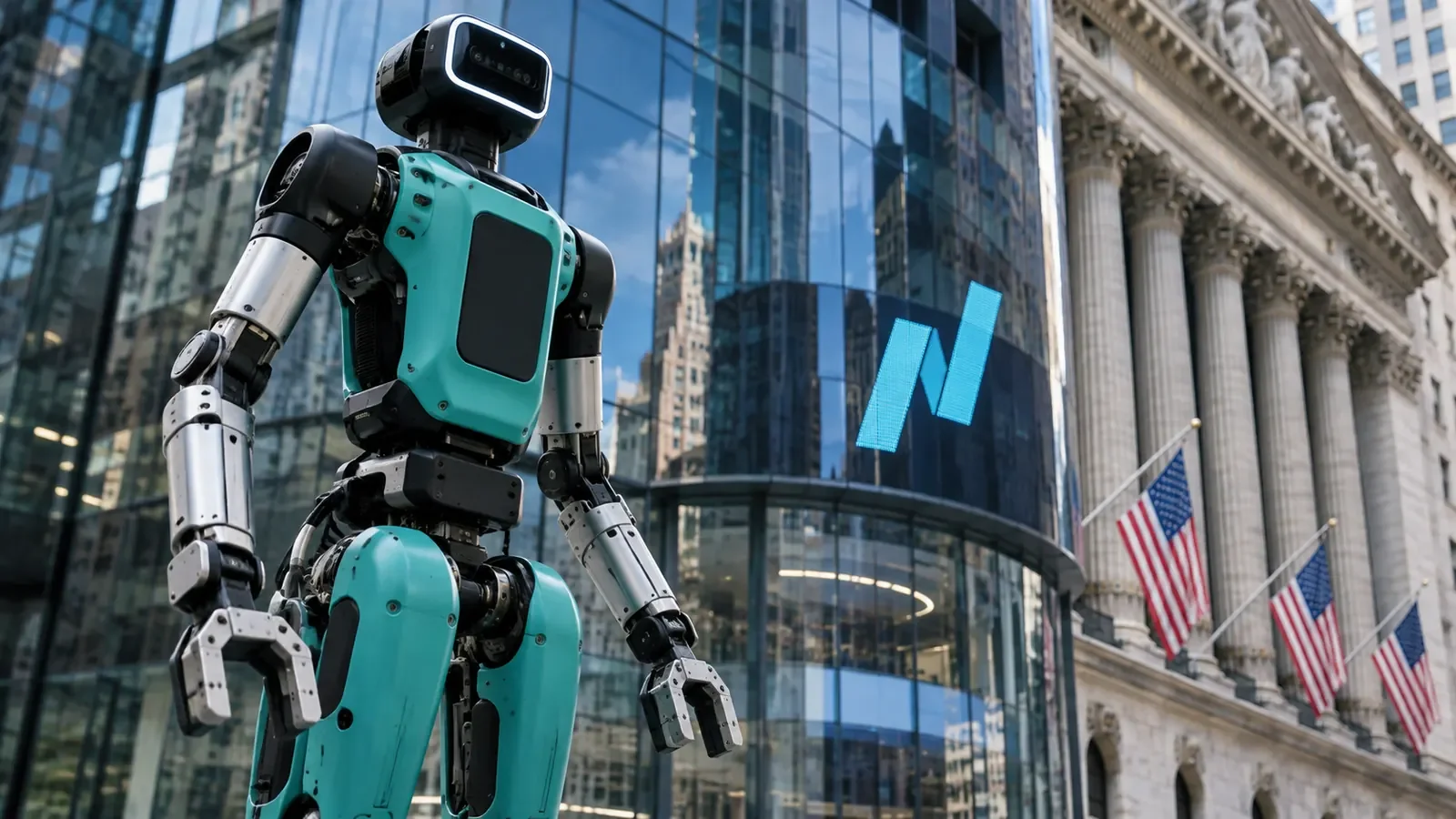
The American company Agility Robotics debuted on Nasdaq on Thursday (November 5), under the ticker AGLT, after completing its business combination with Churchill Capital Corp XI. The transaction and the associated financings raised approximately US$ 465 million in gross capital, while the financial documents reveal a company that still reports modest revenue given the investments required to commercialize humanoid robots.
In 2025, the manufacturer of Digit obtained about US$ 1.8 million in revenue and recorded an operating loss close to US$ 140 million, according to information from its corporate registration examined by Ars Technica. Net loss stood at approximately US$ 138.1 million, an accounting measure different from the operating result.
The debut comes amid the expansion of Agility's commercial contracts. The company announced more than US$ 300 million in multiyear orders for Digit 5, its new generation of humanoid robots, but these commitments depend on meeting contractual milestones, features and technical specifications.
The amount represents potential revenue spread over several years, not revenue already realized. Likewise, the US$ 465 million raised in the transaction corresponds to gross capital raised, before expenses, and not to operating revenue or profit.
Agility already has robots in operation with companies such as GXO, Schaeffler and Toyota Motor Manufacturing Canada. According to the manufacturer, its previous generations accumulated more than 65,000 hours of operation in real environments, indicating existing commercial activity, though still far from the scale planned for Digit 5.
What the documents reveal about the cost of the Digit humanoids
The S-4 registration filed with the U.S. Securities and Exchange Commission (SEC) describes two commercial models for the next generation of robots: subscription and direct purchase of the equipment.
According to the illustrative figures analyzed by Ars Technica, the subscription model provides for approximately US$ 8,500 per month per robot, plus an initial charge estimated at US$ 25,000 for delivery and deployment. In this model, the client uses the equipment through recurring payments that include software and maintenance services.
In the purchase alternative, the hardware costs approximately US$ 200,000 per unit, plus deployment expenses and periodic fees for software and maintenance. The amounts presented are illustrative estimates of the commercial structure, not universal prices or financial results already obtained.
Jonathan Hurst, co-founder and director of robotics at Agility, explained to Ars Technica that the subscription seeks to offer clients a cost comparable to hiring human workers. According to him, the proposal consists of charging “an amount comparable to the cost of human labor”, reducing the initial investment required to adopt the technology.
The comparison expresses the commercial logic advocated by the manufacturer, but it does not constitute independent proof of financial return for all clients.
The commercialization timeline also imposes an important distinction between the announced contracts and the actual deliveries. Agility plans to make the first units of Digit 5 available to selected clients in the first half of 2027, with general availability expected by the end of that year.
The company intends to direct the funds obtained from the business combination to expanding commercial deployments, increasing production and developing its robotics and physical artificial intelligence platform.
With the stock market listing, the evolution of the business can be followed through public financial indicators, including the conversion of conditional orders into deliveries, revenue recognition and the costs required to scale production of the humanoids.