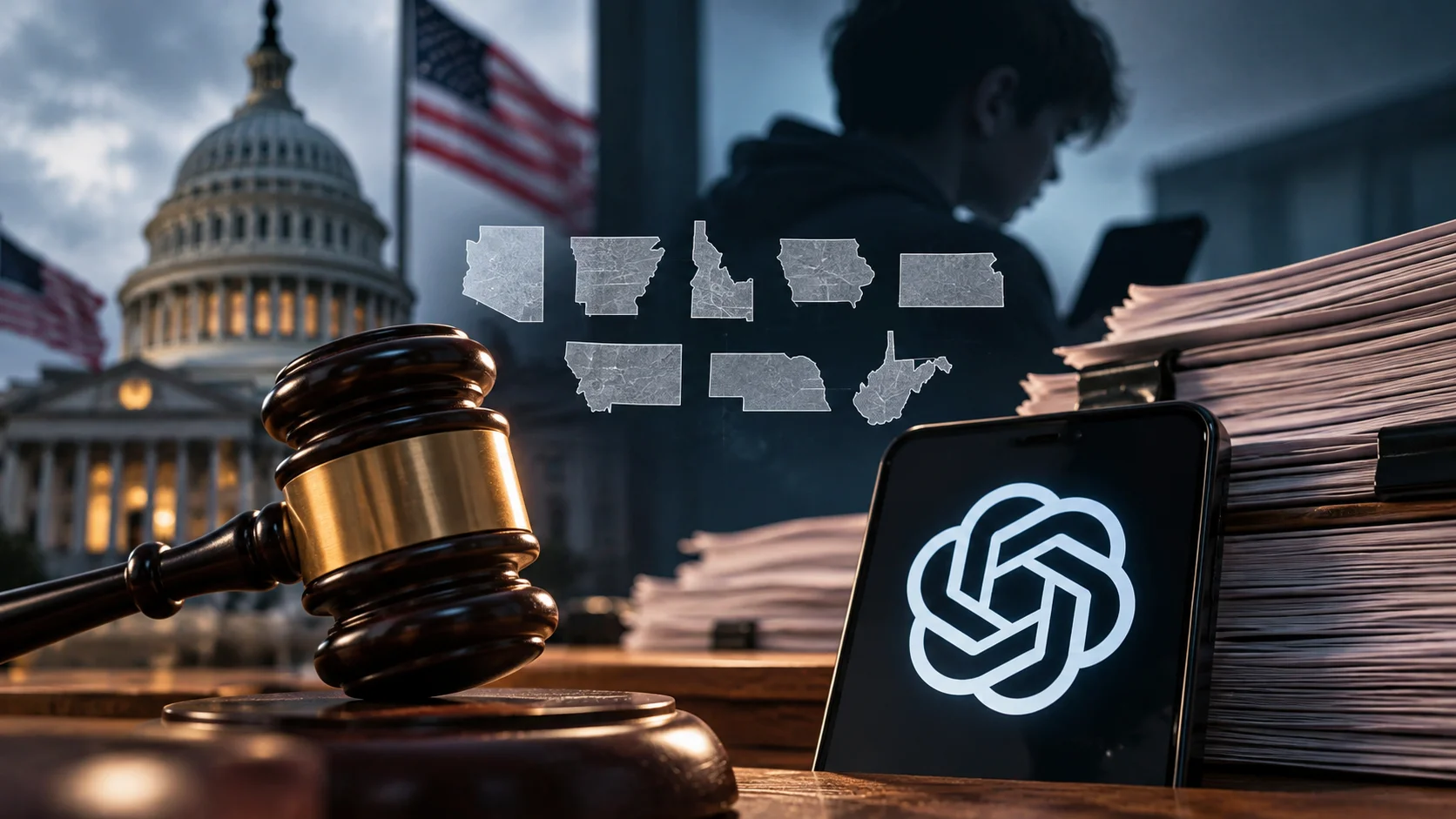
Attorneys general of eight American states filed lawsuits against OpenAI on Wednesday (14), accusing the company of concealing risks associated with ChatGPT and of offering insufficient protections to users, especially children and adolescents. The lawsuits seek fines, changes in the platform's operation and restrictions on the development and testing of certain artificial intelligence systems.
The initiative brings together Arizona, Arkansas, Idaho, Iowa, Kansas, Montana, Nebraska and West Virginia. Although coordinated by state authorities from different parties, the lawsuits were filed separately, with legal grounds and specific requests according to each state's legislation.
The accusations focus on how OpenAI develops and presents ChatGPT to consumers. According to the attorneys general, the platform was designed to keep conversations engaging and to show excessive agreement, creating relationships of trust that can increase the vulnerability of certain users.
The states allege that these characteristics contributed to interactions involving encouragement of dangerous behaviors, reinforcement of delusional beliefs, inadequate medical guidance and emotional dependence. The complaints also mention episodes of violence and self-harm allegedly related to use of the chatbot, without the company's liability having been established in court.
Lawsuits seek fines of up to US$ 50,000 per violation and restrictions on AI models
The court documents show important differences among the measures requested by the states.
In Iowa, Attorney General Brenna Bird seeks fines of up to US$ 40,000 per violation under the state's consumer fraud protection law. The lawsuit also seeks reimbursement for harmed consumers and the deletion of all data from state residents obtained before a possible ruling.
The state also intends to condition the collection of sensitive personal information on the adoption of age verification mechanisms, transparency about data use and informed consent from consumers.
Nebraska bases part of its lawsuit on state legislation that establishes security requirements for digital services used by minors. The lawsuit seeks penalties of US$ 50,000 per violation under that law and points to obligations related to identifying users' ages, parental controls and limiting potentially harmful features.
In Idaho, authorities seek fines of US$ 5,000 per violation and a measure that would prevent the deployment or continuation of tests of advanced AI models outside secure environments, subject to independent verification. The request includes reporting incidents in which autonomous systems exceed their controls or access resources without authorization.
Iowa also seeks to suspend new tests of advanced models until adequate safeguards are verified by third parties. These restrictions expand the scope of the dispute beyond conversations held by ChatGPT users, also involving safety procedures in the development of the technology.
In a statement sent to The Verge, OpenAI spokesperson Drew Pusateri said the company has developed specific protections for different age groups, including parental controls, break reminders and safety mechanisms adapted to younger users.
Pusateri acknowledged that no system is perfect and stated that the company will continue working with experts and state authorities to improve protections and develop policies applicable to the artificial intelligence sector.
None of the fines or restrictions sought represents a conviction already imposed on OpenAI. The requests depend on evaluation by the courts, and the allegations presented by the states remain subject to legal challenge.