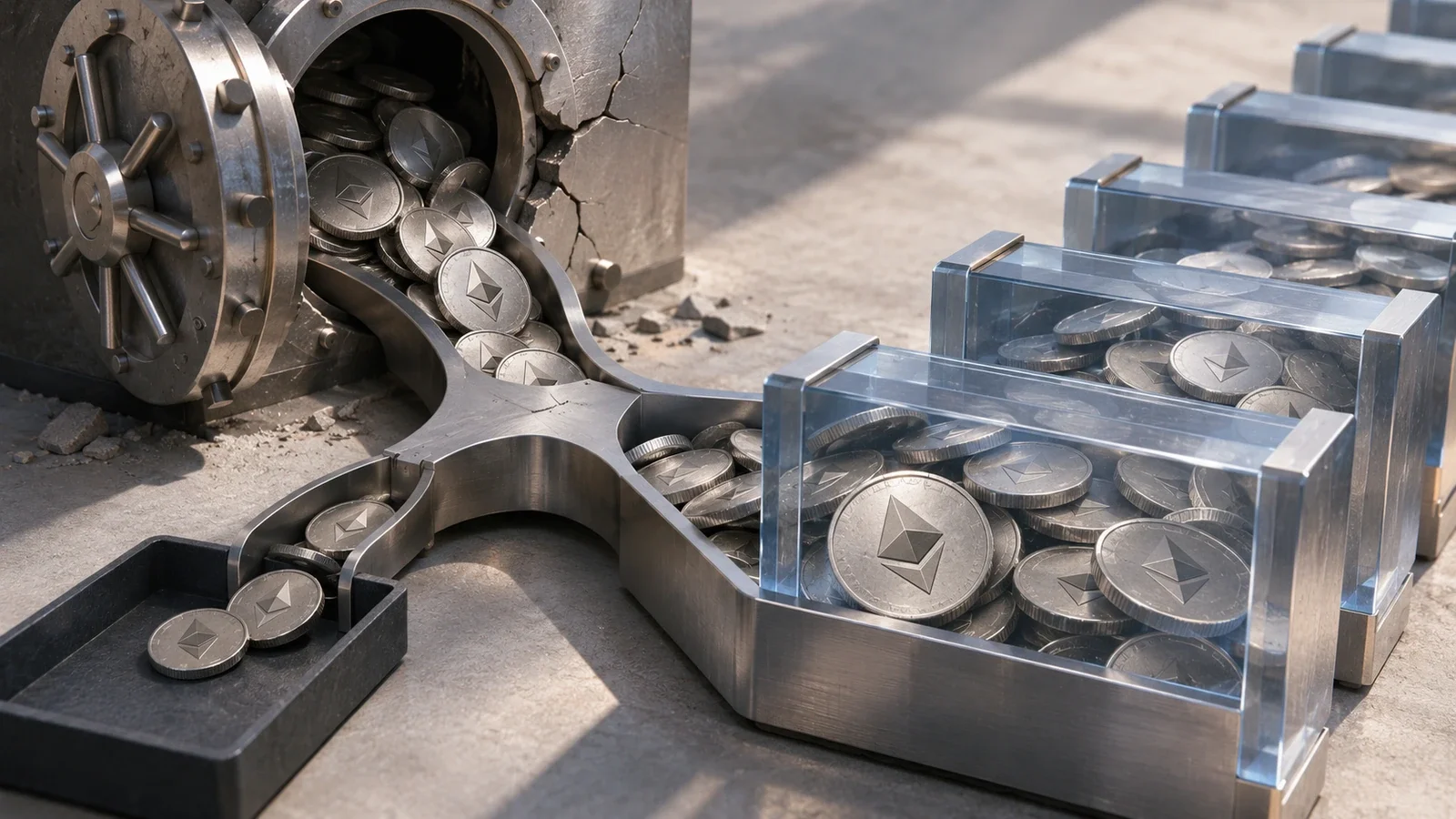
Companies responsible for building Ethereum blocks received approximately US$ 1.78 million in payments from bots competing to exploit a vulnerability in K3 Capital's sBOLD digital asset vault. The attack occurred on Wednesday (18) and withdrew US$ 3.42 million from the product in about eight minutes.
An investigation by blockchain intelligence firm Bitquery identified 97 transactions associated with the incident. The wallet identified as responsible for the original exploit and another wallet funded by it together received about US$ 520,000, less than one-third of the amount allocated to the block builders.
sBOLD is a decentralized finance (DeFi) product that allows users to earn yield on their BOLD deposits, the dollar-pegged stablecoin from the Liquity V2 protocol.
K3 Capital suspended the vault's operations after the attack. In a report released this Thursday (19), reported by The Defiant, the company attributed the incident to a failure in permission management during token conversion operations. According to the company, the Liquity V2 protocol was not compromised.
How bots redistributed the funds withdrawn from the protocol
A single bot reproduced the exploit and withdrew US$ 1.91 million, equivalent to 56% of the diverted funds. However, a large part of that amount was allocated to paying for the execution priority of its transactions.
The practice is associated with MEV (Maximal Extractable Value), a mechanism through which operators can extract economic value from the inclusion and ordering of transactions on a blockchain.
On Ethereum, block builders select and organize transactions before delivering the blocks to validators, who are responsible for proposing them on the network. Bots can offer payments to obtain more advantageous positions in that sequence.
During the attack, competition raised the amount paid for execution priority in a single block to 44 ETH. Titan was responsible for building most of the blocks that contained transactions from the main bot.
The payments received by the builders, however, do not necessarily represent profit. According to K3 Capital's subsequent report, practically all of that amount was passed on to the recipients of the validator fees. There is no evidence that these operators deliberately participated in the exploit.
K3 Capital announced a reward of 15% of the returned amounts as part of an asset recovery initiative. The recovered funds will be converted into BOLD and used to reimburse affected depositors, with the amount depending on the amount effectively recovered.