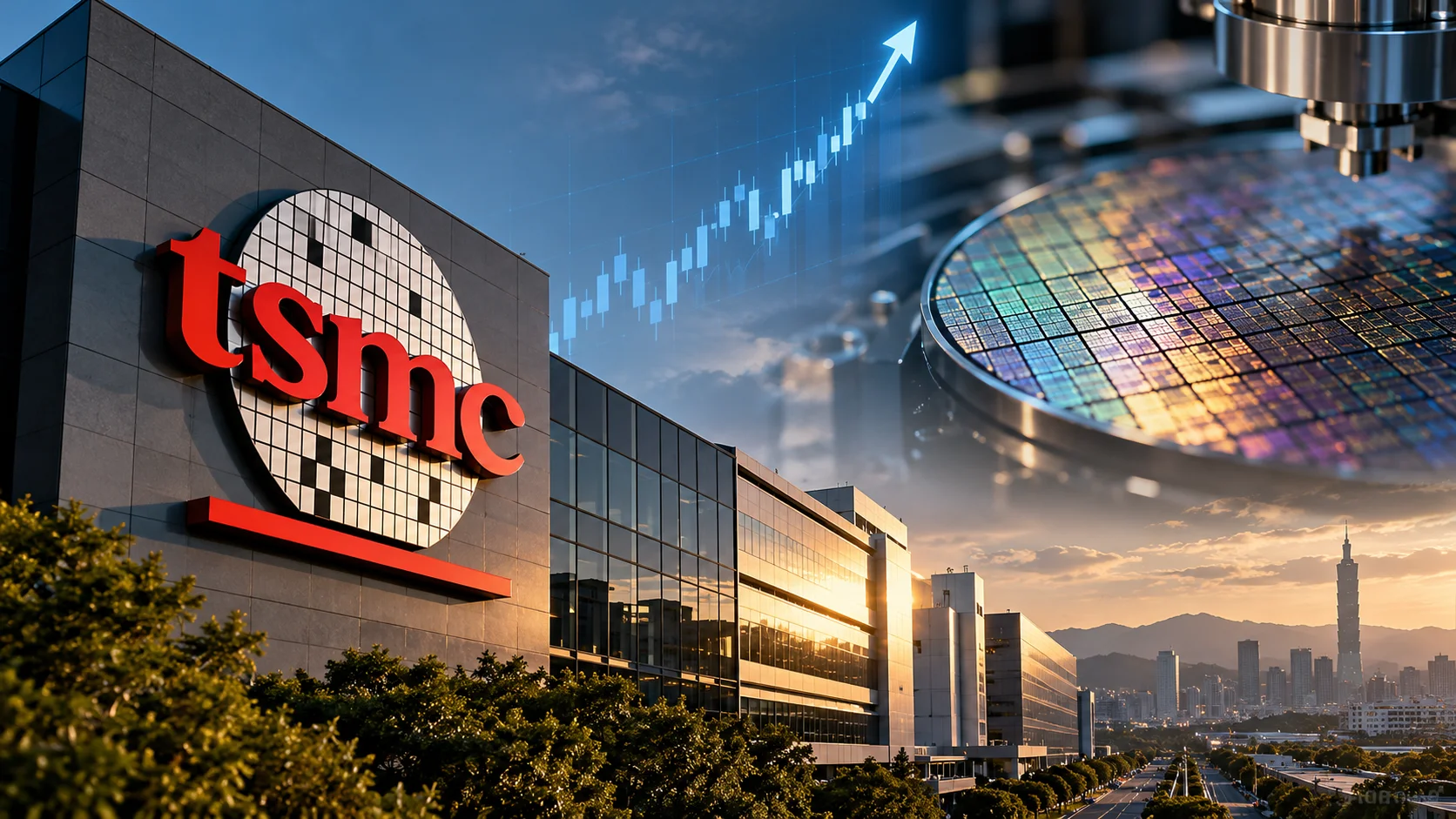
TSMC reported record net profit of NT$ 763.1 billion (US$ 23.59 billion) in the third quarter of 2026, a 68.7% increase compared with the same period a year earlier. The result, released this Thursday (15), marks the Taiwanese manufacturer's 6th consecutive quarter of record profit, driven by demand for advanced semiconductors used in artificial intelligence.
The performance exceeded the NT$ 746.3 billion estimate compiled by LSEG. Quarterly revenue reached US$ 46.72 billion, a year-over-year increase of 41.2% in dollars, while net profit margin reached 51.1%. TSMC supplies chips to companies such as Nvidia and Apple and occupies a central position in the manufacturing of the market's most advanced processors.
The figures also show the growing importance of the latest manufacturing technologies. Processes of 7 nanometers or below accounted for 79% of wafer revenue, the silicon wafers used in chip production. The 2-nanometer technology, still in industrial expansion, already accounted for 8% of that revenue.
For the fourth quarter, the company projects revenue of between US$ 52.3 billion and US$ 54.3 billion, above the US$ 46.72 billion recorded between July and September. The forecast for annual revenue growth in 2026 was also raised to approximately 44%, compared with previous guidance of expansion above 40%.
TSMC maintains high investments but warns of risks in 2027
Despite the results, TSMC CEO C.C. Wei took a more cautious tone about next year. During the earnings presentation, he said that consumer-facing segments and more price-sensitive markets remain under pressure from rising component costs and macroeconomic uncertainties.
"That's why we are being prudent in our business planning for 2027," Wei said.
The caveat does not represent a forecast of a decline in demand for artificial intelligence. The company stated that demand for advanced chip manufacturing capacity remains far above available supply and that it does not identify signs of a slowdown in that segment.
The contrast lies in the difference between the markets served by the manufacturer. While technology companies continue to expand investments in AI infrastructure, electronic products more dependent on household consumption face less favorable conditions, especially given rising component prices.
TSMC maintained its forecast for capital investments of between US$ 60 billion and US$ 64 billion in 2026, aimed at expanding industrial capacity and developing manufacturing technologies. These amounts represent the budget planned for the year, not fully executed expenses.
Part of this expansion will take place in the United States. The company reported that construction of its second factory in Arizona has been completed, but mass production is scheduled only for the third quarter of 2027, ahead of the originally planned schedule.
The combination of record profits, growth projections and high industrial investments confirms the strength of current demand for advanced semiconductors. The caution for 2027, however, shows that TSMC continues to differentiate growth supported by artificial intelligence from the economic conditions faced by its other markets.