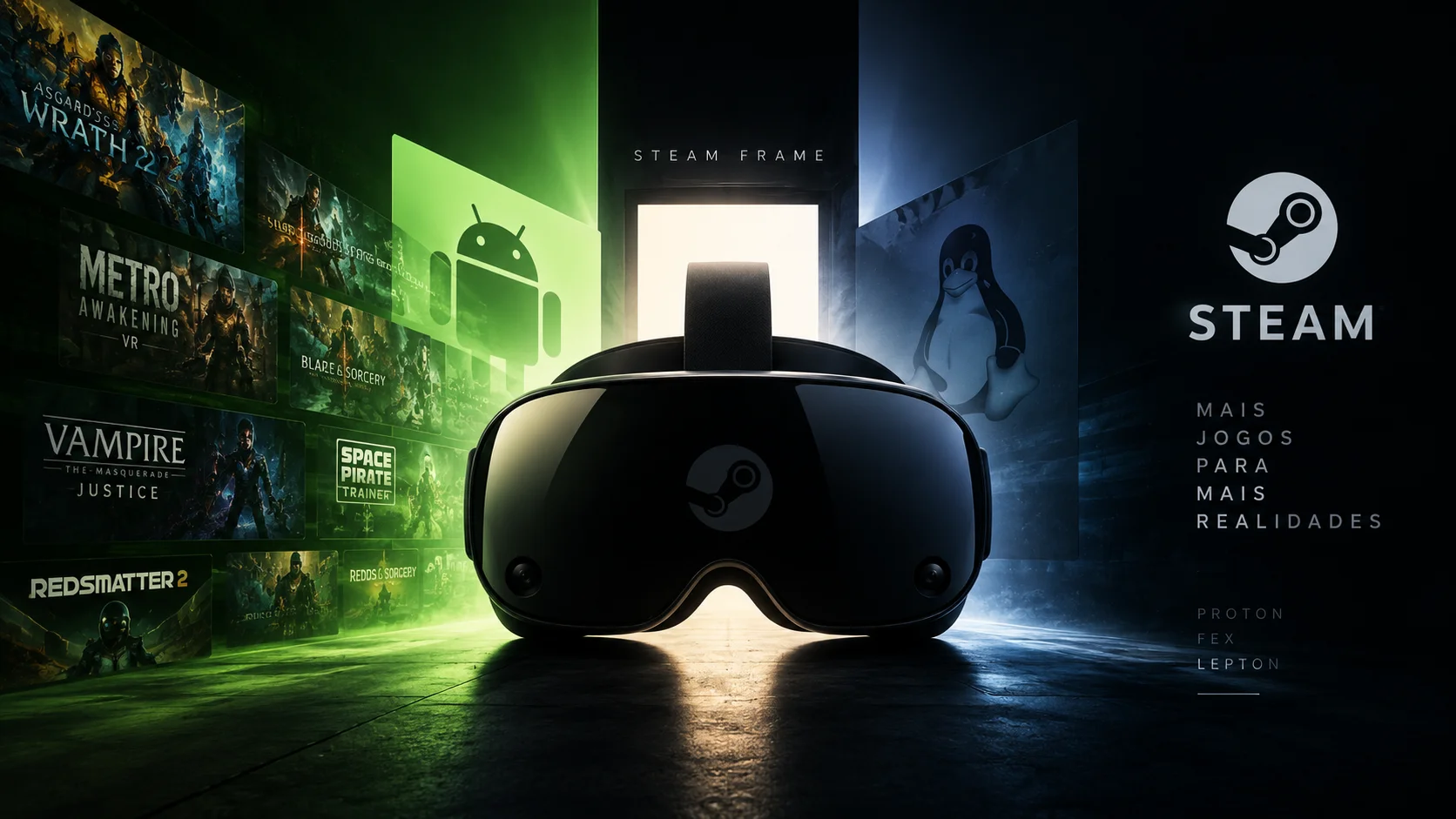
Valve has open-sourced Lepton, its compatibility layer for running Android games on Linux, just days after the launch of Steam Frame. More than a technical tool, the project reveals a strategy already known to the company: instead of convincing developers to rebuild catalogs for a new operating system, minimizing the need to port them as much as possible. It was this model that helped Proton turn Windows games into part of the SteamOS ecosystem. Now, Valve is trying to apply the same logic to the virtual reality market.
The similarity, however, is strategic, not technical. Proton uses Wine and other technologies to run software developed for Windows on Linux. Lepton places Android applications inside a container-based environment, with an explicit focus on games and especially on the ARM64 versions already produced for standalone headsets.
The result may be more important for Steam Frame than simply increasing its compatibility: Valve is trying to reduce one of the biggest obstacles faced by a new VR platform — starting with a small catalog.
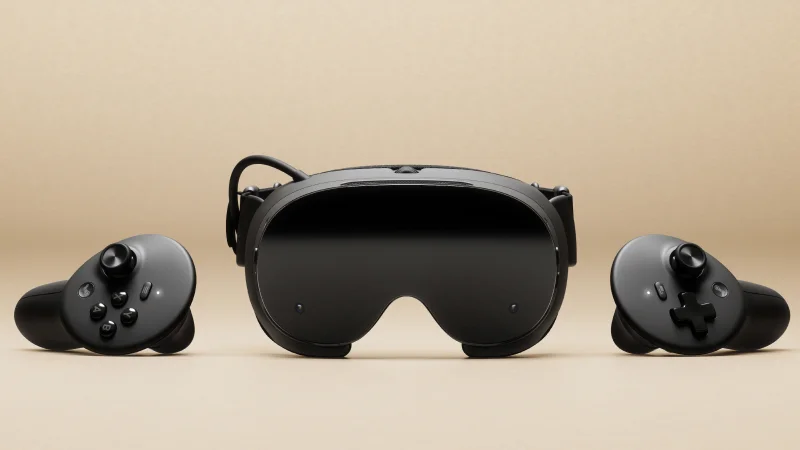
Valve wants to leverage games that studios have already made for other headsets
The key
point appears in Valve's own documentation. For developers who have already created an optimized mobile version of their VR games, usually on Android ARM64, the company says it makes more sense to run that version on Steam Frame than to produce and maintain another build specifically for the device.
This brings Steam Frame directly closer to the ecosystem built around standalone headsets, where Android is already an important foundation.
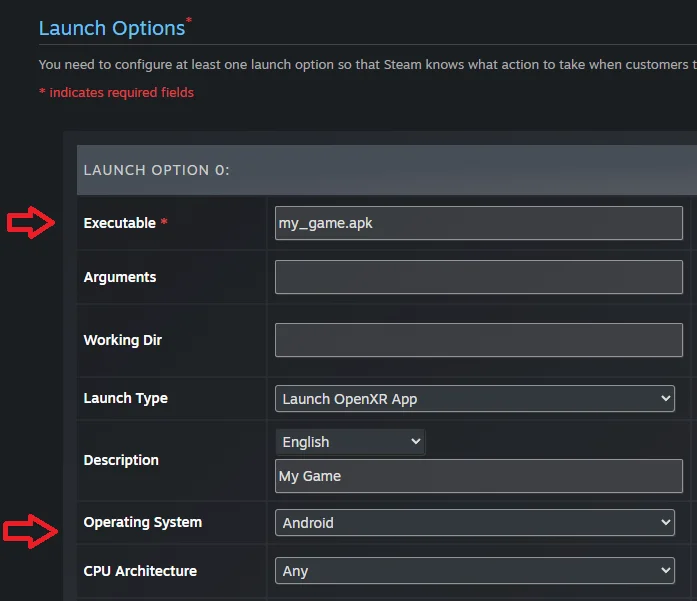
Valve also changed Steam's infrastructure to accept this strategy. Developers can mark Android as a compatible operating system, create a specific depot, and upload an APK file directly. The presence of that depot allows Steam to install and run the game through Lepton. OBB files and Steam Cloud integration are also part of the flow envisioned by the platform.
This integration is the part that brings the project closest to the strategy used with Proton.
Proton's value is not only in technically allowing a Windows executable to run on Linux. It allowed Valve to build devices based on SteamOS without depending on a separate catalog of Linux versions. With Lepton, the company is trying to avoid a similar problem in VR: launching Linux-based hardware without requiring all studios of standalone experiences to start treating it as a completely new platform.
Lepton does not try to turn SteamOS into Android
The comparison with Proton also has important limits.
The code published by Valve shows a project deliberately more restricted than a general-purpose Android implementation. Lepton runs applications in containers without root privileges, disables Android services considered unnecessary for games, and recommends that each application be run in its own instance. Valve itself warns that these decisions can break compatibility with certain applications.
The project incorporates components and patches from initiatives such as Waydroid, Anbox, Halium, and Hybris. The main tool was published under the MIT license, while the Android system image uses GPL-3.0 because of the incorporated components.
There is also deep integration with the host system. Lepton can use graphics libraries from SteamOS itself, components from Steam and Steamworks, and Vulkan layers aimed at features such as foveated rendering and rendering optimization. The intention is to prevent Android from behaving like a virtual machine isolated from the rest of the platform.
For development, the environment retains tools familiar from the Android ecosystem. Valve allows connection to the container via ADB and documents workflows with tools such as RenderDoc, as well as commands for logs and debugging.
OpenXR reduces the barrier, but does not eliminate dependencies on Meta
This does not mean that any game created for a Meta Quest can simply be uploaded to Steam without changes.
Steam Frame maintains compatibility with OpenXR, and Valve recommends that Unity projects intended for the device use the engine's OpenXR plugin. At the same time, its own documentation guides developers to disable Meta XR-specific features when they interfere with the application's execution.
This distinction matters because there are two different layers in a Quest game: the fact that it is an Android application and the specific APIs or services used by the title.
Lepton solves much of the first problem. The second will continue to depend on how each game was built.
A title that uses Android ARM64, Vulkan, and OpenXR in a relatively standardized way tends to require less adaptation. Games strongly dependent on proprietary services, platform-specific APIs, or other Meta integrations may still need changes.
Therefore, open-sourcing Lepton does not amount to automatically releasing the entire Android catalog for Steam Frame.
The bigger strategy is to make the operating system less important to the catalog
Steam Frame shows how these technologies begin to work together.
The device runs SteamOS on ARM64 architecture and uses three different paths to expand its library: Proton for Windows software, FEX to translate x86 code to ARM64, and Lepton for Android applications. Valve itself presents these three technologies side by side in its documentation.
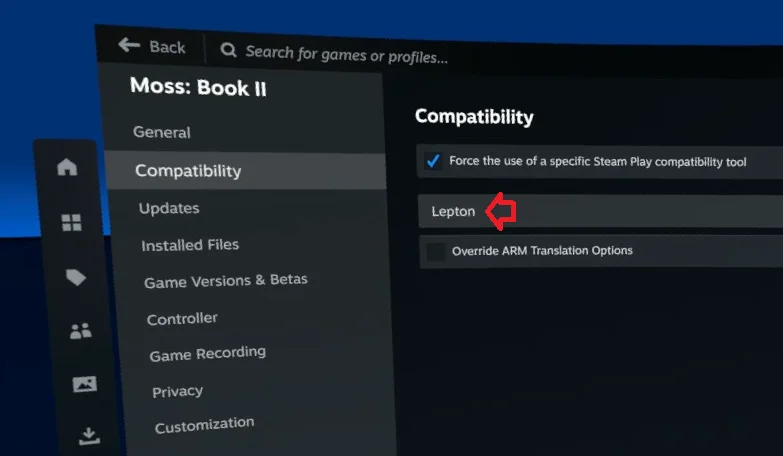
This combination reduces the traditional relationship between operating system and catalog.
A developer can keep their Windows version and run it through Proton and FEX. If they already have an Android version optimized for mobile VR hardware, they can use Lepton. There is also the possibility of native ARM64 software.
For Valve, this reduces the number of developers who need to decide in advance that Steam Frame has enough users to justify a port. Compatibility comes into existence before the platform achieves scale.
It was precisely this type of problem that Proton helped work around on the Steam Deck: Valve did not need to convince thousands of studios to create Linux versions before launching a SteamOS-based handheld.
Lepton tries to reproduce this effect in VR, although starting from a different and still much more specific technological base.
The most important indicator going forward will not be how many Android applications can technically launch on SteamOS. It will be how many developers start publishing their Android builds as official versions on Steam and can maintain them without creating a second development line.
If this flow works, Lepton's impact will be less about turning Linux into a platform for Android and more about allowing Valve to build a VR ecosystem without having to start its catalog from scratch.