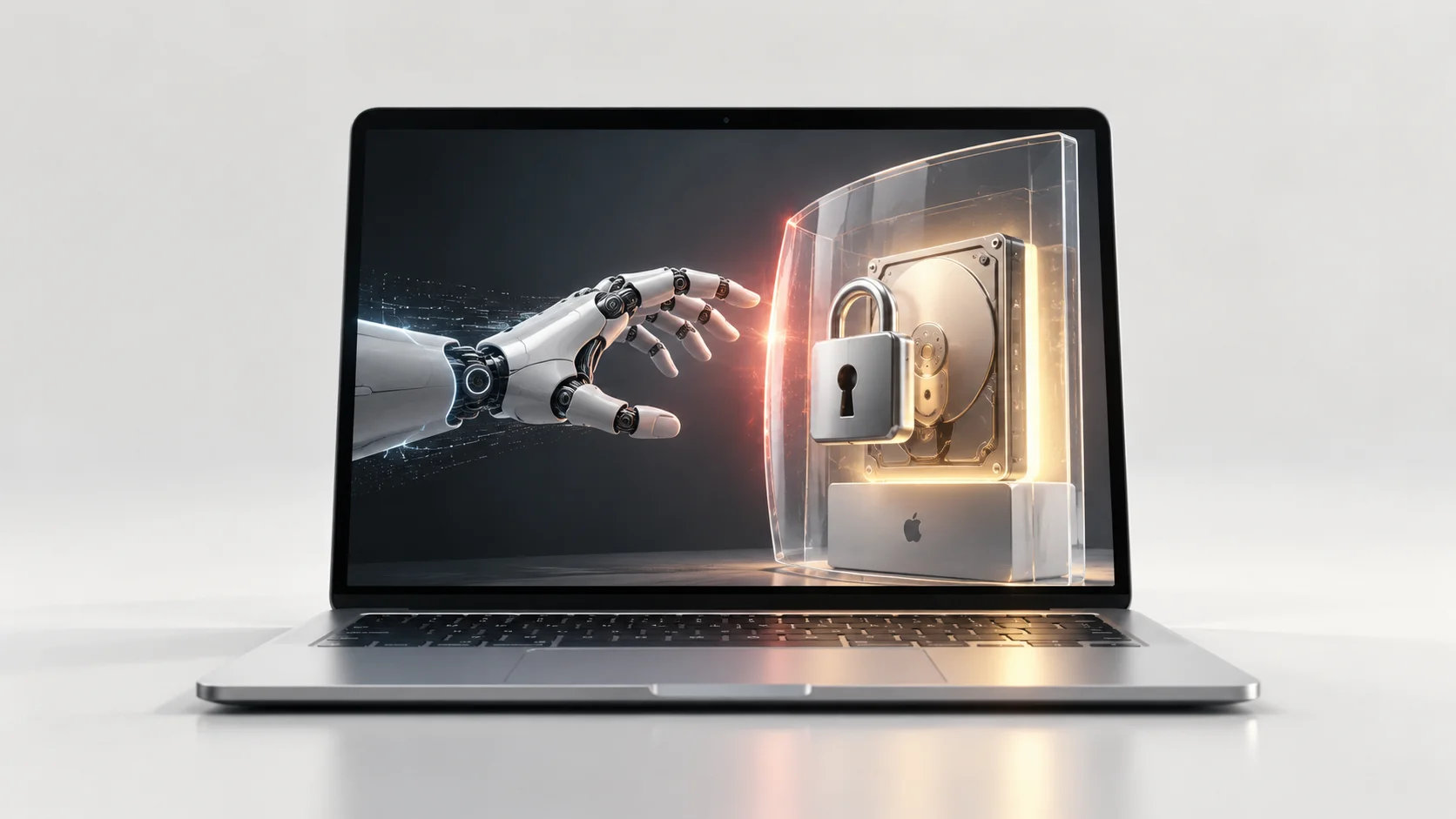
Apple announced on Friday (2) that it will add new controls to macOS Full Disk Access, a permission that gives apps broad access to data stored on the Mac. The company directly linked the change to the advance of increasingly autonomous artificial intelligence agents and said that full disk access will require more explicit action by the user.
Full Disk Access was created primarily to allow backup software to work, but it bypasses part of the privacy protections normally applied by macOS. With the permission active, an app can reach sensitive data such as files, emails, messages and browsing history.
Apple stated that some developers are resorting to this level of access in ways that can expose information without the user fully understanding the scope of the authorization. In communication apps, the problem can also affect data of other people who interact with the user.
Change still has no defined deadline
The company did not detail how the new controls will work, nor did it say in which version of macOS they will be implemented. The promise is that granting this level of access will depend on an explicitly conscious action by the user, adding a new barrier to a permission that Apple itself classifies as extraordinary.
Today, apps can no longer obtain Full Disk Access automatically through code or an entitlement. Apple's documentation requires the user themselves to grant the permission in macOS Privacy and Security settings. The announced change indicates that this process will be tightened, but the company has not yet explained which additional steps will be required.
Apple also did not announce a formal requirement for developers to justify their use of Full Disk Access to the company. So far, the confirmed change is focused on additional controls and on making the user's decision more explicit before authorization.
The announcement comes amid the expansion of agents capable of operating continuously on the computer and accessing different data sources. Reuters reported that the decision came after questions involving Muse, Meta's agent, after a journalist said that the software had access to the content of private messages. Meta disputed the interpretation and said that integration with Messages depends on both Full Disk Access and the specific activation of the connector.
For developers of AI agents and other apps that depend on broad access to the system, the practical consequence will still depend on the rules Apple presents. The company, however, made clear that it considers the current model insufficient in the face of software capable of acting with greater autonomy over data stored on the Mac.