Ethereum co-founder Vitalik Buterin has released a new version of the network's roadmap, dubbed 'Strawmap', that replaces the old six-phase plan and sets as priorities security against future quantum computers, user privacy and the integration of artificial intelligence into code verification.
Change of priorities
In place of the previous roadmap's stages, such as Merge and Surge, Strawmap organizes the blockchain's evolution into three layers: consensus (CL), data (DL) and execution (EL).
In a statement, Buterin said Ethereum will be quantum-proof, put user privacy in first place, be secure, censorship-resistant and highly performant and scalable. He also said the network will be 'lean'.
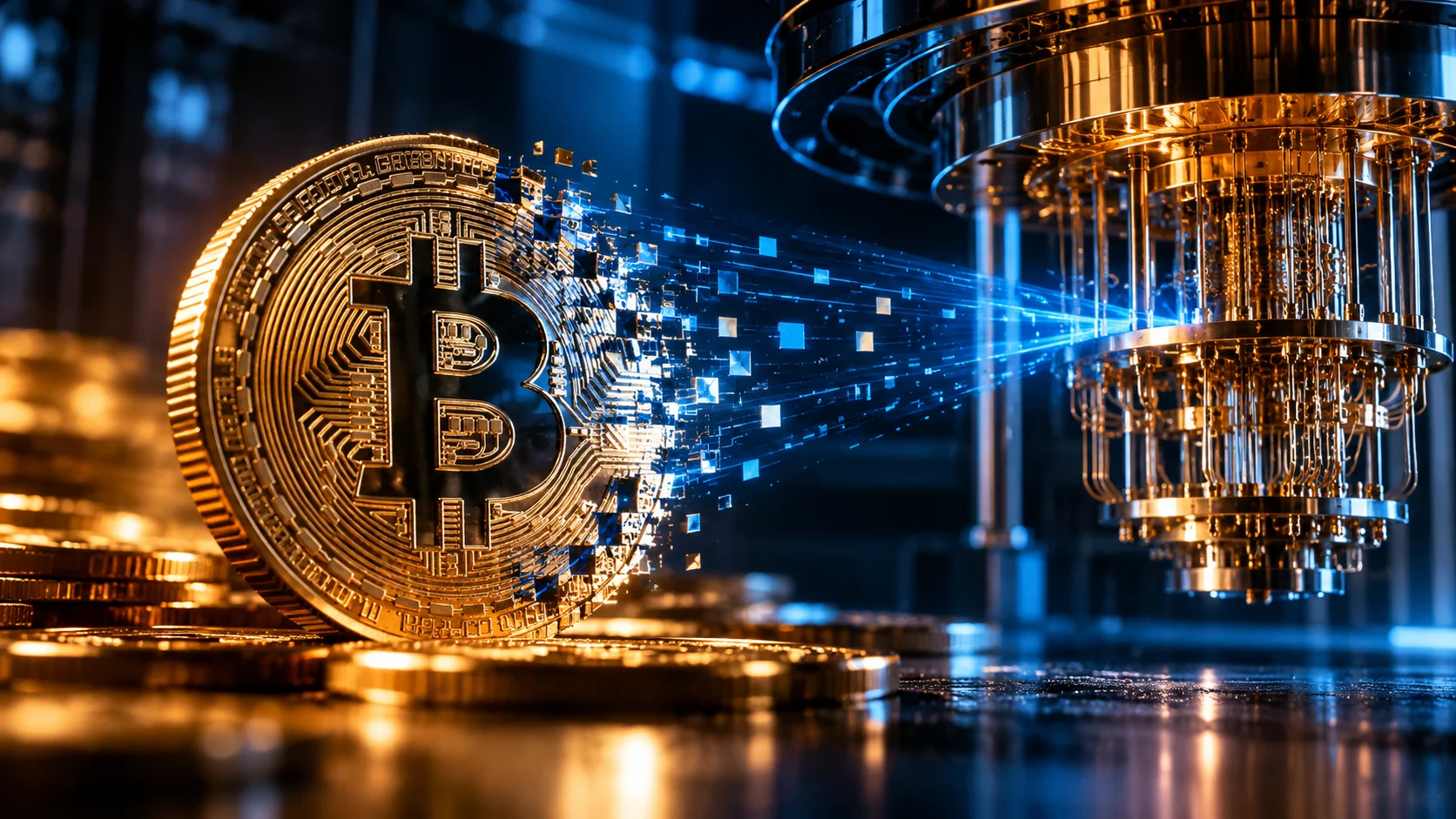
The expectation that powerful quantum computers could emerge soon led researchers to rewrite the security roadmap, with the introduction of a post-quantum public key registry and PQ transactions. Buterin highlighted that the plan includes 'aggressive scaling in the post-quantum context', with lightweight LeanSPHINCS signatures and 'zkzk' cryptographic structures.
To reach this goal, developers made concessions: Verkle trees, developed years ago, have been officially declared obsolete and replaced by Poseidon binary trees (PBTs), designed to work with STARK proof math.
Buterin acknowledged that previous roadmaps did not have integrated privacy tools and that the network now requires 'first class attention to strong privacy'. Keyed nonces, FOCIL elements, lean privacy pools and a 'wormhole' architecture are being integrated into the protocol to enable fully shielded transfers on the base layer.
Economy and the role of AI
Rather than trying to scale all of Ethereum's activity, developers are creating specialized mechanisms to support the heaviest loads, including token transfers, fast swaps and privacy protocols. The technical foundation will consist of recursive STARK proofs and native rollups, which were not considered in 2023 because SNARKs were not mature enough.
Ethereum's economy will also be reformed. The roadmap includes short- and long-term futures for gas and blobs. According to Buterin, that idea did not exist in 2023. This will allow large applications to buy network capacity in advance at a fixed price, protecting users from sudden fee spikes.
The security of such a densely integrated architecture will be made possible through end-to-end formal verification (FV) of the protocol specifications. Buterin plans to entrust that task entirely to modern AI tools, since the volume of code has become too large for human verification.