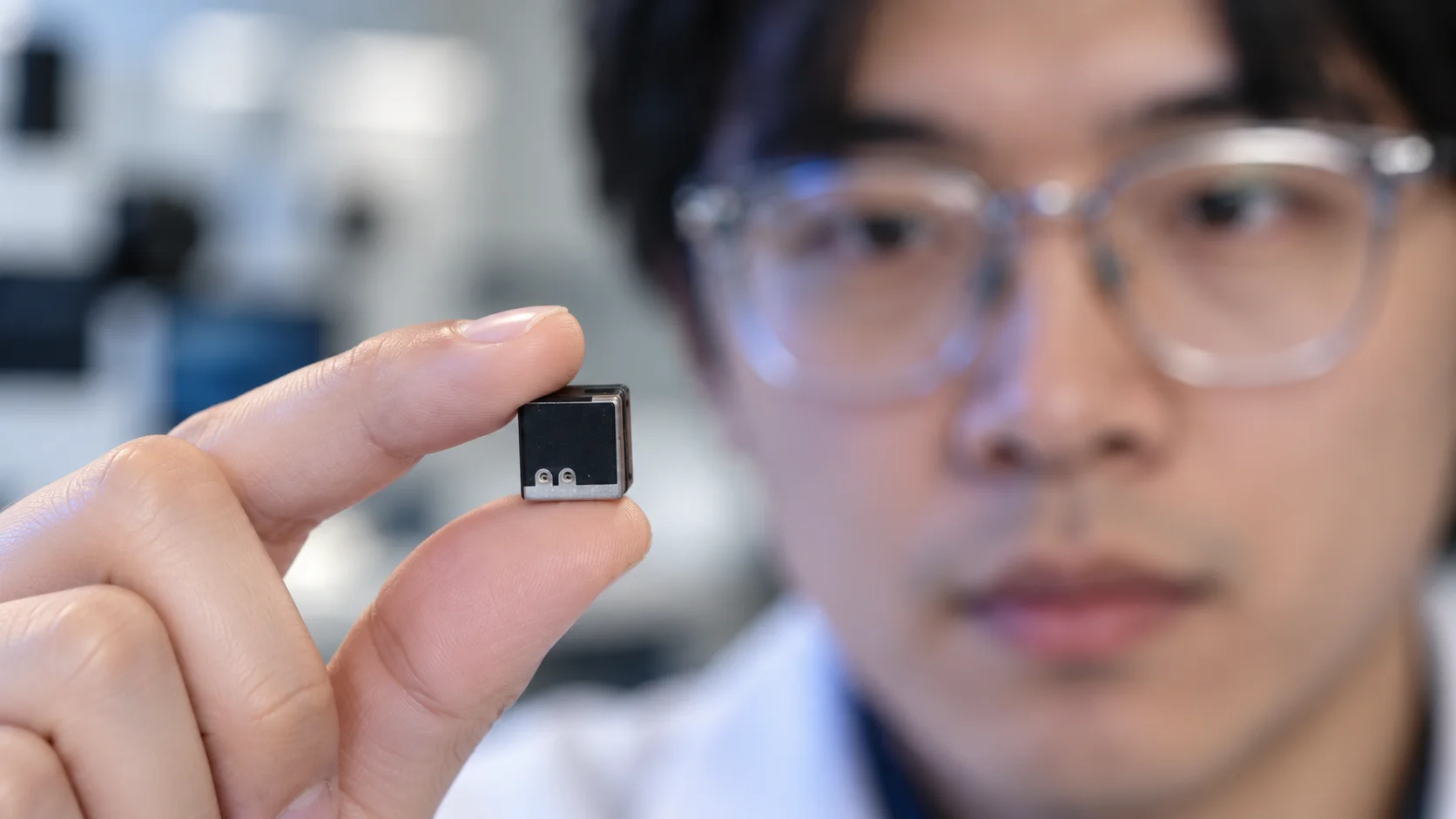
Researchers at Tianjin University in China presented on September 30 a non-invasive brain-computer interface system that weighs just 3 grams and takes up about 2 cm³. Named Shen Gong Xumi Brain Cube, the device was developed to capture electrical signals from the brain during extended periods without relying on traditional electroencephalography caps.
The equipment brings together EEG electrodes, electronic circuits, battery and wireless transmission in the same module. It is attached directly to the scalp and can remain hidden among the hair, reducing the volume of conventional systems based on caps, helmets or bands.
According to the developers, the device's main parameters meet the applicable requirements of the Chinese standard GB 9706.226-2021 for medical equipment. With a sampling rate of 1,000 Hz, the battery allows between 8 and 10 hours of operation, a range designed for continuous brain signal collection sessions.
Tianjin University presents the system as the smallest and lightest non-invasive device of the type developed so far. The miniaturization seeks to reduce one of the practical limitations of traditional EEG: the size and discomfort of the equipment during prolonged monitoring.
System targets healthcare, research and high-risk operations
Among the planned applications are the monitoring of physiological and pathological indicators related to brain activity, sleep stage classification, neurofeedback and cognitive research. The platform was also designed for brain-computer interaction applications, including device control and digital experiences.
The team is also working with companies and institutions on projects aimed at monitoring professionals involved in special activities and emergency operations. The goal is to use brain signals combined with wearable devices to monitor safety-related conditions during work.
The Brain Cube is part of the Shen Gong line developed by Tianjin University's brain-computer interaction laboratory. The group says it has already taken more than 20 devices from the family to medical and neural interaction applications, with use in thousands of patients.