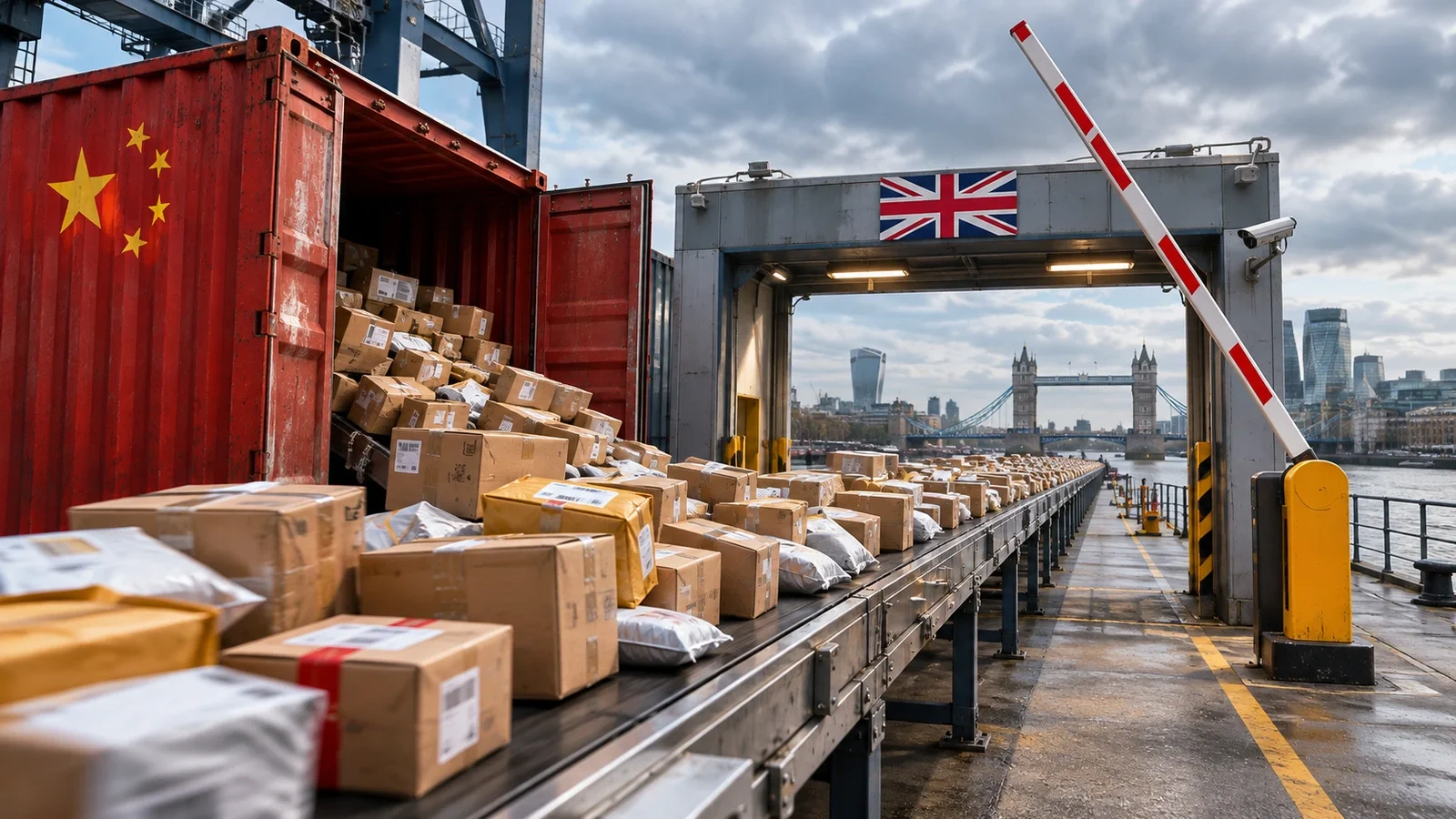
The value of small parcels imported from China to the UK jumped from £1.3 billion to £5.3 billion in two fiscal years, through 2025-26. The figures are from the British tax authority (HMRC), obtained by the Financial Times through a freedom of information request and published this Sunday (22).
The growth comes as the British government maintains the customs duty exemption for shipments of up to £135, a benefit used by international sellers and e-commerce platforms such as Shein and Temu. The rule is scheduled to be ended by October 2028, at the latest.
The UK is following a slower timeline than other major markets. The United States suspended the exemption de minimis for low-value shipments in August 2025. The European Union, in turn, began charging a €3 tariff per category of goods on small parcels in July 2026, adding a €2 handling fee per item in November.
The British government says it has brought the reform forward by six months, reducing the deadline originally planned for March 2029. Even so, the change could take almost two years to come into effect.
What the fiscal representative changes
In addition to eliminating the customs exemption, the reform will introduce the figure of the fiscal representative established in the UK, who may be jointly liable for the customs debts generated in import declarations by foreign sellers.
The new system also provides for additional information, compliance and enforcement requirements. The operational details will be defined by supplementary regulation.
The timeline faces criticism from British retail. Tom Ironside, policy director at the British Retail Consortium, told the Financial Times that the deadline “means two more years of inaction, increasing the risk of the UK becoming even more attractive to foreign online sellers”.
The regulatory gap remains during the Black Friday season, when local merchants compete with international platforms that continue to use the British low-value imports regime.