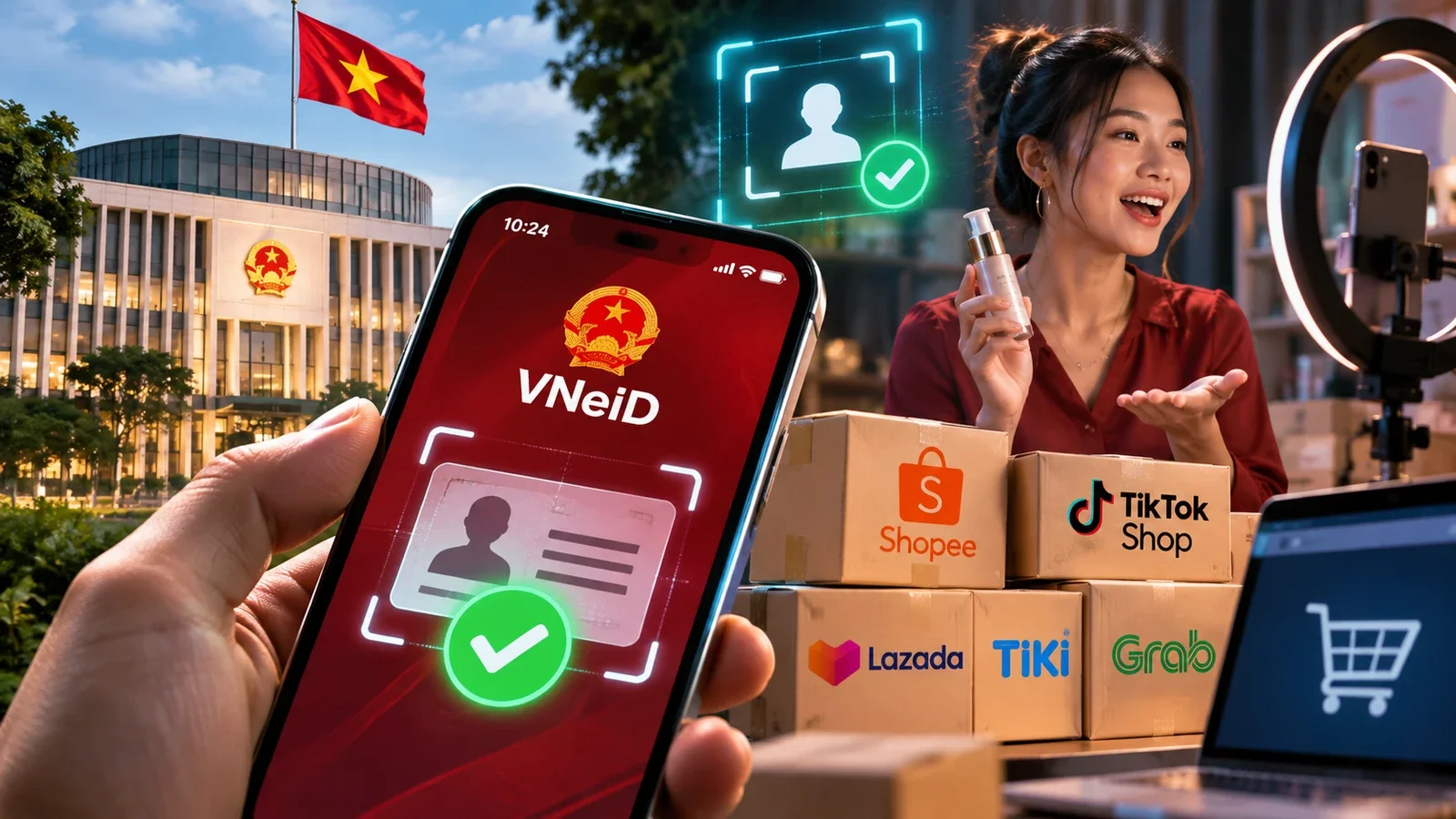
Vietnam's e-commerce platforms will have to verify the identity of sellers and those responsible for live sales broadcasts starting January 1, 2027. The National Assembly reinforced the requirement this Saturday (21), by approving a resolution with 491 votes in favor among 492 lawmakers present.
The measure requires the government to coordinate the implementation of electronic verification on e-commerce platforms and social networks used for sales. The obligation was already provided for in Decree 248/2026, which regulates the e-commerce legislation in force since July.
The decision comes one day after the approval of the Electronic Identification and Authentication Law, on Friday (20), by 473 of the 478 lawmakers present. The new legislation requires that accounts used in online transactions be linked to the national digital identity, through the VNeID system.
The scope goes beyond e-commerce: it includes banking services, telecommunications, investments, social networks, health, digital wallets, digital assets and online gaming. The law also provides for consent for the collection and use of authentication data, subject to legal exceptions, and storage of verification results for at least five years.
Three deadlines for accounts and platforms
The implementation involves three different dates. Under Decree 320/2026, electronic transaction accounts created before September 28, 2026, including those used by sellers and livestreamers, must be linked to VNeID by December 31, 2026. Old bank accounts have their own deadline, until June 30, 2027.
On January 1, 2027, the specific obligation for platform operators to electronically verify the identity of sellers and live sales hosts begins. The new Electronic Identification and Authentication Law, meanwhile, takes effect on July 1, 2027, expanding the legal framework for authentication of accounts used in digital transactions.
The requirements cover domestic and foreign operations in the Vietnamese market. In October, the Ministry of Industry and Trade gathered representatives from platforms such as Shopee, TikTok Shop, Tiki and Grab to discuss identification procedures and system integration. For foreign sellers and livestreamers, e-commerce legislation allows verification through legal documents.
The government presents electronic identification as a tool to combat fake accounts and impersonation fraud. The measure, however, does not prove the origin or quality of the products sold. The inspection of goods, the checking of documents and the fight against misleading ads remain separate obligations.