Google announced this Thursday (8) a new corporate artificial intelligence agent capable of performing tasks using both its own Gemini models and the Claude, developed by rival Anthropic. The tool will also be able to operate services from other companies, coordinate specialized agents, and perform activities that continue running even after the user closes their computer.
Presented during the Gemini at Work 2026 event, the system brings together research, document production, information analysis, and programming in a single interface. Instead of responding only to isolated commands, the agent receives objectives, organizes steps, and uses tools connected to the company's systems to complete the work.
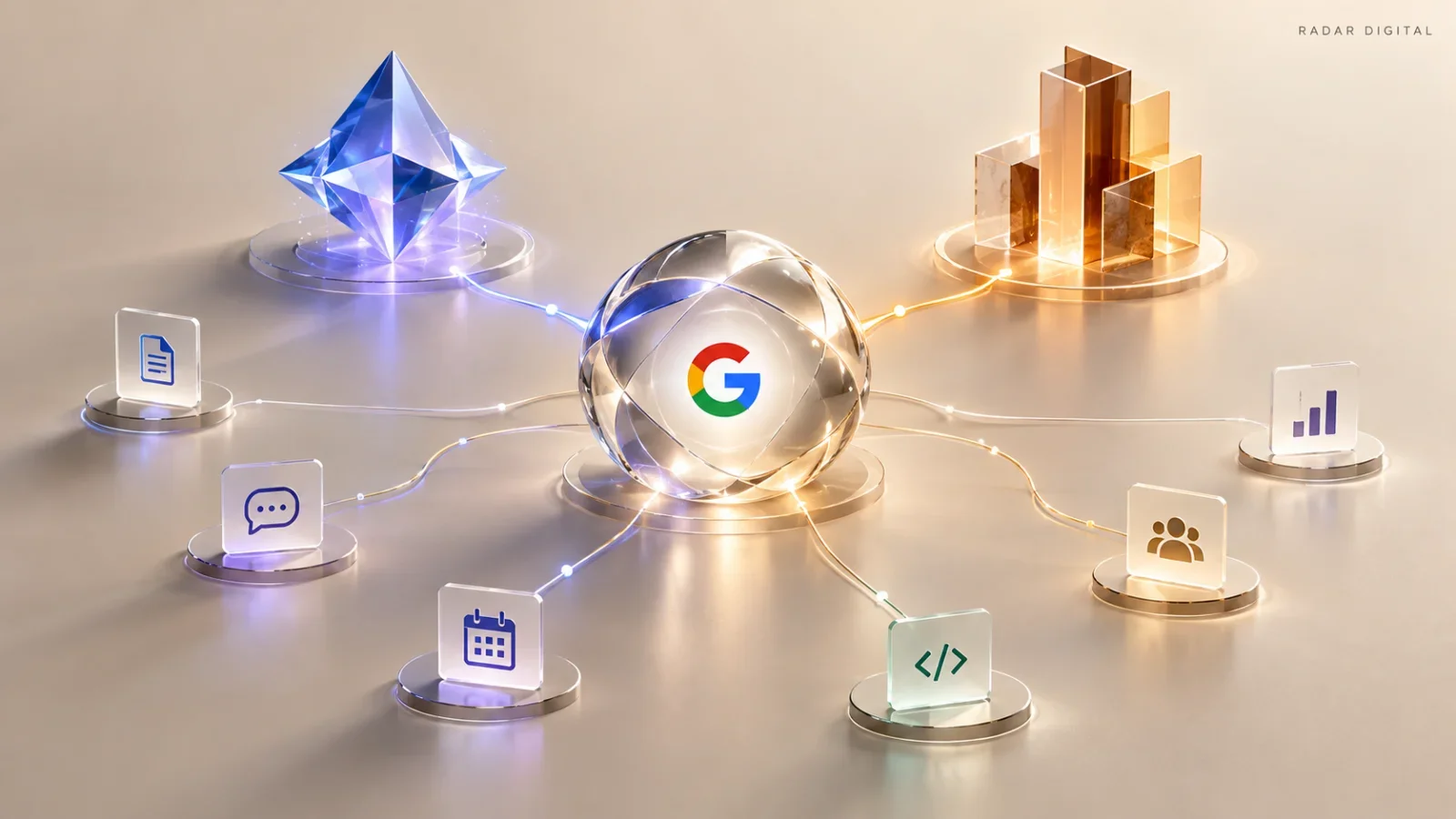
The solution runs in the cloud and maintains memory and context across devices. In addition to Google Workspace applications, such as Gmail, Docs, and Sheets, it can access tools such as Microsoft 365, Slack, Salesforce, and Jira, without requiring all operations to take place within Google's ecosystem.
Why Google's agent also uses competing models
The main differentiator lies in the separation between the agent and the artificial intelligence model responsible for executing each task.
According to Google Cloud, the system will be able to dynamically select Gemini or Claude models, considering the characteristics of the work. The company intends to expand this capability in the future to other proprietary and open-source models.
The choice also has a financial dimension. The mechanism called Smart Routing directs requests to the model considered most suitable in terms of performance and cost. Companies will be able to set spending limits per project, with automatic interruption of operations when the defined budget is reached.
Swiss sporting goods manufacturer On participated in the initial tests of this dynamic selection. Google, however, did not disclose a quantitative performance comparison between Gemini and Claude in the new agent.
Agents with their own identity and access to corporate systems
Another announced capability is the creation of specialized subagents, which can execute different steps of an activity in parallel or sequentially.
The system also allows creating permanent agents that work as members of a team. Each one will be able to receive its own corporate account, email address, calendar, and storage, in addition to participating in conversations and receiving tasks directly from employees.
Integrations include databases, enterprise platforms, and servers compatible with the Model Context Protocol (MCP). Access will be controlled by specific permissions, while the actions executed by the agents may be logged for auditing.
Despite the announcement, the new Gemini agent is still in a private testing phase for corporate clients, with no confirmed general availability. The expansion occurs as Google seeks to integrate autonomous agents into productivity tools and the systems used daily by companies.