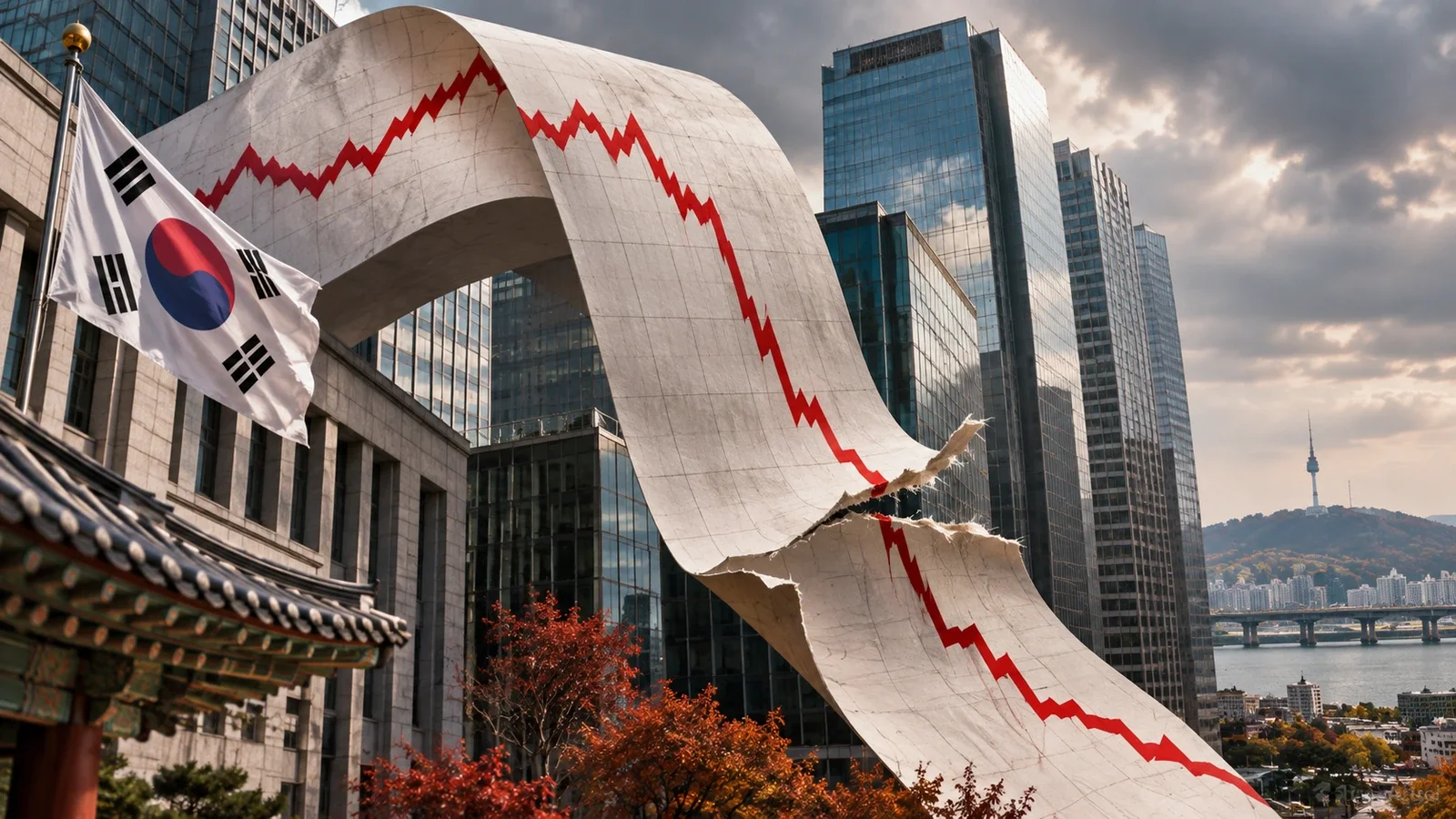
The KOSPI, South Korea's main stock market index, closed this Monday (23) at 4,708.54 points, a drop of 3.31%, after a session marked by the triggering of a mechanism to curb selling. As a result, the index has accumulated a loss of 48.34% since its June record, while the government prepares a stabilization fund of approximately US$ 8 billion to face the turmoil.
The index lost 161.42 points and reached a low of 4,586.80 during the session, when it was down about 5.8%. At 11:33, the Korea Exchange triggered the so-called sidecar, interrupting programmed sell orders for five minutes. It was the second consecutive activation of the mechanism, also used on Friday (20).
The sidecar is triggered when KOSPI 200 futures fall at least 5% for one minute. Unlike a general trading suspension, the measure temporarily interrupts automated sell orders to contain abrupt movements.
The scale of the correction goes beyond the daily drop. On June 22, the KOSPI had reached a record closing high of 9,114.55 points. Five months later, the index is practically halved, having given back all the gain that took it to its all-time high. Monday's close was the lowest since January 13.
Government eases buybacks, but fund has not yet been activated
The deterioration of the market led South Korean authorities to announce on Sunday (22) the preparation of a stabilization fund of 10.76 trillion won, approximately US$ 8 billion. The funds may be used to buy shares if market conditions justify an intervention.
The fund was set up in 2020, during the pandemic, but was never actually used. The last actual intervention through a similar mechanism occurred in 2008, during the global financial crisis.
Finance Minister Lee Hyoung-il said on Monday that the government is reviewing the procedures needed to allow the activation of the fund and may reassess its size according to market conditions. There was no announcement of an actual release of the funds by the close of trading.
A second measure has already received regulatory approval. The Financial Services Commission decided to ease the daily limits on share buybacks by the companies themselves between November 24, 2026 and February 23, 2027.
During that period, listed companies may submit daily orders to buy back their own shares up to the total authorized for direct acquisition, instead of obeying the limits normally applied per session. The change expands the companies' capacity to act, but does not require them to make purchases.
The authorities will also step up for three months oversight of illegal short selling and monitoring of leveraged operations, margin calls and forced liquidations. The stated goal is to prevent forced selling from amplifying instability.
Semiconductors magnify Korean exposure to the AI crisis
The pressure on the stock exchange follows the global correction of companies linked to artificial intelligence. On Friday (20), the Nasdaq had fallen 5.28% in New York amid concerns about the profitability of investments in AI infrastructure.
South Korea is especially exposed to this movement because of the weight of its semiconductor manufacturers. Samsung Electronics and SK hynix, important memory suppliers to the AI industry, together accounted for more than 46% of the KOSPI's market capitalization. On Monday, their shares fell 3.06% and 2.52%, respectively.
The pressure also hit smaller companies. The KOSDAQ fell 1.58% and closed the session at 635.45 points, its lowest close since December 2024.
Starting Tuesday (24), the easing of buybacks will be the first operational measure of the new package to take effect. Use of the stabilization fund will remain subject to the authorities' assessment of market developments.