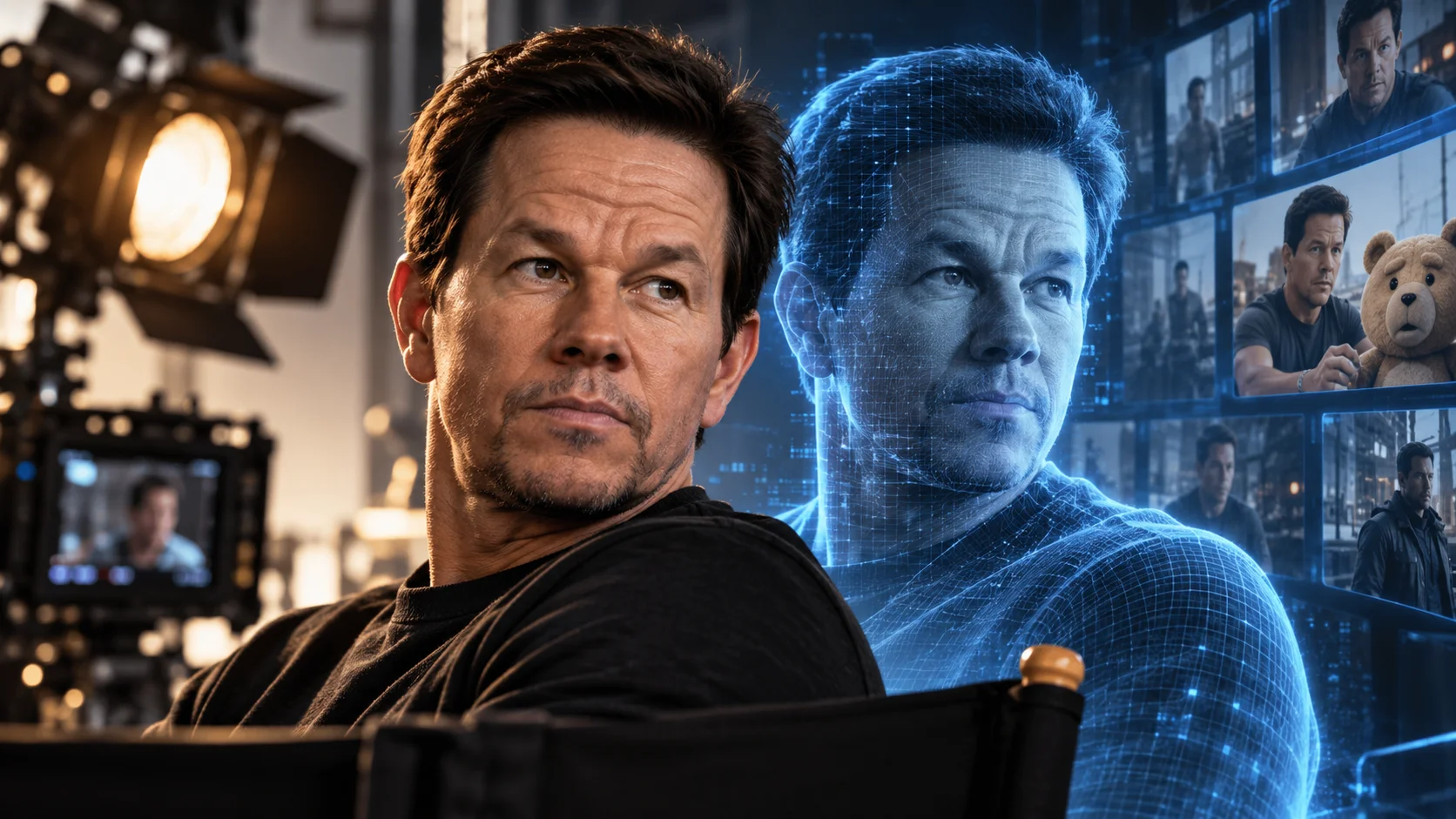
Mark Wahlberg is open to the possibility of continuing to appear in films even after his death, through a replica created with artificial intelligence. The actor said he would like to leave control of his digital image to his children or grandchildren, allowing future generations to decide in which productions his virtual version could participate.
The statement was made during TechCrunch Disrupt, in an interview published on October 16. Asked about CAA Vault, a service from the Creative Artists Agency that allows artists' faces, bodies, movements and voices to be digitally recorded, Wahlberg said he has not yet used the technology but is considering the possibility.
“It would be interesting if my children or grandchildren could control my appearance and my image and, who knows, put me in good films,” he said.
The actor also mentioned the series Ted: The Animated Series, in which he returns as the voice of John Bennett. With premiere set for December 17, 2026 on Peacock, the animated show will have eight episodes initially, with others planned for 2027.
Wahlberg said he would not oppose the production continuing for decades using an AI version of his character, including when he could no longer participate in person. For him, the existence of an interested audience could justify the digital preservation of these performances.
The possibility is still hypothetical. The actor did not announce the creation of a clone nor confirm any agreement for its future use.
Despite his openness to the technology, Wahlberg advocated limits on its use in cinema. He criticized the idea of generating entire scripts with tools such as ChatGPT and producing films without using real actors.
On the other hand, he considers it legitimate to use AI to enhance existing productions. One example is the biopic of baseball player Pete Rose, in which he will play the lead. The team is considering using artificial intelligence to improve the representation of stadiums, reducing the need for certain conventional visual effects.
For Wahlberg, the technology can expand the resources available to filmmakers, but it should not replace the human work of acting and storytelling.