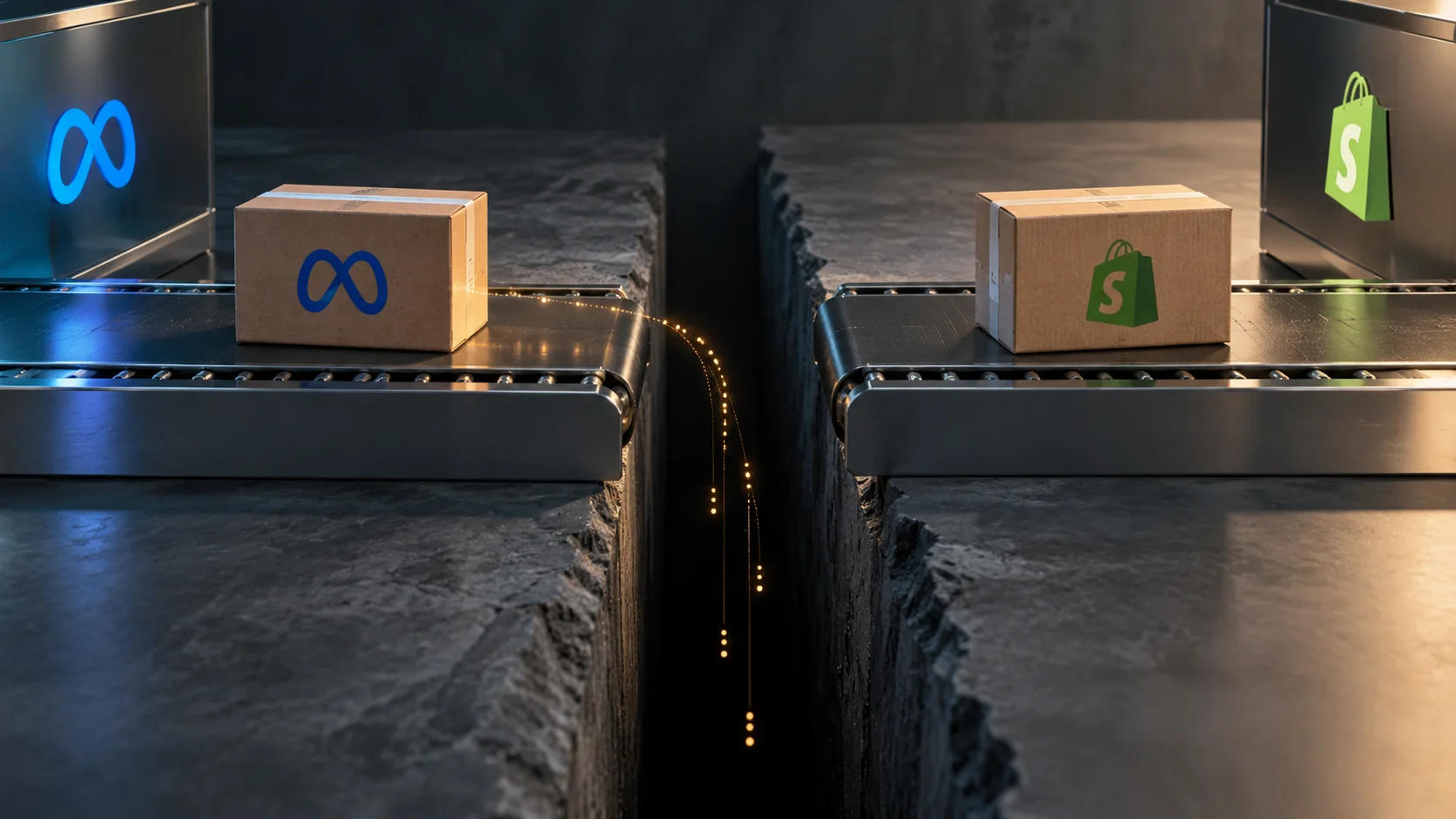
Meta's integration with Shopify's Agentic Storefronts allows customers to complete purchases directly on the company's surfaces, but creates a relevant difference in sales measurement: Google Analytics and client-side pixels are not triggered when the transaction ends outside the store.
Orders continue to be recorded normally in Shopify and are attributed to the Meta channel. The gap appears when teams rely on GA4, custom pixels or attribution tools based on events fired in the browser to measure revenue and media performance.
According to Shopify's documentation, Meta's direct checkout triggers events server-to-server for the start and completion of the purchase, but does not run standard or custom pixels on the client side, since the consumer does not go through the store's checkout.
In practice, a sale may appear normally in Shopify and not be recorded the same way in GA4 or in platforms that depend on client-side pixels. This can generate differences between dashboards and distort analyses of attributed revenue, conversion and return on media.
Direct checkout can be disabled
Meta began integrating Shopify's Agentic Storefronts on September 8, 2026, with products shared through the Shopify Catalog. For qualifying stores, direct checkout may allow customers to complete certain purchases without leaving Meta's surface.
Shopify allows disabling this modality and keeping only product discovery. In this scenario, the buyer is sent to the store to finalize the transaction, allowing traditional measurement tools to track the checkout.
The change highlights a growing challenge in commerce intermediated by AI agents: the sale may exist in the transactional system without appearing fully in the traditional analytics layer. For merchants who rely on GA4 or their own pixels, Shopify data takes on a bigger role in reconciling these conversions.