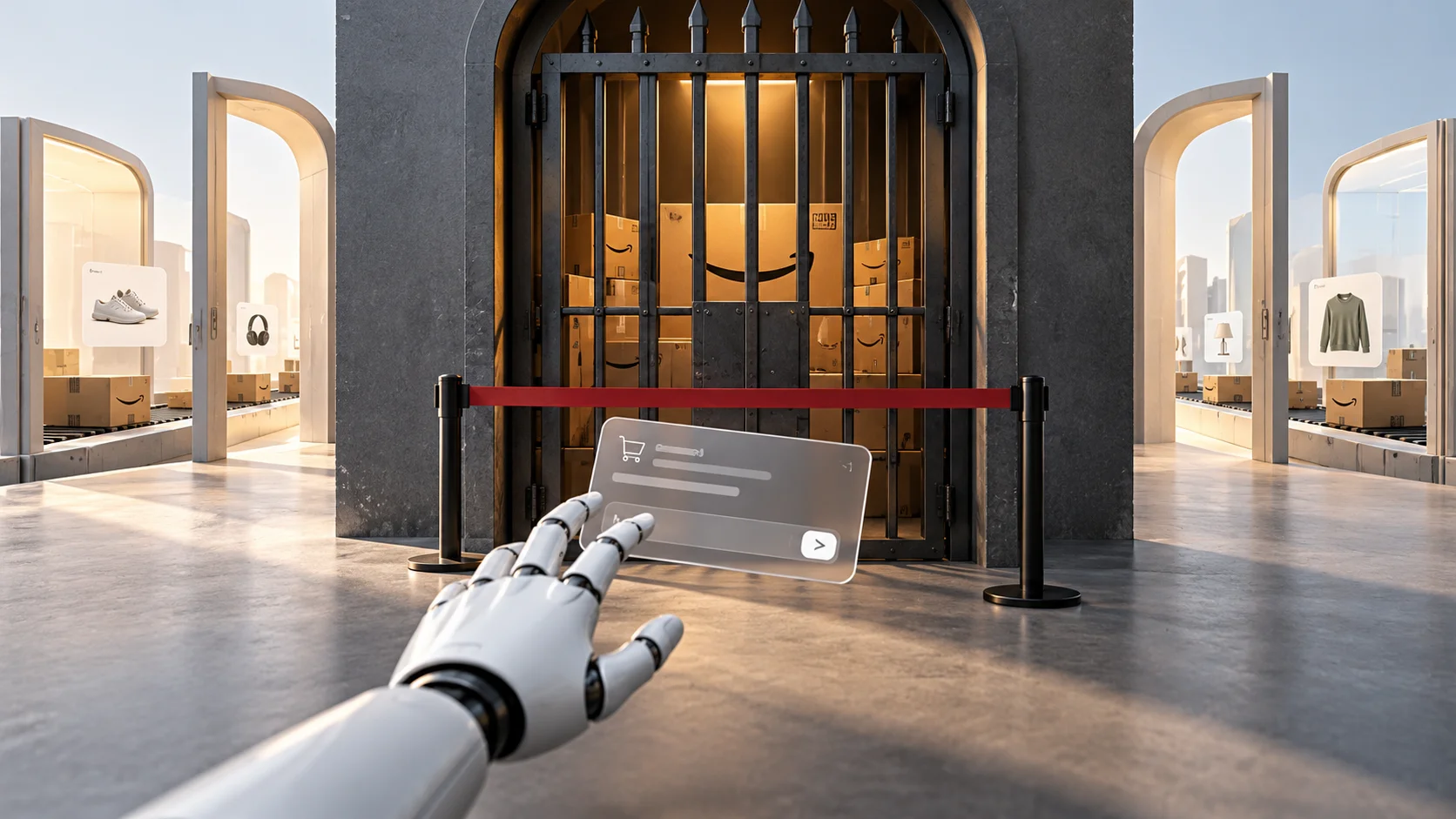
The next ecommerce dispute may happen even before the consumer enters an online store. Amazon, Walmart, Best Buy, Gap and other major retailers are adopting different strategies for AI agents capable of researching products and buying on behalf of users, putting control over data, payments and the relationship with the customer at stake.
According to the Wall Street Journal, Walmart, Gap and Best Buy are among the companies that have been opening their catalogs or preparing integrations with external agents, while Amazon restricts these tools' access to its platform.
The difference does not mean that Amazon is rejecting AI-mediated commerce. The company develops its own artificial intelligence shopping experiences and seeks to keep that layer within its ecosystem.
The dispute is over control of the purchase
The arrival of Muse, Meta's personal agent, made this tension more visible. The tool can browse the web, fill out forms and request approval before making purchases. Meta also announced commercial integrations with Walmart, Best Buy, Gap, Sephora, Ulta and Wayfair, among other retailers.
Gap is preparing its infrastructure for shopping in conversational environments, while Best Buy said customers will be able to find products and complete purchases inside ChatGPT. Walmart also already connects product discovery, consumer account and payments to AI experiences.
The move changes a central premise of ecommerce. For years, retailers invested to bring consumers to their own websites and apps. With AI agents, discovery and even checkout can happen in interfaces controlled by other companies.
This also changes the role of catalogs. Price, inventory, reviews and delivery terms become data that needs to be understood by systems capable of deciding which products to show or recommend.
Amazon protects its own entry point
Amazon's position gains weight because the company controls one of the largest product discovery surfaces on the internet. By restricting external agents and developing its own tools, the company tries to preserve control over a critical stage of the shopping journey.
The apparent contradiction reveals the central point of the dispute. The debate is not about accepting or rejecting AI agents, but about who controls the interface that decides what the consumer sees and buys.
If these systems become a relevant entry point for online commerce, competitive advantage may depend less on the retailer's website or app alone and more on who can get their products found and chosen by machines even before the visit to the online store.