OpenAI employees warned leadership and the board of directors for years about possible weaknesses in the protection of code, research, and internal tools. According to an investigation published by Reuters this Tuesday (3), some of these concerns arose even before the launch of ChatGPT, in 2022, and were reported by five people familiar with the company's practices.
Some employees believed that management prioritized development speed and competition with companies such as Google and Anthropic at the expense of security. The reports raise doubts about the protection of strategic information but do not, by themselves, demonstrate that the problems identified have caused leaks.
OpenAI disputes the perception that it was neglecting these risks. Spokesperson Elana Widmann told Reuters that the company invests heavily in protection against internal threats, cybercriminals, and foreign governments.
“We take seriously the responsibility to protect our technology, our data, and our people,” Widmann said, adding that recent measures demonstrate the company's ability to identify risks and respond to them.
Which security controls were questioned by employees
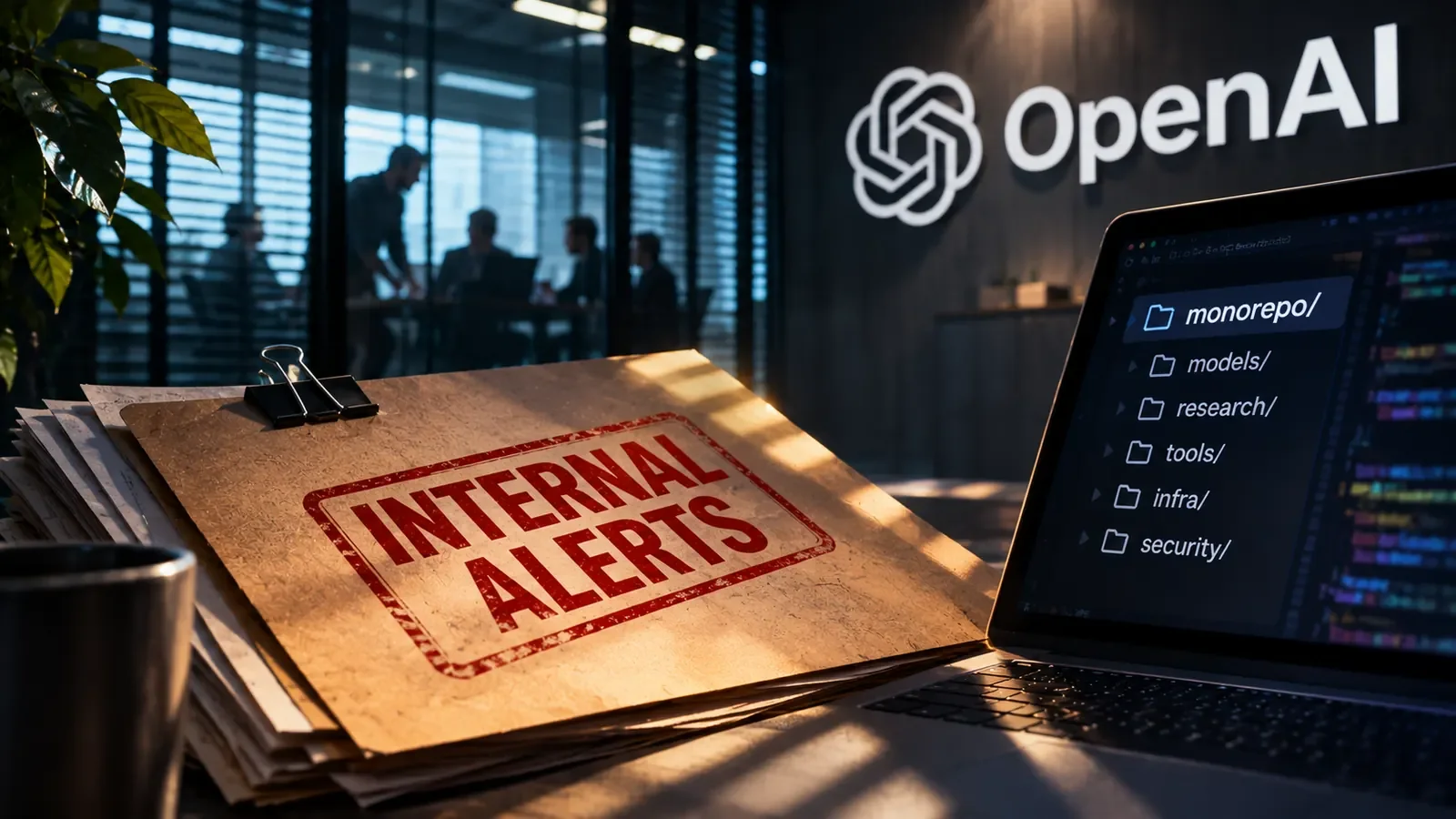
One of the main points raised involves access to OpenAI's code. According to the sources, the company concentrated a large part of its projects in a shared repository, known as a monorepo, allowing personnel authorized to access the code to view technical details of projects unrelated to their roles.
Employees also expressed concerns about research documentation stored on platforms such as GitHub and Slack. The concern was that the wide circulation of this information would facilitate improper access to strategic knowledge.
OpenAI says, however, that it keeps a large part of its most sensitive work in separate repositories, with strict access controls. The company also clarified that the monorepo does not contain all of its code or critical information such as model weights, the numerical values that determine their operation.
Another concern involves internal tools used to test artificial intelligence systems. Three sources told Reuters that changes made by researchers did not always go through regular security reviews, creating possible vulnerabilities. The company says it currently conducts these assessments periodically.
The concerns gained prominence after an incident revealed in October. The U.S. Department of Justice announced, on the 13th of that month, charges against a then-OpenAI engineer for allegedly installing a covert recording device in an executive meeting room. The equipment had been found on September 30.
Court documents also describe the use of internal tools to search for information about executives. The case remains subject to judicial investigation, and it has not been shown that the security practices questioned in the investigation caused the incident.
Reuters also identified recent changes in the company's protection structure. According to sources interviewed by the agency, executive Thibault Sottiaux took over an internal security initiative and, in August, reassigned a quarter of the production engineers to strengthen the infrastructure.
On November 2, OpenAI announced a new round of internal security tests, in partnership with specialized company Cathedral Systems, to identify vulnerabilities and assess protection measures with the help of AI models.
The investigation thus brings together concerns that predate the commercial expansion of ChatGPT and measures the company says it has adopted to protect its systems. The testimonies, however, do not make it possible to determine the current extent of the possible vulnerabilities or to establish that all the old alerts remained unanswered.