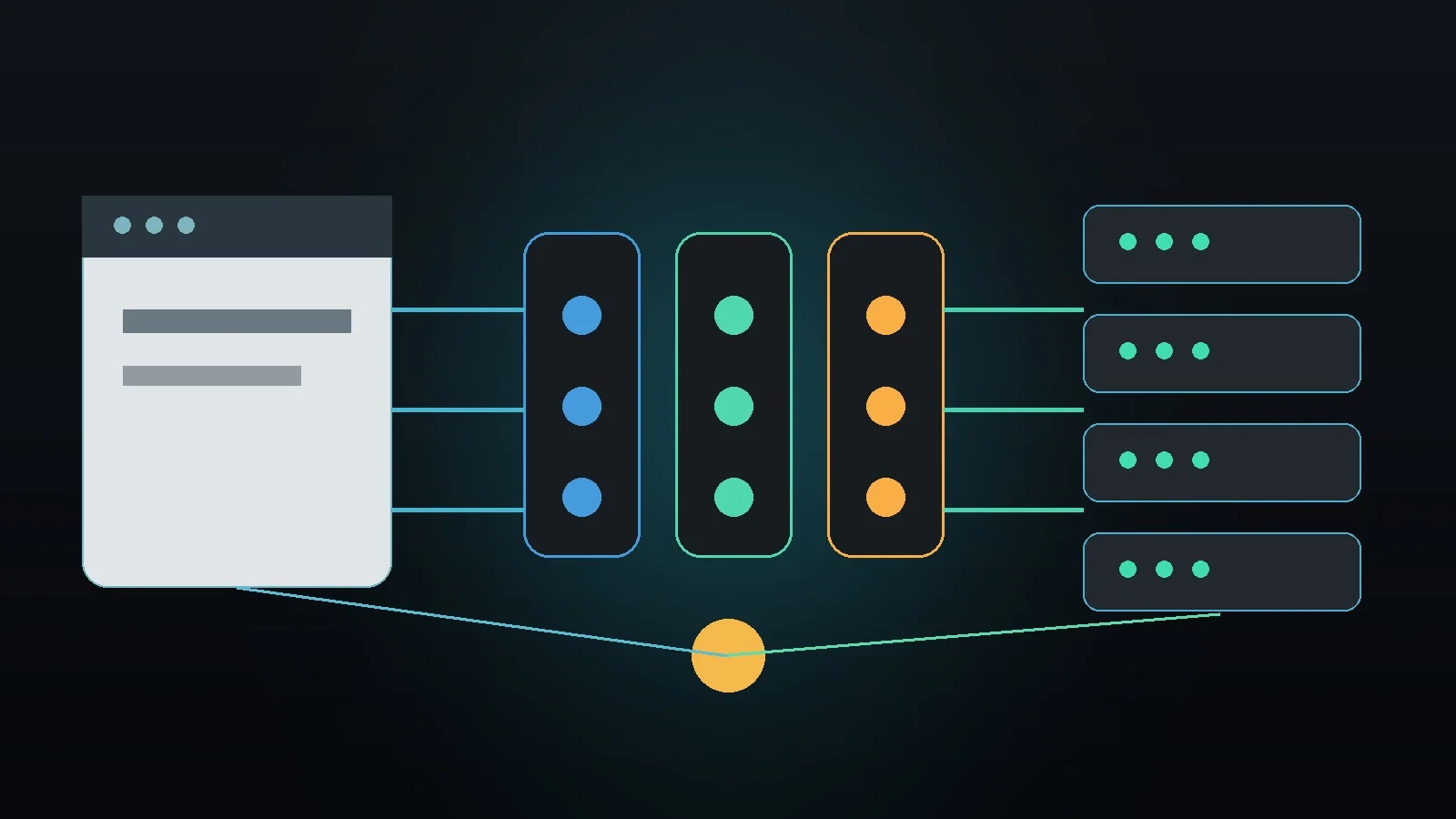
The pixel is now one signal source, not the architecture
Browser pixels remain useful.
They capture page context, interaction timing, campaign identifiers and behavioral events close to the user experience.
But a professional conversion system should no longer assume the browser is the only place where business events exist.
Purchases are finalized in commerce backends. Leads change status in CRMs. Subscriptions renew in billing systems. Refunds appear after the original order. Sales teams qualify opportunities days after a form submission.
Those systems often know more about the economic outcome than the page tag does.
The job of modern conversion architecture is therefore to connect browser context with server truth without double-counting, violating consent requirements or sending inconsistent values.
Start with the canonical business event
The most important design choice is the canonical event model.
Do not begin with "What does Meta call this event?" or "Which Google conversion action should we create?"
Begin with the business event.
For an ecommerce purchase, define:
- order ID;
- event timestamp;
- currency;
- realized order value;
- product lines;
- customer status;
- refund state;
- consent state;
- source identifiers where permitted.
For a lead, define:
- lead ID;
- submission time;
- lead type;
- qualification status;
- CRM stage;
- opportunity value;
- close state;
- revenue when realized.
That canonical event can then be translated into the format required by each destination.
This creates consistency.
If every platform integration independently invents its own definition of a "purchase," reconciliation becomes impossible.
Browser and server events should complement each other
A hybrid implementation usually has two paths.
Browser path: fast, contextual, close to the click or page action.
Server path: durable, connected to backend outcomes and less dependent on the browser completing the full journey.
The goal is not to make the server replace every browser event.
The goal is to use the strongest source for each part of the event.
A browser may capture click identifiers and consented first-party context. The backend can confirm the order and authoritative value. The CRM can later enrich the same customer journey with qualification or revenue.
A clean architecture preserves the relationship between those states.
Deduplication is a data contract
Sending the same conversion through browser and server paths creates an obvious risk: counting one business event twice.
The solution is not to turn one path off.
It is to make both paths carry a shared event identity.
For Meta, the Conversions API deduplication model uses a shared event identity between browser and server versions of the same event. Current implementation references describe matching the same event name and event identifier across both paths.
For Google ecommerce conversions, transaction IDs perform an equivalent business role by giving the conversion a stable identity that can be reconciled.
The operational rule is simple:
Generate the identity once, as close as possible to the canonical business event, and propagate it to every destination that needs it.
Do not let the browser invent one ID and the server invent another.
For purchases, the order ID is often the most natural stable key.
For leads, use the CRM or form submission identifier.
Before publishing implementation-specific parameter names or timing assumptions, verify the current platform documentation because API contracts can change.
Value must come from the business system
Server-side tracking becomes especially useful when the platform should optimize toward a deeper outcome.
A browser tag may know that a form was submitted.
The CRM may know, three days later, that the lead was qualified.
The sales system may know, twenty days later, that the lead became a $15,000 contract.
Those are different signals.
Google's Enhanced Conversions for leads is designed to connect first-party lead information with imported offline outcomes. Google changed the technical path in 2026: beginning June 15, offline conversion imports and Enhanced Conversions for leads uploads moved toward the Data Manager API rather than the legacy Google Ads API path. Google also unified Enhanced Conversions settings for web and leads beginning in April 2026.
That change is a reminder that conversion infrastructure has lifecycle requirements.
APIs change. Authentication changes. Data contracts evolve.
Tracking should therefore have an owner and a maintenance process.
Consent belongs upstream
Consent should not be bolted onto the final platform request.
It should be part of the event model.
The event layer should know:
- what consent state applied when the event occurred;
- what data categories are permitted;
- whether identifiers may be used for advertising activation;
- whether the event may be stored for analytics;
- how regional policy changes affect routing.
This is important because server-side transport does not remove privacy obligations.
Moving an event away from the browser does not create permission that did not exist.
A server is a transport layer, not a consent loophole.
Normalize before activation
Different systems frequently describe the same transaction differently.
The ecommerce platform may use cents. The CRM may use decimal currency. The warehouse may store timestamps in UTC. A tag manager may send local browser time. Product IDs may differ between site, feed and ERP.
The event layer should normalize those differences before sending data outward.
Create standards for:
- timestamp format;
- currency;
- order ID;
- product ID;
- customer ID;
- event names;
- value semantics;
- refund handling;
- source system;
- consent flags.
This reduces destination-specific debugging.
If the canonical event is wrong, fix it once.
Build observability into the pipeline
A conversion pipeline needs monitoring.
At minimum, track:
- browser event count;
- server event count;
- deduplication rate;
- successful destination delivery;
- rejected events;
- missing required identifiers;
- latency;
- order-value discrepancies;
- CRM stage import failures;
- platform-to-source-of-truth variance.
A dashboard that says "CAPI is connected" is not enough.
The team should know whether yesterday's 1,042 orders produced 1,042 canonical purchase events, whether the destinations received them and whether reporting remains within expected variance.
This is conversion reliability engineering.
Latency determines how signals can be used
Not every outcome arrives quickly enough for the same optimization job.
Purchase confirmation is often near real time.
Lead qualification can take days.
Closed revenue can take weeks.
The architecture should therefore support multiple layers of signal.
For example:
- immediate form submission for fast feedback;
- qualified lead for quality control;
- closed-won value for economic calibration.
The media team can then choose which event is primary for bidding and which is used for analysis or value adjustment.
There is no universal answer.
The right balance depends on conversion volume, sales-cycle length and how quickly the platform needs feedback to learn.
Use server-side systems to improve value, not inflate attribution
A dangerous implementation mindset is "recover every lost conversion."
That can turn server-side tracking into a reporting-inflation project.
The goal should be signal quality.
The conversion pipeline should make platform optimization more representative of real business outcomes while preserving the ability to reconcile to finance.
If Meta reports more purchases than the order database because deduplication is broken, the implementation failed.
If Google optimizes toward every form fill while finance only values qualified leads, the implementation is incomplete.
If server-side events bypass consent or use inconsistent values, the implementation is unsafe.
Success is not a larger conversion count.
Success is a more trustworthy relationship between media exposure and business outcomes.
Assign operational ownership
A reliable stack typically crosses several teams.
Marketing owns the optimization requirement.
Analytics owns event definitions and QA.
Engineering owns backend integration and reliability.
Legal or privacy functions own policy interpretation.
Finance owns realized revenue and margin definitions.
Someone still needs to own the system end to end.
Without that role, each component can be technically "working" while the overall signal remains wrong.
Treat conversion tracking as production infrastructure
Paid media bidding systems make financial decisions from the conversion data they receive.
That elevates tracking above a marketing tag.
It is production infrastructure.
The strongest teams design it accordingly: canonical events, versioned definitions, monitored pipelines, deduplication, consent, source-of-truth reconciliation and documented failure handling.
The pixel still has a role.
It just no longer gets to define reality alone.