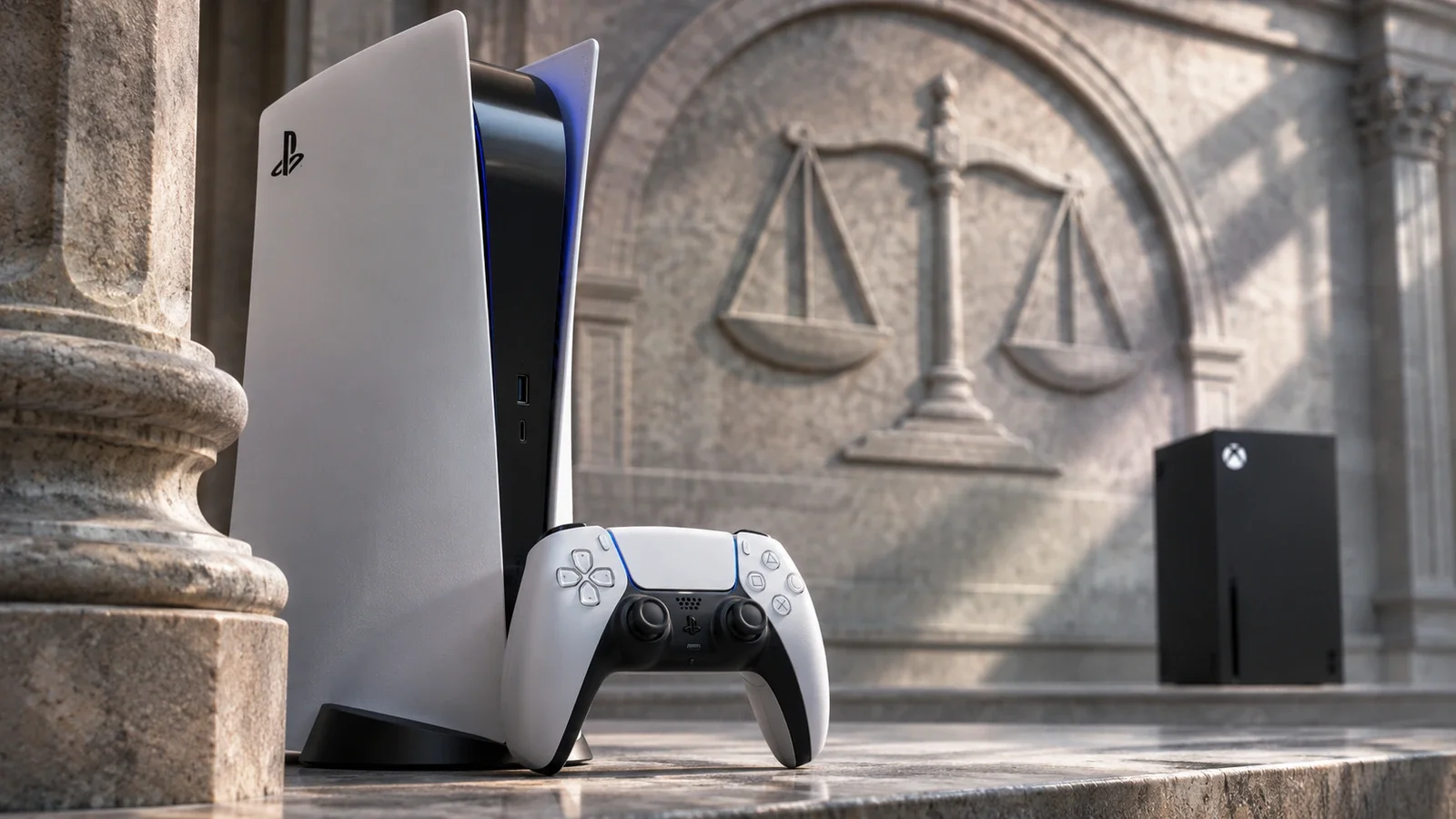
Sony won a court victory in the United Kingdom this Tuesday (17th), after the Competition Appeal Tribunal fully rejected a class action that accused the company of restricting competition and charging excessive prices on the PlayStation Store. The lawsuit sought compensation of approximately £1.97 billion, including interest, on behalf of 12.2 million consumers.
The action, filed in August 2022, alleged that Sony used its control over the PlayStation ecosystem to prevent competing distributors from selling digital games and additional content directly to console users.
The claimant argued that, if other stores could operate on the platform, consumers would pay approximately 20% less for digital content. The court found that the evidence presented was not sufficient to demonstrate that reduction.
The judges also concluded that it was not proven that the commercial margin of approximately 30% normally applied by Sony in the sale of digital games constituted an excessive or unfair charge.
Court analyzed competition between console ecosystems
One of the central points of the trial was the definition of the market in which Sony operates. Instead of analyzing digital game distribution for PlayStation in isolation, the court considered competition between integrated systems, in which the sale of consoles is economically linked to the sale of games and services.
That interpretation took into account Sony's business model, under which it sells consoles at low or negative margins and recovers part of its investments through purchases subsequently made by players.
The decision also mentions the company's own research indicating possible commercial harm if PlayStation game prices ceased to be competitive with those charged on Xbox.
For the court, the availability of physical games, the use of multiple platforms and the possibility of choosing another console represent factors capable of limiting the prices charged by Sony, although these alternatives have different degrees of availability.
With that interpretation, the judges concluded that Sony's dominant position in the relevant market was not demonstrated. Even considering the market definition proposed by the claimant, the court found that the allegations of anticompetitive abuse were not proven.
Alex Neill, the consumers' representative, expressed disappointment with the result and said he was reviewing the decision and the possibility of appealing.
The court will hold a new hearing in the week of December 14, 2026 to examine the procedural costs and any requests for permission to appeal. To date, no compensation has been awarded to the consumers represented.