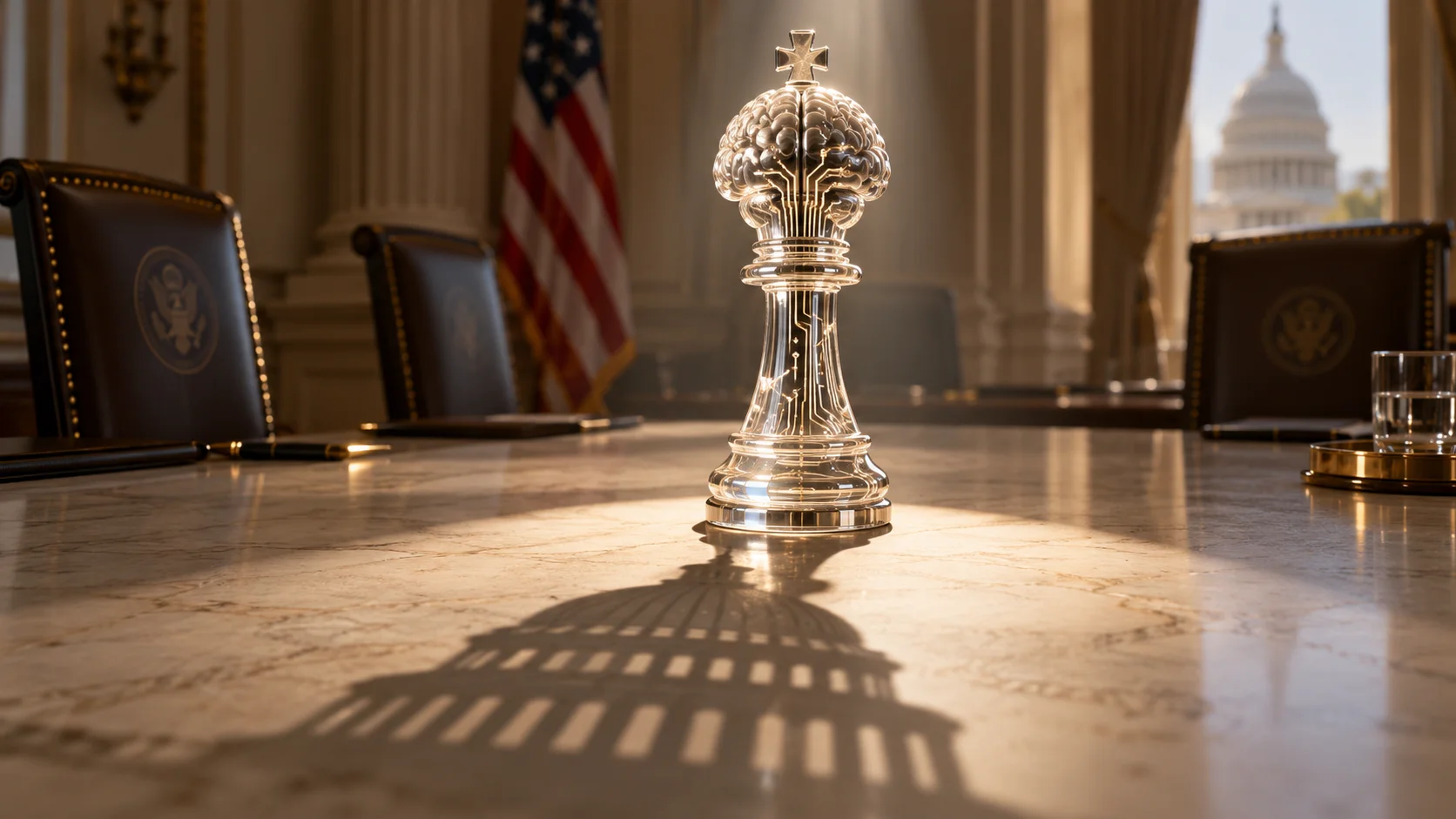
The new artificial intelligence task force created by the White House will have 120 days to assess the technology's risks and recommend what the federal government's role should be. The group will be led by Jay Clayton, Director of National Intelligence of the United States.
The so-called Super Intelligence Force, announced on Sunday (4), should coordinate different federal agencies and assess whether current mechanisms are sufficient to handle incidents involving AI. The mandate includes reviewing systems for reporting violations, cyberattacks and other risks.
In addition to Clayton, the leadership includes Andrew Ferguson, chairman of the Federal Trade Commission, Emil Michael, chief technology officer of the Pentagon, and Scott Kupor, director of the Office of Personnel Management. The group will report directly to the White House.
Report may redefine federal action
The main objective will be to determine how far Washington's action on advanced AI systems should go. The recommendations may alter the distribution of responsibilities among agencies and the mechanisms used by the government to monitor risks and respond to incidents.
The initiative comes amid the Trump administration's strategy of limiting regulatory barriers that could reduce American competitiveness vis-à-vis China. At the same time, the presence of officials linked to intelligence, defense and regulation places national security, cybersecurity and critical infrastructure at the center of the debate.
The task force will also be expected to consult companies, consumers, civil society organizations and critical infrastructure operators.
The report expected in the next four months may indicate whether American policy will continue to be supported mainly by voluntary industry commitments or will begin to incorporate new federal oversight mechanisms.