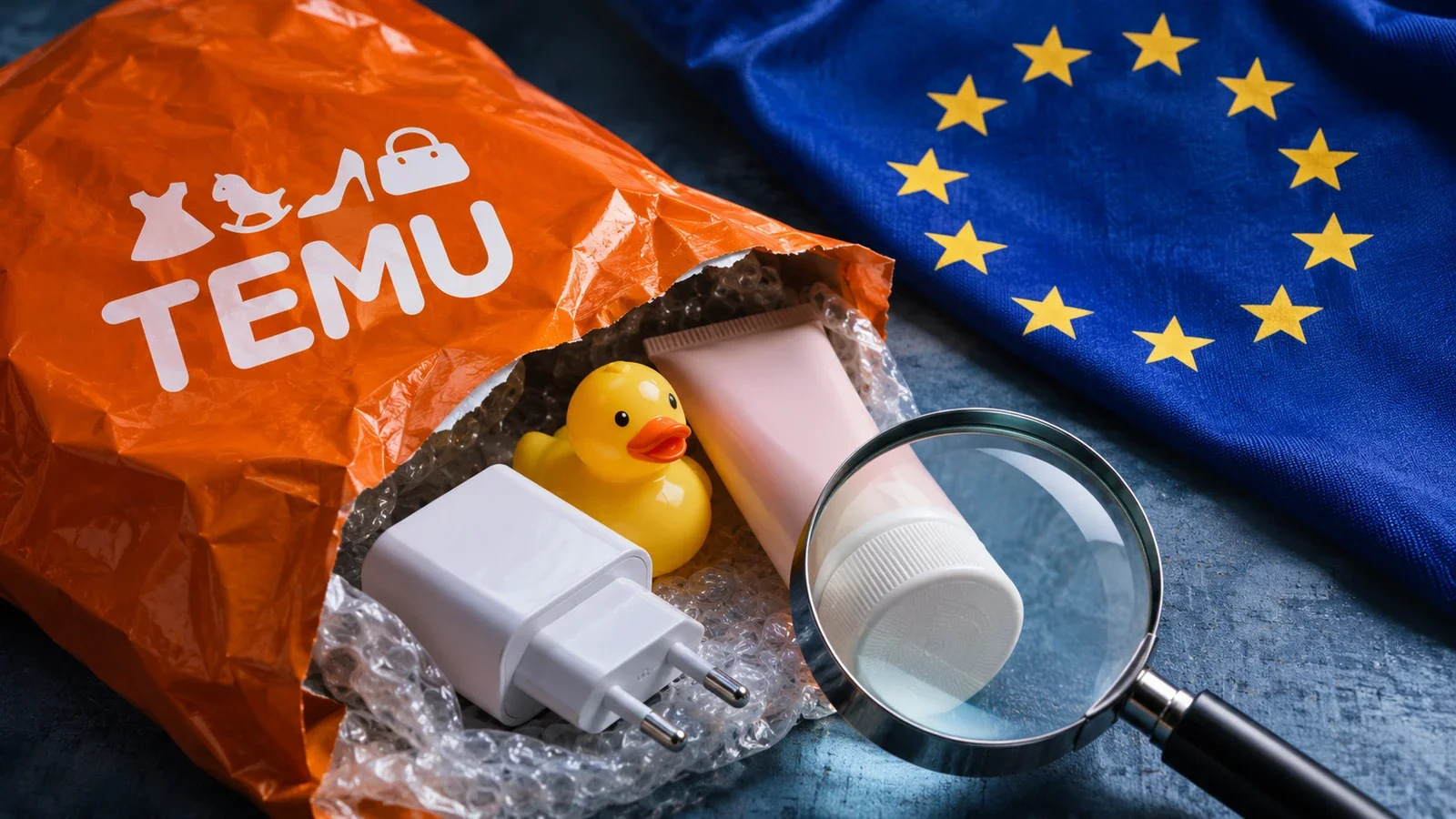
The European Commission accused Temu this Tuesday (17) of failing to adopt sufficiently effective measures to combat the sale of illegal products on its marketplace. The preliminary findings point to violations of the Digital Services Act (DSA) and expose the Chinese platform to the risk of a new fine of up to 6% of its global annual revenue.
The investigation identified deficiencies in three areas: verification of product compliance, content moderation systems and the penalties applied to merchants that violate the platform's rules.
According to the Commission, Temu requires safety test reports for a very small share of the products sold and, even when it requests those documents, it often fails to verify them. Categories considered high-risk, such as toys, electronics and cosmetics, also are not prioritized in physical inspections.
Regulators further identified that moderation focuses mainly on ad information and compliance with the marketplace's internal rules, rather than verifying product safety. The number of human moderators also has not kept pace with the growth in the number of ads.
Another problem lies in how the platform punishes violators. Sanctions fall on individual stores, and not necessarily on the merchants responsible for them. In practice, a seller can continue selling products through other stores even after having one of them suspended.
“Buying online should not mean running the risk of purchasing illegal and unsafe products,” said Henna Virkkunen, executive vice-president of the European Commission responsible for tech sovereignty, security and democracy.
In a statement to Reuters, a Temu spokesperson disputed the preliminary findings, defended the company's efforts to reduce the circulation of illegal products and said the company will respond to the Commission.
Investigation follows €200 million fine imposed in May
On May 28, 2026, the European Commission fined Temu €200 million for failing to comply with Article 34 of the DSA, which sets out obligations related to the identification and assessment of systemic risks.
At the time, the investigation found that the company had underestimated consumers' exposure to illegal products. Tests carried out during the inquiry revealed safety problems in chargers and children's toys.
On October 26, the Commission approved an action plan presented by Temu to remedy these deficiencies, giving the company four months to implement the measures, which will subsequently be subject to an independent audit.
The new findings, however, concern Article 35 of the DSA, which requires the adoption of concrete and effective measures to reduce the identified risks. While the previous penalty dealt with failures in assessing those risks, the current proceeding questions the effectiveness of the mechanisms used to combat them.
Temu will be able to consult the investigation documents and submit its defense in writing. Any new fine will depend on confirmation of the preliminary findings by the European Commission.