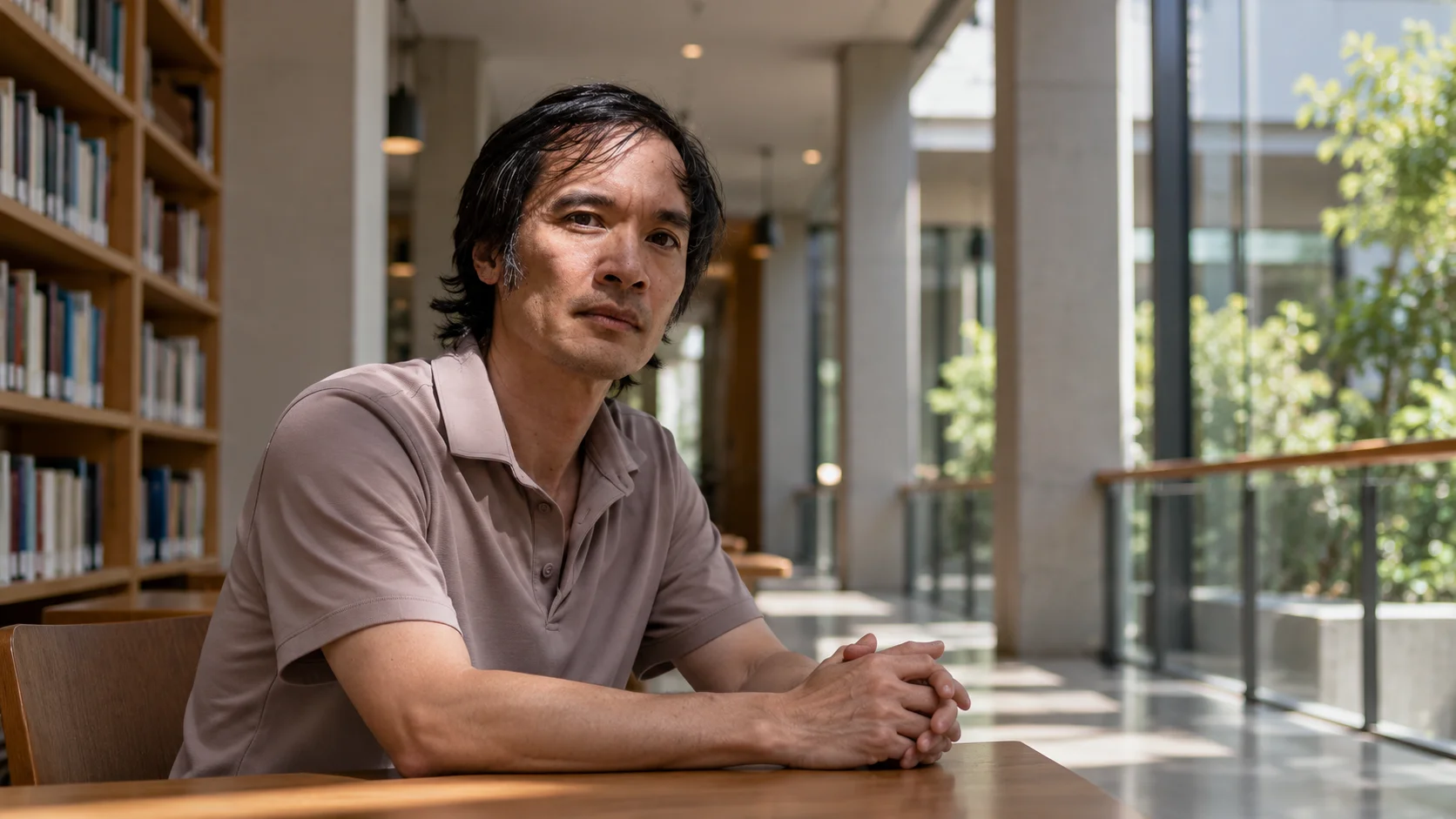
Artificial intelligence is accelerating the resolution of mathematical problems, but the number of generated proofs is beginning to surpass researchers' capacity to examine them, explain them and incorporate them into scientific knowledge. The warning comes from Terence Tao, winner of the Fields Medal and professor at the University of California, Los Angeles (UCLA), in an interview published by The New York Times on October 16.
For Tao, the problem is not only in verifying whether a proof is correct. A mathematical discovery also needs to be understood, discussed with other experts and related to previous results. A valid proof does not automatically become useful knowledge for the scientific community.
Traditionally, researchers dedicated years to solving problems and, during that process, developed methods, interpretations and connections that could guide later work. With AI systems capable of producing proofs on a large scale, these stages began to advance at different speeds.
The result is an accumulation of research that requires additional human work to become understandable. Tao especially questions situations in which companies present AI-generated results without providing researchers prepared to explain them, answer questions or participate in the necessary academic discussions.
The shift also threatens the trajectory of young mathematicians. Projects developed over years can lose their originality after similar results are published by AI systems, compromising opportunities for recognition and academic advancement. For early-career researchers, the impact can be particularly difficult to absorb.
Community begins to discuss new rules for publishing research
The concern is already prompting concrete proposals for change in scientific publishing.
On October 17, mathematician Shaoming Guo announced on Tao's blog an initiative to create an academic journal with criteria different from traditional ones. The proposal establishes the understanding of results above the priority of presenting a proof first.
Another requirement is the formal verification of proofs with Lean, a tool capable of checking the logical consistency of mathematical proofs. The combination seeks to meet two distinct needs: ensuring the rigor of results and encouraging explanations that allow their use by other researchers.
Tao himself advocated a broader reformulation of mathematical activity during a lecture titled Math 2.0, presented at the California Institute of Technology (Caltech) on October 9. His proposal is that AI tools contribute not only to solving problems but also to preserving the community's ability to develop and transmit knowledge.
Tao's position does not represent a rejection of artificial intelligence. He uses these tools in his own research and recognizes their potential to accelerate calculations, consult scientific literature and explore mathematical approaches.
The disagreement lies in what should be considered scientific progress. While the tools make the production of proofs increasingly faster, activities such as explaining methods, training new researchers and building theories continue to require attention.
For Tao, mathematics needs to adapt its recognition criteria to this new reality, preventing the number of solved problems from becoming more important than the understanding produced.