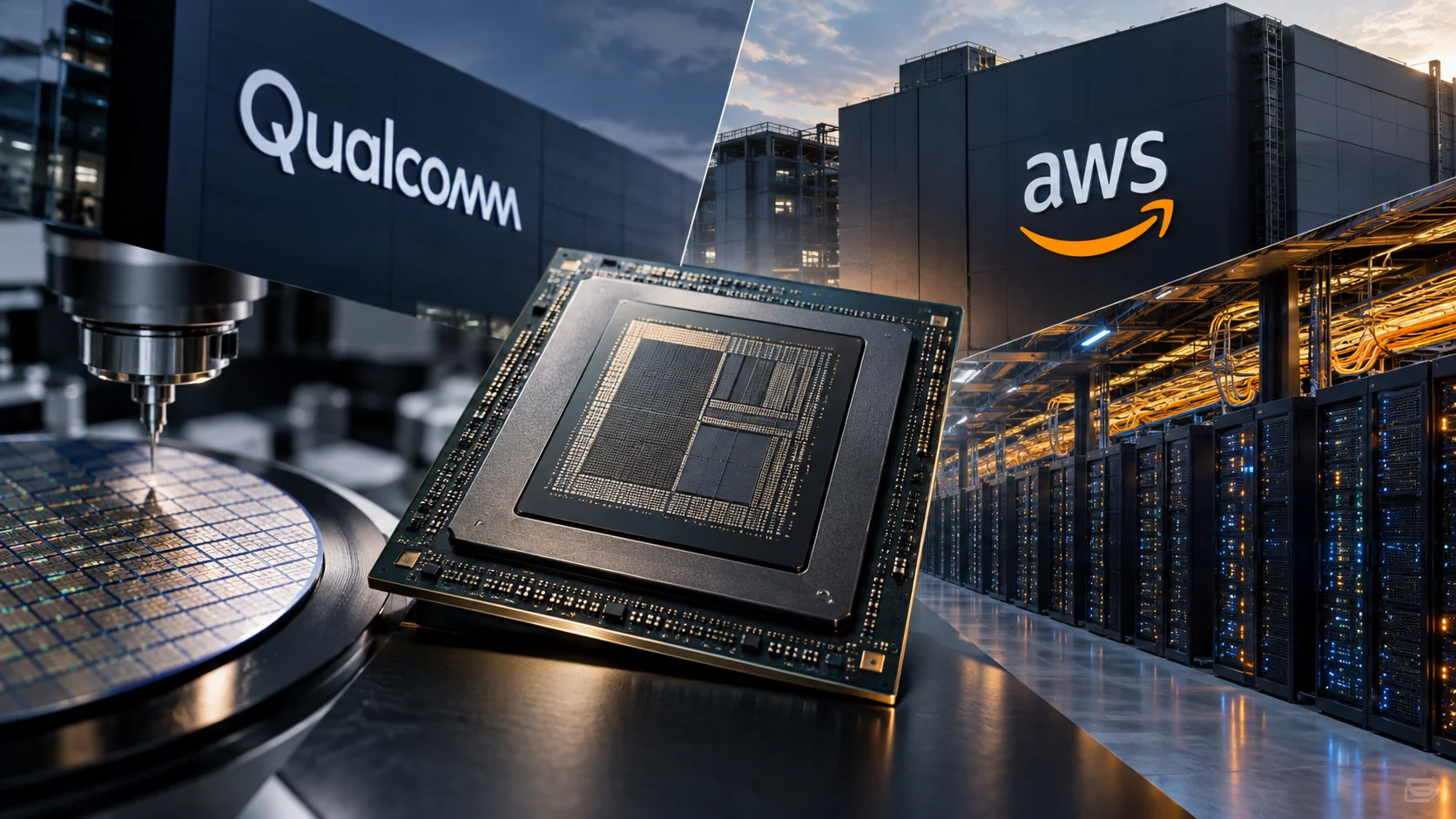
Qualcomm announced on Tuesday (8) a long-term partnership with Amazon to develop multiple generations of custom chips for AWS's artificial intelligence infrastructure, with a focus on inference and high-speed connectivity for data centers.
The collaboration expands Qualcomm's entry into the AI infrastructure market and brings the manufacturer closer to major cloud providers, which are seeking alternatives and complements to Nvidia's dominant processors. The companies did not disclose a timeline or specifications for the first chips resulting from the agreement.
In addition to inference processing — the stage in which already-trained models execute tasks and generate responses — Qualcomm and Amazon will work on optical connectivity solutions of up to 1.6 terabits per second (Tbps). The technology is aimed at transferring large volumes of data between equipment within AI infrastructures.
Agreement could involve up to US$ 60 billion in purchases
The financial scale of the partnership appears in a document presented by Qualcomm to the Securities and Exchange Commission (SEC). The manufacturer granted Amazon a warrant that allows the purchase of up to 25 million shares of Qualcomm at US$ 161.26 each, equivalent to about US$ 4 billion at the exercise price.
The right to acquire the shares will be released in stages tied to contracts, orders, and purchases actually made by Amazon. According to the document, these milestones could reach US$ 60 billion in payments to Qualcomm over the term of the agreement. The amount, therefore, represents the projected ceiling for the transactions associated with the mechanism, not an already guaranteed purchase.
Of the total, 3.75 million shares have already become eligible based on the initial purchase commitments. The warrant expires in September 2036. Qualcomm shares rose more than 7% in trading this Tuesday after the announcement of the partnership.
The agreement also provides for Qualcomm to expand its use of AWS's AI infrastructure, including Amazon Bedrock, in electronic design automation processes used in the development of semiconductors. The company plans to use these resources to reduce the time needed between the design stages of new chips.
The partnership reinforces Qualcomm's attempt to reduce its dependence on the smartphone market. In June, the company introduced a new line of products for data centers and announced agreements with major technology companies, including Meta and Microsoft. The manufacturer expects revenue from data center chips to reach US$ 15 billion in 2029.