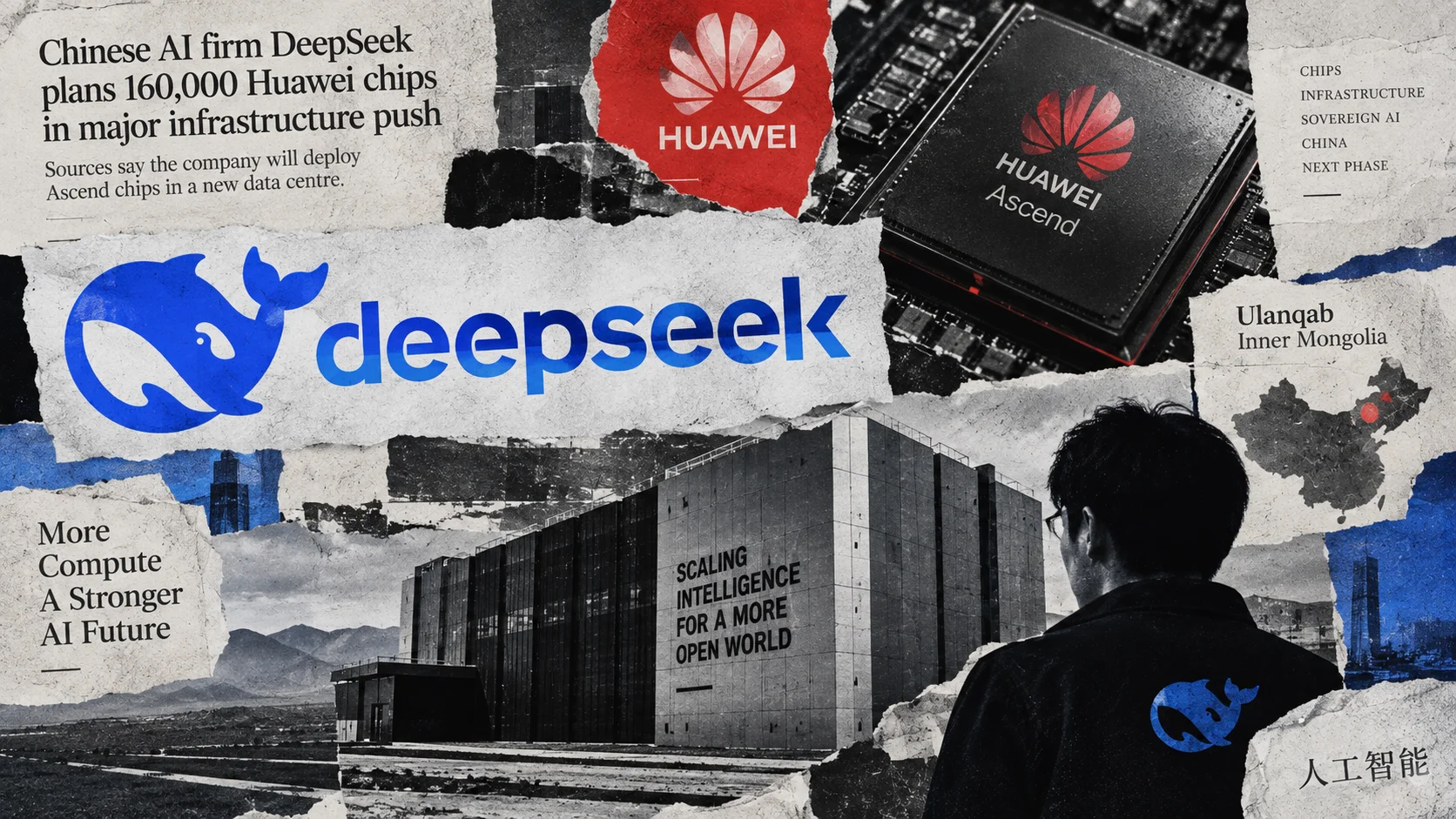
DeepSeek plans to install at least 160,000 Huawei AI chips in a new data center, expanding its computing capacity and reinforcing its bet on hardware developed in China.
The information was published by Bloomberg on September 4, based on people familiar with the project. According to the report, the company intends to use Ascend 950DT accelerators, one of Huawei's most advanced generations, initially for inference workloads.
DeepSeek and Huawei did not publicly comment on the plan.
DeepSeek expands its own infrastructure
The new data center is being developed in Ulanqab, Inner Mongolia, a region that has become an important hub for computing infrastructure.
The expansion had already shown signs earlier. In April, DeepSeek posted job openings related to data center operations in the region, including roles linked to infrastructure delivery and technical operations.
The move indicates an attempt by the company to build its own capacity on a larger scale as demand for its AI models and services grows.
Huawei gains ground against Nvidia
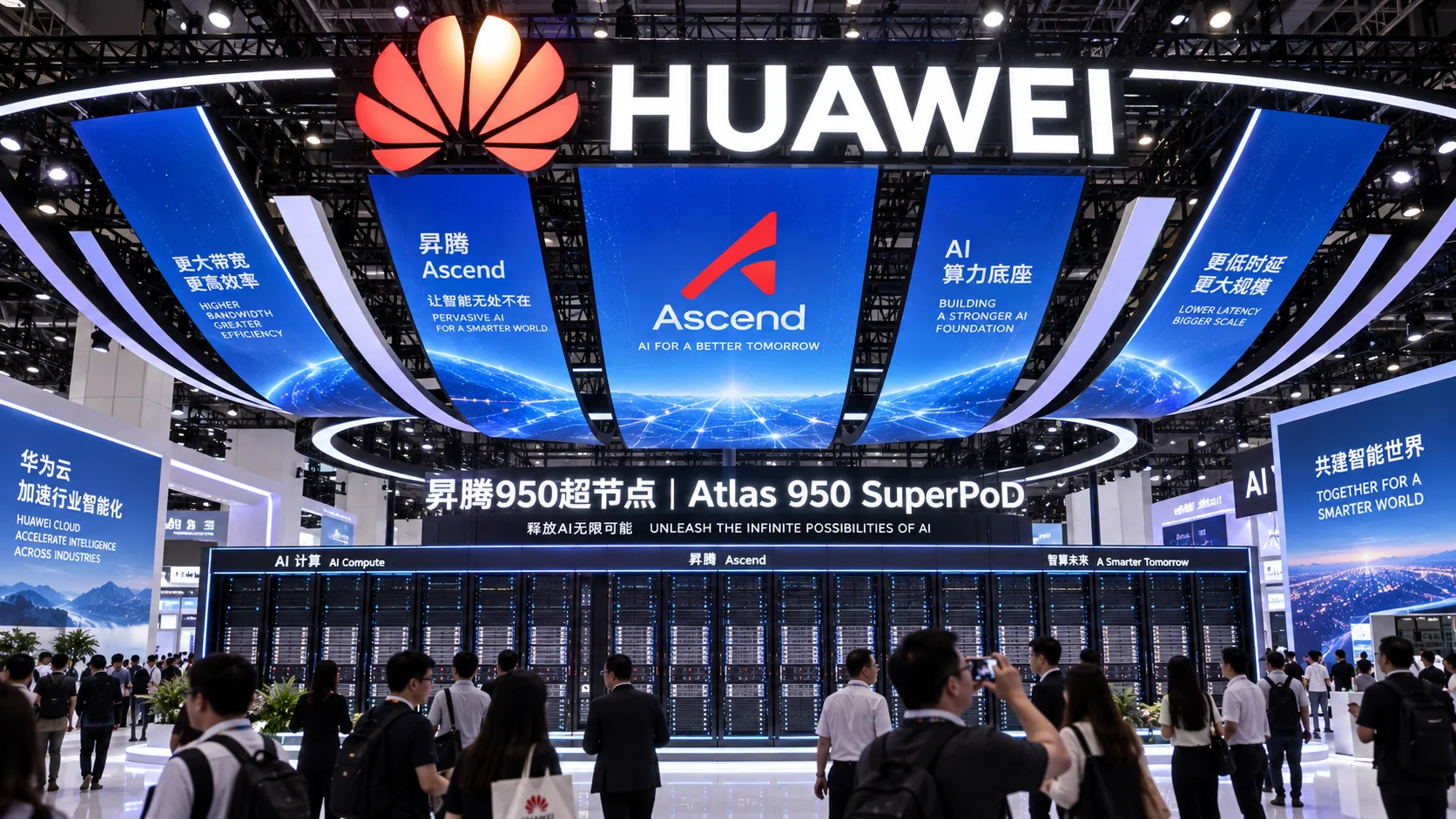
The Ascend 950DT is part of Huawei's new generation of accelerators for advanced AI workloads. According to specifications released by the company, the chip will have 144 GB of memory and bandwidth of up to 4 TB per second, with commercial availability expected for the 4th quarter of 2026.
According to Bloomberg, DeepSeek intends to use the chips initially for inference, a process in which already trained models receive requests and generate responses.
The choice is relevant because training large models remains one of the areas where Nvidia's most advanced accelerators maintain an advantage that is harder to replace.
Huawei also introduced the Atlas 950 SuperCluster, an architecture designed to connect more than 520,000 Ascend 950DT accelerators. A cluster with 160,000 units, therefore, would be within the scale envisioned by the company itself.
160,000 chips have not yet been confirmed
The exact order volume has not been officially confirmed by DeepSeek or Huawei.
Chinese publications that covered the information also attribute the figure of 160,000 chips to Bloomberg, not to documents or statements from the companies.
DeepSeek's expansion in Ulanqab is backed by the company's own earlier moves, but the planned number of accelerators remains based on sources close to the project.
If the plan materializes on that scale, DeepSeek could become one of the largest known users of Huawei's new generation of AI chips and one of the most relevant tests of China's ability to expand AI infrastructure with less dependence on Nvidia.