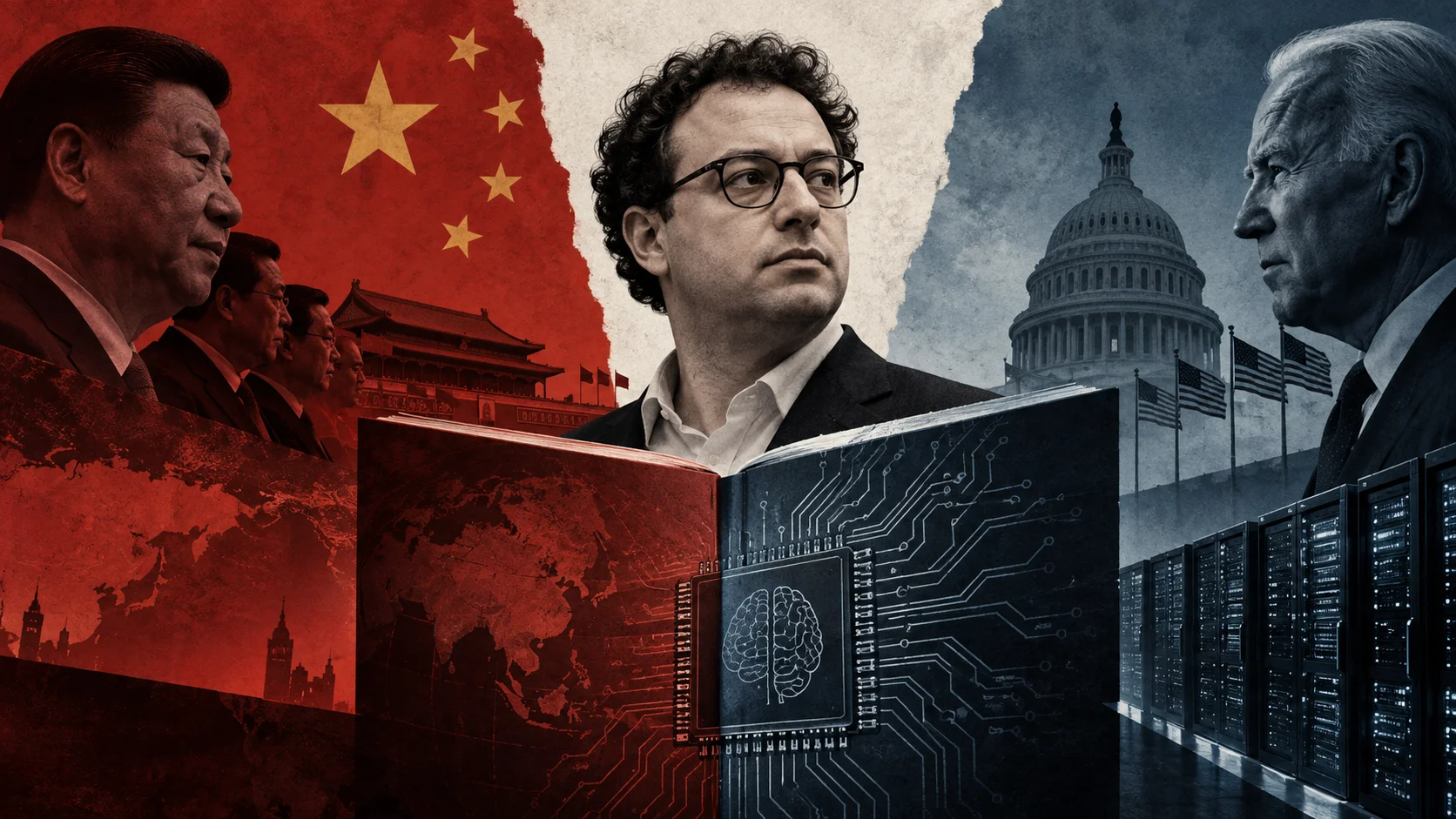
China reacted to the proposal by Anthropic CEO Dario Amodei to slow the advance of artificial intelligence and expand technological restrictions against Beijing. In an editorial published on Sunday (13), the Global Times, a Chinese state newspaper, described the plan as a “Cold War playbook” aimed at containing the country's AI development.
The criticism targets especially the geopolitical part of the plan presented by Amodei on Saturday (12). Although the executive advocates slowing the pace of advancement of the models to give more time to safety measures, he also proposes that the United States preserve its advantage over China through stricter controls on advanced chips, semiconductor manufacturing equipment and technology transfer.
Amodei states that Chinese leadership in AI would represent a serious risk for the United States and other democratic countries. Among the suggested measures are combating chip smuggling, restrictions on remote access to data centers outside China and actions against so-called model distillation, a technique that makes it possible to reproduce part of the capabilities of more advanced systems at lower cost.
According to the executive, these measures could significantly widen the American advantage over China in the next three to five years, a period he considers decisive for the geopolitical impact of AI. Only after that increase in advantage, he argues, would Washington have better conditions to negotiate global limits on the advance of the technology.
Beijing accuses US of using security to contain rival
The Global Times stated that the proposal appears to deal with AI safety, but contains mechanisms aimed at restricting China. The newspaper accused Amodei of trying to preserve Washington's technological leadership and exclude Beijing from the construction of international rules for artificial intelligence.
The reaction also reached the Chinese government. On Monday (14), Ministry of Foreign Affairs spokesperson Guo Jiakun advocated an “open and inclusive” approach to AI and stated that fostering threats, confrontation and hostile competition would harm the global governance of the technology.
Amodei's proposal does not foresee completely halting AI development. The plan sets out three fronts: allowing external evaluators to have continuous access to companies' systems, coordinating safety standards among developers in democratic countries and, later, seeking international coordination that includes China.
The Anthropic CEO argues that the slowdown is necessary because the capabilities of the models are advancing faster than the mechanisms used to control them. Among the risks cited are cyberattacks, loss of control over autonomous systems and the use of AI agents in coordinated operations.
The dispute comes as Washington and Beijing prepare to discuss risks linked to frontier AI. The topic may also enter the agenda of the meeting planned between Donald Trump and Xi Jinping on September 24, increasing the weight of artificial intelligence in the technological rivalry between the world's two largest economies.