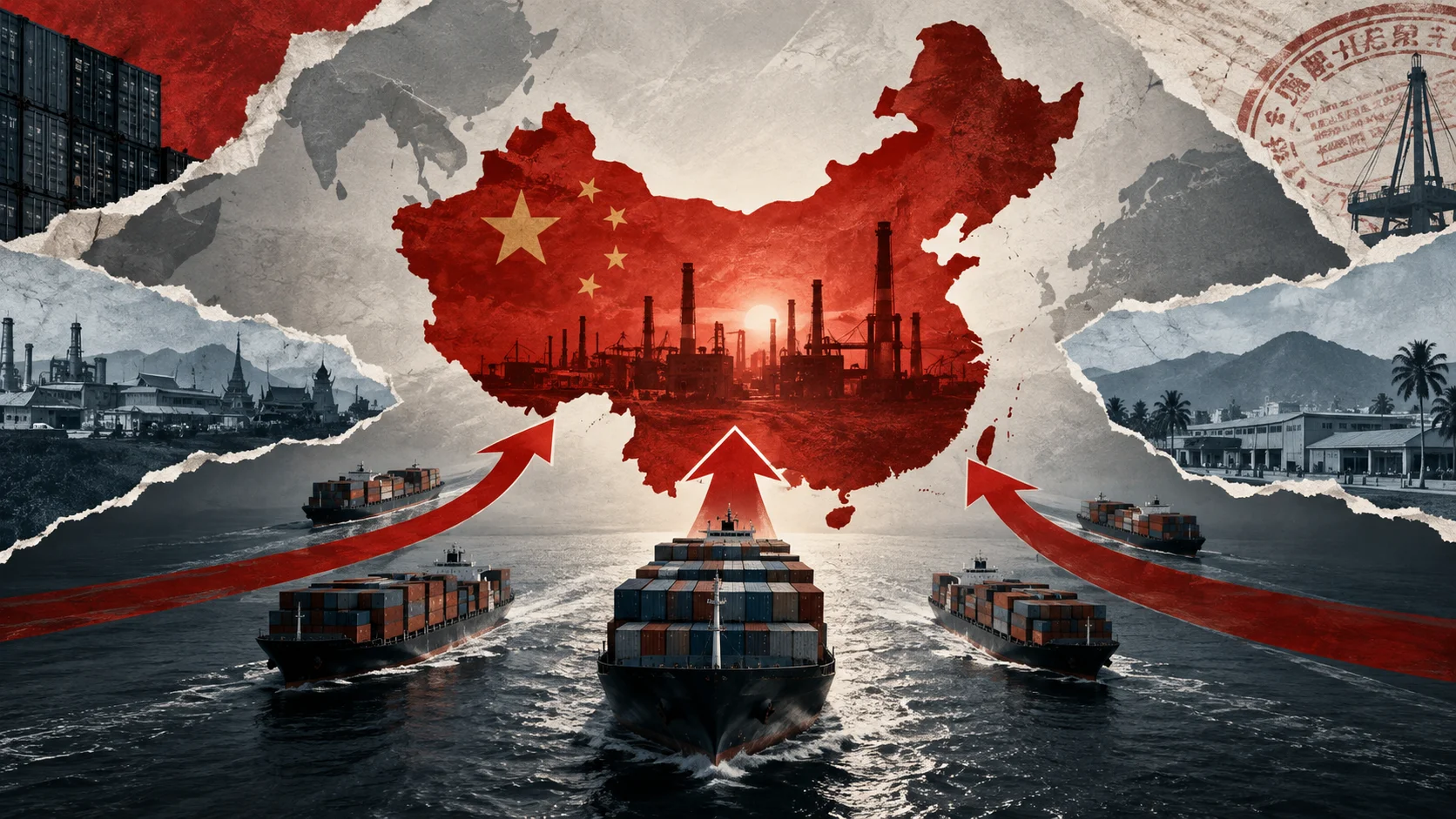
Some of the companies that moved production and suppliers out of China to reduce the impact of U.S. tariffs are taking orders back to the country, after facing costs, industrial limitations and supply problems in alternative markets. The reversal cannot yet be quantified on a global scale, but it is already showing up at large retailers and manufacturers interviewed by Reuters.
The Target again moved some of its orders to Chinese suppliers because of supply chain disruptions and production restrictions in other countries, according to two people familiar with the move. The value and duration of the contracts were not disclosed. The Shein is also reducing part of its operations in Vietnam, according to people close to the company's activities in the country.
The move comes after companies accelerated the strategy known as “China plus one,” keeping Chinese suppliers while adding factories in countries such as Vietnam, India, Indonesia and Thailand to reduce exposure to American tariffs.
In practice, some companies found that lower labor costs or the tariff advantage did not offset the difficulties of replicating China's supplier network, skilled labor, equipment, logistics and energy supply.
The Chinese manufacturer Dawang Metals, for example, lost some orders from a major American agricultural machinery customer when production was moved to India. After facing problems in the new market, the buyer went back to ordering from the Chinese company. Dawang itself even studied moving part of its production to another country, but abandoned the plan.
China regains ground in supply chains
Data from supply chain inspection and auditing company QIMA indicate a similar shift. China's share of the services the company provides to North American clients rose to 35% in the second quarter of 2026, the highest level in six quarters. In the same period, Southeast Asia's share fell back to levels prior to 2025.
The picture represents a partial reversal from the first quarter, when China's share in sourcing monitored by QIMA had fallen to 27%, while American demand for inspections in South and Southeast Asia grew 21% year over year.
Tariffs remain part of the equation. Estimates from the Economist Intelligence Unit cited by Reuters pointed in July to an effective U.S. tariff close to 20% for Chinese goods, versus 6.1% for Vietnam, 13.4% for Indonesia and 4.5% for Thailand. The expansion of trade barriers to other countries, however, reduced part of the economic incentive to shift production.
For some companies, operating costs also eliminated the difference. A furniture exporter from Hangzhou closed this year a workshop opened in 2024 in Ho Chi Minh City after having to import basic items from China, such as screws and molds. According to him, when all costs were considered, producing in Vietnam no longer offered a significant advantage.
The shift does not mean the end of industrial diversification. Vietnam, India and Indonesia continue to receive investments, and some companies maintain capacity outside China as protection against a possible new tariff escalation. For now, the moves show that reducing dependence on Chinese industry can be harder — and more expensive — than simply moving production lines to another country.