OpenAI is discussing a possible review of its computing capacity expectations for 2027 after the midterm elections in the United States, held on November 3. According to The Wall Street Journal, company executives began assessing the effects of victories by candidates who advocate restrictions on the construction of new data centers.
The discussions took place on Wednesday (4), according to a person familiar with the matter who was heard by the newspaper. No decision has yet been announced on capacity cuts, postponements or project cancellations.
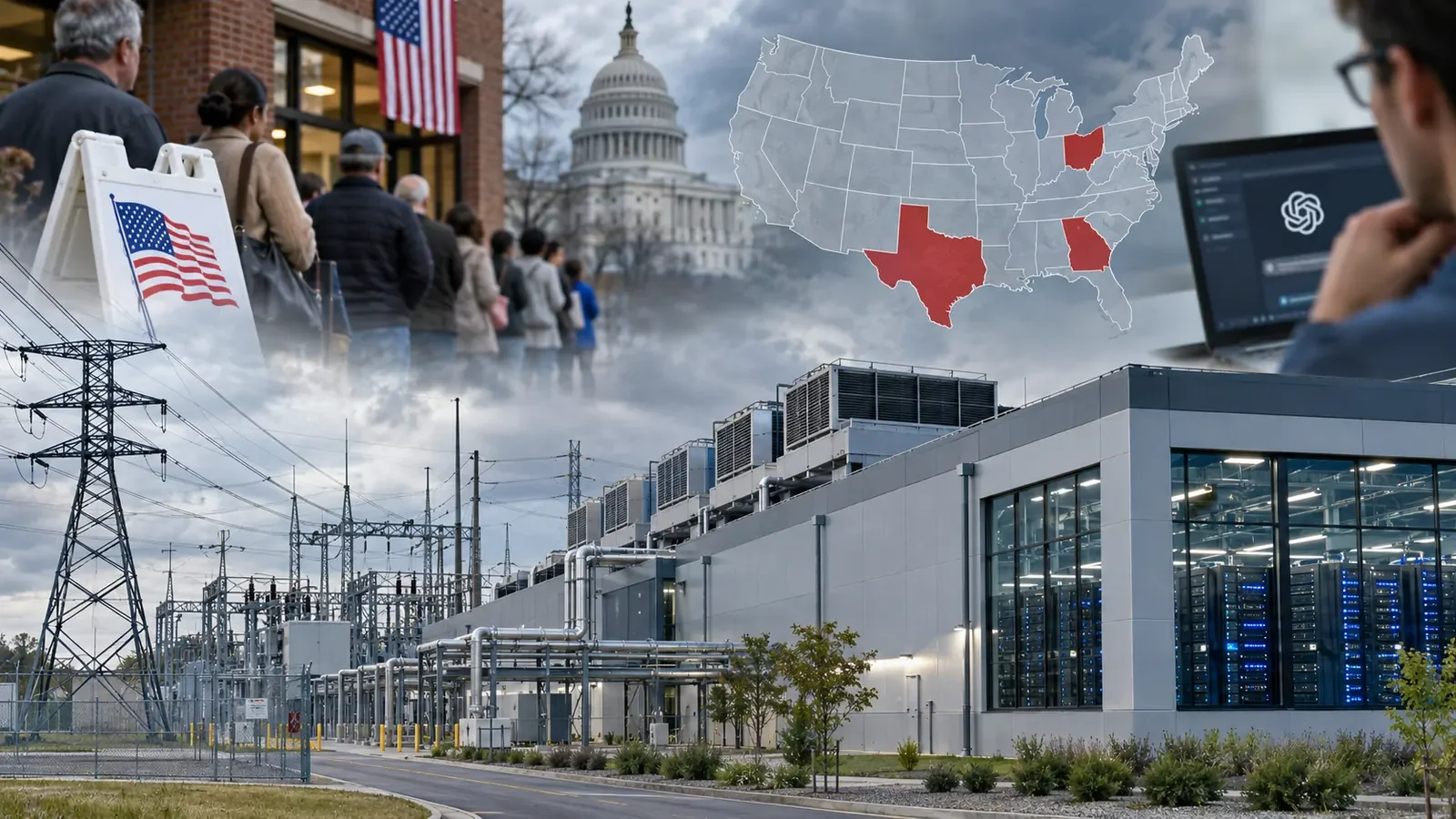
The election result increased uncertainty in states important to the expansion of artificial intelligence infrastructure, especially Texas, Georgia and Ohio. Candidates favoring moratoriums or stricter conditions for new projects won races in those markets, calling into question the pace of approval of future facilities.
The resistance is mainly associated with electricity consumption, the possibility of rate increases for residents and pressure on water resources. For companies that depend on large computing facilities, changes to state and local rules can prolong licensing processes and connections to power grids.
Billion-dollar projects depend on energy and local approval
OpenAI's exposure includes projects associated with the Stargate initiative in Texas and large-scale projects in Ohio. In August, the company announced an agreement to develop approximately 8 GW of IT capacity at the PORTS-Pike campus in Ohio, with deployment planned in stages through 2032.
In Georgia, Project Camellia plans to contract 3.2 gigawatts of power from Georgia Power. Delivery is planned in phases between 2028 and 2032, with the first capacity potentially coming online in 2028.
The distinction is important: the 3.2 GW represent contracted electricity supply for a project still under development, not computing capacity already installed or available in 2027. The schedule remains subject to permits, financing, construction and infrastructure.
In response to community concerns, OpenAI announced on Thursday (5) new commitments for the future campuses it will own and operate. Among them are paying energy and infrastructure costs in full, disclosing water and electricity consumption data, presenting noise studies and expanding residents' participation in decisions about the projects.
The company also proposed rules to prevent residential consumers from bearing additional costs caused by large facilities. In Project Camellia, its agreement allows the utility to reduce by up to 1,000 MW the supply during periods of higher electricity demand.
Any eventual revision of the 2027 projections therefore remains an internal discussion reported by the Wall Street Journal. The public commitments announced by OpenAI do not represent a formal change to the project schedules.