The commercial expansion of robotaxis in the United States is intensifying disputes over safety, jobs, and limits on the growth of autonomous fleets. States and cities are debating new rules while companies such as Waymo, Zoox, and Tesla expand operations, according to a report published by The Verge on Sunday (24).
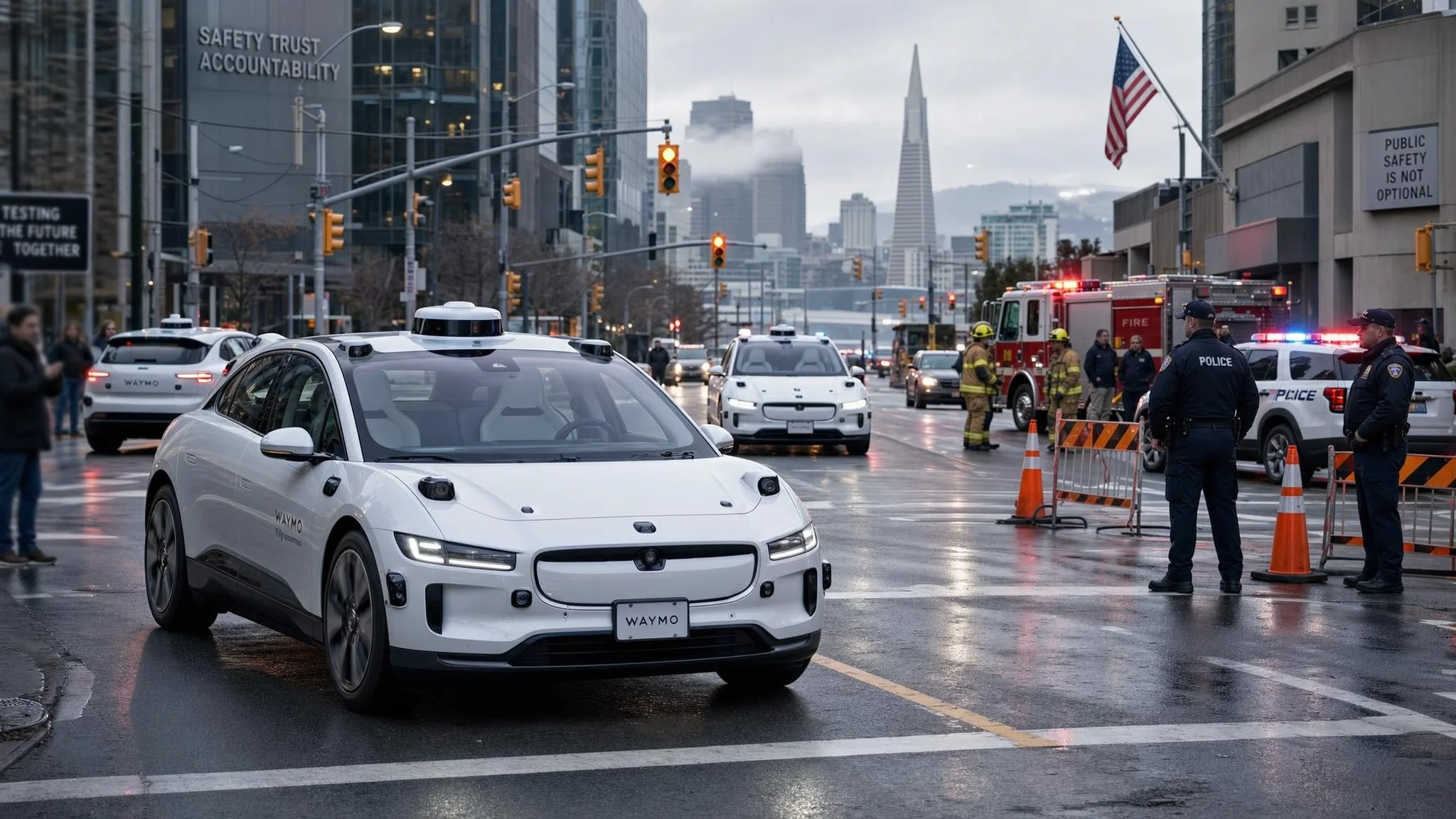
The pressure has also reached the federal government. The U.S. National Highway Traffic Safety Administration (NHTSA) warned on July 8 that autonomous vehicles unable to safely interact with police officers, firefighters, and medical crews pose a risk to the public.
The agency said it has identified cases of driverless vehicles entering emergency areas, blocking ambulances and fire trucks, or failing to react properly to emergency lights, smoke, fire, flares, and cones. NHTSA demanded solutions from companies and said it could resort to enforcement measures in the face of significant safety problems.
States and cities debate limits on expansion
The discussion comes as different U.S. regions adopt different responses to the advance of the technology.
In New York, Governor Kathy Hochul this year withdrew a proposal that would have paved the way for driverless commercial services outside New York City. The measure faced resistance from taxi drivers, unions, and lawmakers, and commercial robotaxi operations remain banned in the state.
In Washington, D.C., a proposal to legalize the service faces union opposition and includes the possibility of limiting operations to 200 vehicles, as well as charging US$ 0.15 per mile driven. The revenue would go to public transit and to supporting workers affected by automation.
Waymo supports creating a regulatory framework in the U.S. capital but believes a permanent cap of 200 vehicles could limit the service. The company has also shown openness to a fee earmarked for public transit and workers, though it questions adopting a per-mile charge.
In California, authorities in July started allowing autonomous vehicle manufacturers to be formally held liable when their driverless cars violate traffic rules.
In San Francisco, Mayor Daniel Lurie, who supports the technology, has begun advocating stricter rules after incidents in which Waymo vehicles disrupted traffic during emergencies and major events.
Waymo now surpasses 500,000 paid rides per week
Regulatory pressure is growing at the same time as the major companies expand their operations.
Waymo maintains more than 3,500 vehicles in public service in 11 U.S. cities and makes more than 500,000 paid rides per week.
Uber, by comparison, makes about 40 million trips per day globally. In the 2nd quarter, the company said that 10.2 million drivers and delivery workers earned income through its platform.
Zoox has begun offering paid rides in Las Vegas with its vehicle designed specifically for autonomous driving, without a steering wheel. The company also continues to offer free rides in San Francisco through its Explorer program and is testing the technology in ten cities.
Tesla, which launched its Robotaxi service with a safety monitor on board, is also seeking to expand the operation without supervision before the arrival of the Cybercab, a vehicle developed specifically for autonomous transportation.
Unions fear impact on millions of jobs
The advance of robotaxis has opened another front of dispute over the effect of automation on work.
The Teamsters, one of the largest U.S. unions, say autonomous driving could affect not only app-based drivers but also truckers, delivery workers, and other commercial transportation professionals.
The union has argued that heavy autonomous vehicles, such as trucks, must keep a trained human operator on board. Proposals with that requirement have already been approved twice by the California Legislature but vetoed by Governor Gavin Newsom.
Waymo acknowledges that autonomous vehicles could replace some of the work currently done by drivers but argues that the new fleets also require technicians, mechanics, remote support professionals, and operations teams.
The company believes, however, that it is still too early to determine whether the technology will create more jobs than it eliminates.
Companies also advocate national rules
Despite disagreements with governments and unions, the companies themselves in the sector have begun advocating clearer regulation.
Zoox CEO Aicha Evans said the industry needs to be regulated. The company advocates greater federal uniformity and says it works with authorities and emergency teams before entering new markets.
Waymo also supports creating a national safety standard for autonomous vehicles, including minimum testing requirements, vehicle design, and data sharing.
The company's proposal is to keep vehicle safety under federal responsibility, leave traffic rules to the states, and allow cities to handle local issues such as boarding areas, enforcement, and emergency response.
NHTSA has already begun drafting the first major update of federal guidance for autonomous vehicle developers since 2017 and is working on developing national performance standards for the technology.
The agency says it supports the potential of autonomous vehicles to reduce human error but has made clear it intends to continue using its enforcement authority when it identifies significant risks.