South Korea's Education Minister, Choi Kyo-jin, resigned this Sunday (22) after a series of last-minute changes to the rules aimed at preventing fraud with artificial intelligence in the Suneung, the national university admission exam. President Lee Jae-myung accepted the resignation about an hour after the minister submitted the request.
The measures, announced up to the eve of the exam held on November 19, drew complaints from students and teachers. The government tightened enforcement amid fears that candidates would use microcameras, smartphones and AI tools to obtain answers during the exam.
In a statement released by the Ministry of Education and cited by the Yonhap agency, Choi acknowledged the authorities' lack of preparation.
“As the responsible minister, I believe I cannot escape the criticism that we failed to prepare in advance,” he declared. He added that he felt deep responsibility for the problems and that, for this reason, he was submitting his resignation.
The rules that triggered the crisis
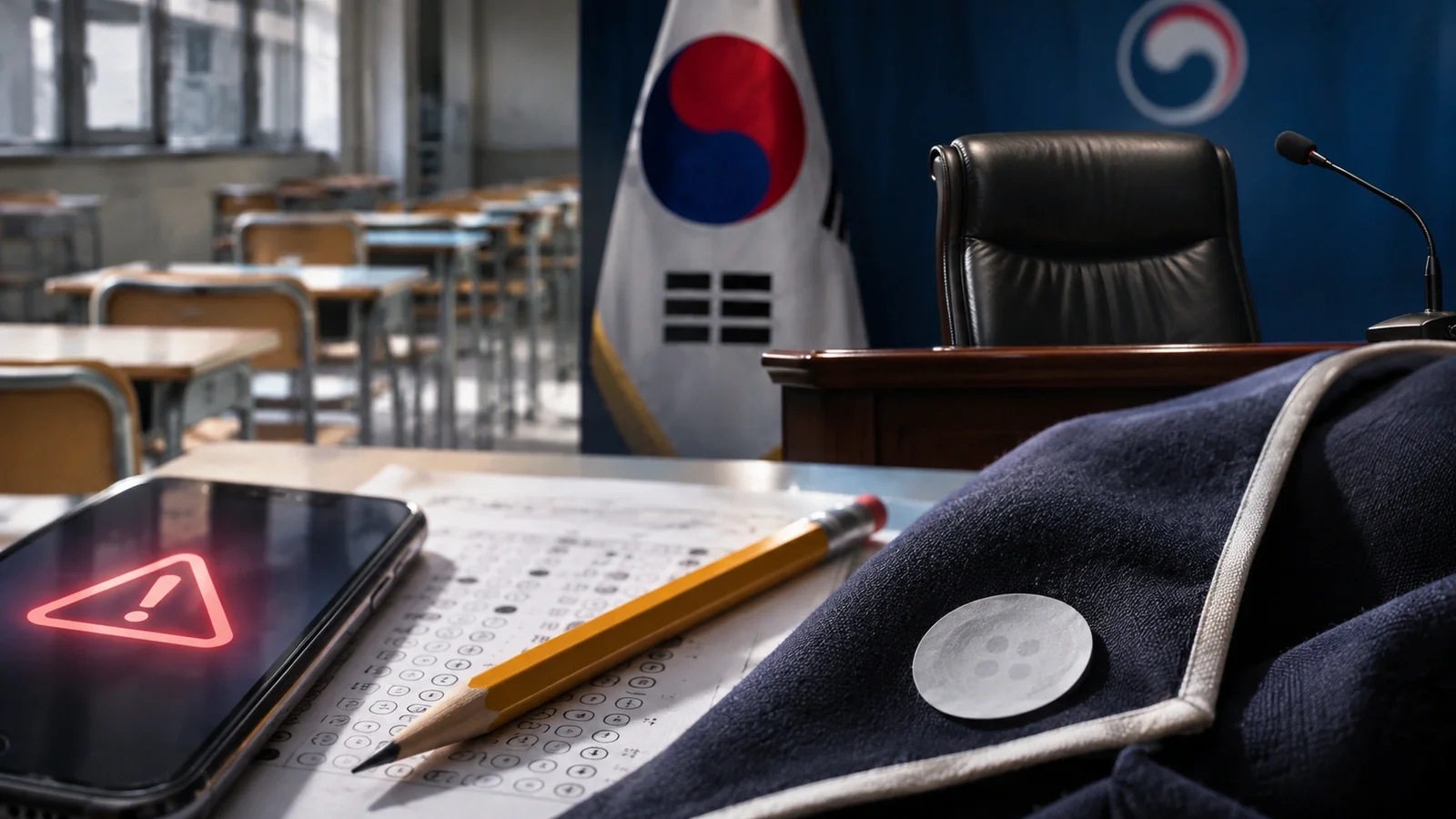
Among the changes, the government determined that candidates could bring only pencils into the exam rooms. Proctors also received guidance to cover clothing buttons with stickers, preventing the use of miniature cameras hidden in these accessories.
During the exam, the authorities sent three emergency alerts to cell phones across the entire country. The measure sought to identify devices that candidates had not handed in before the exam.
On Friday (20), the Ministry of Education reported it had identified 111 suspected cases of irregularities involving electronic devices. The records still depend on evaluation and do not represent definitive convictions.
The controversy also involved statements by Choi, 72, in Parliament. Asked about his confidence in detecting all attempts at AI fraud, the minister replied that he did not believe he was capable of it, mentioning his own age.
The Suneung is considered one of the most important exams in South Korea. Its results directly influence university admission and students' career prospects.
A Ministry of Education committee is due to evaluate the irregularities before the release of the scores, scheduled for December 11. The government and the ruling party are also discussing extending to up to ten years the restriction applicable to candidates involved in AI fraud, including with possible retroactive effect.