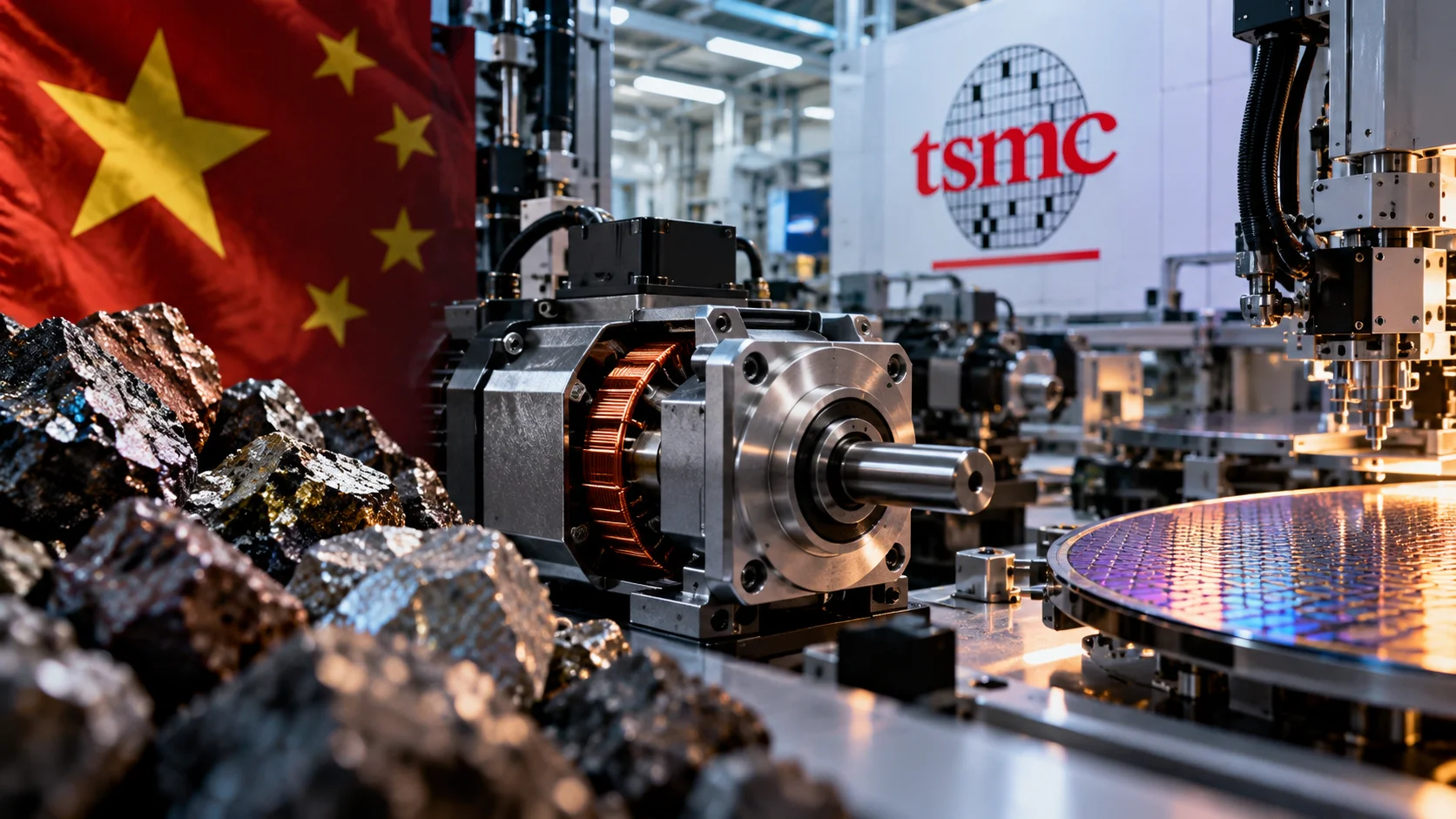
TSMC is consulting suppliers about the possibility of using rare-earth-free motors in equipment at its chip factories. The initiative, revealed by Reuters this Thursday (22), seeks to reduce the risk of interruptions in the supply of industrial components subject to China's export controls.
According to three industry executives familiar with the plans, the Taiwanese manufacturer is evaluating alternatives for the automation systems at its facilities. The talks are still at a preliminary stage, with no widespread adoption of the new equipment.
The interest is related to restrictions imposed by Beijing in 2025 on the export of certain rare earth materials, magnets and processing technologies. Those measures require licenses for the supply of specific products abroad.
Rare-earth magnets are used in motors that drive components of industrial machinery, including equipment present in TSMC's highly automated factories.
A possible shortage of these specialized parts could compromise semiconductor manufacturing operations for smartphones, artificial intelligence systems, data centers and defense applications.
The company, the world's largest contract chipmaker, declined to comment on the information presented by Reuters.
The search for alternatives comes as Taiwan and the United States develop initiatives to reduce dependence on Chinese supply chains for critical minerals.
In February 2026, the Taiwanese government announced support for the Industrial Technology Research Institute (ITRI) to develop rare earth-related technologies. The plan includes a pilot production line, planned for the next three years, with estimated capacity to meet 50% of Taiwan's domestic demand.
For now, there is no confirmation that TSMC has replaced existing motors or set a timetable for incorporating rare-earth-free equipment into its factories.