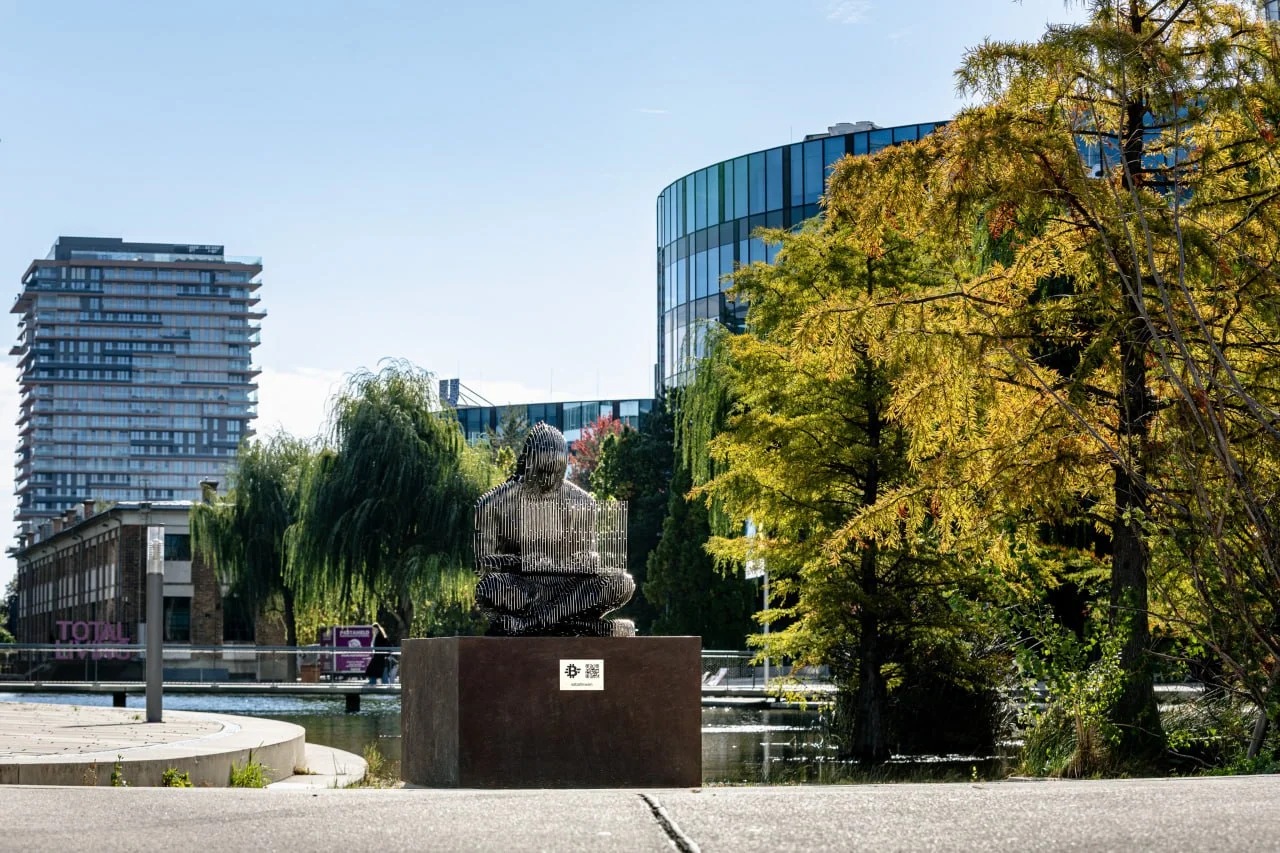
Vienna unveiled, on October 14, 2026, a statue of Satoshi Nakamoto that appears to disappear depending on the viewing angle. Installed in the Viertel Zwei district, in the Austrian capital, the work honors the anonymous creator of Bitcoin and is part of an international art project.
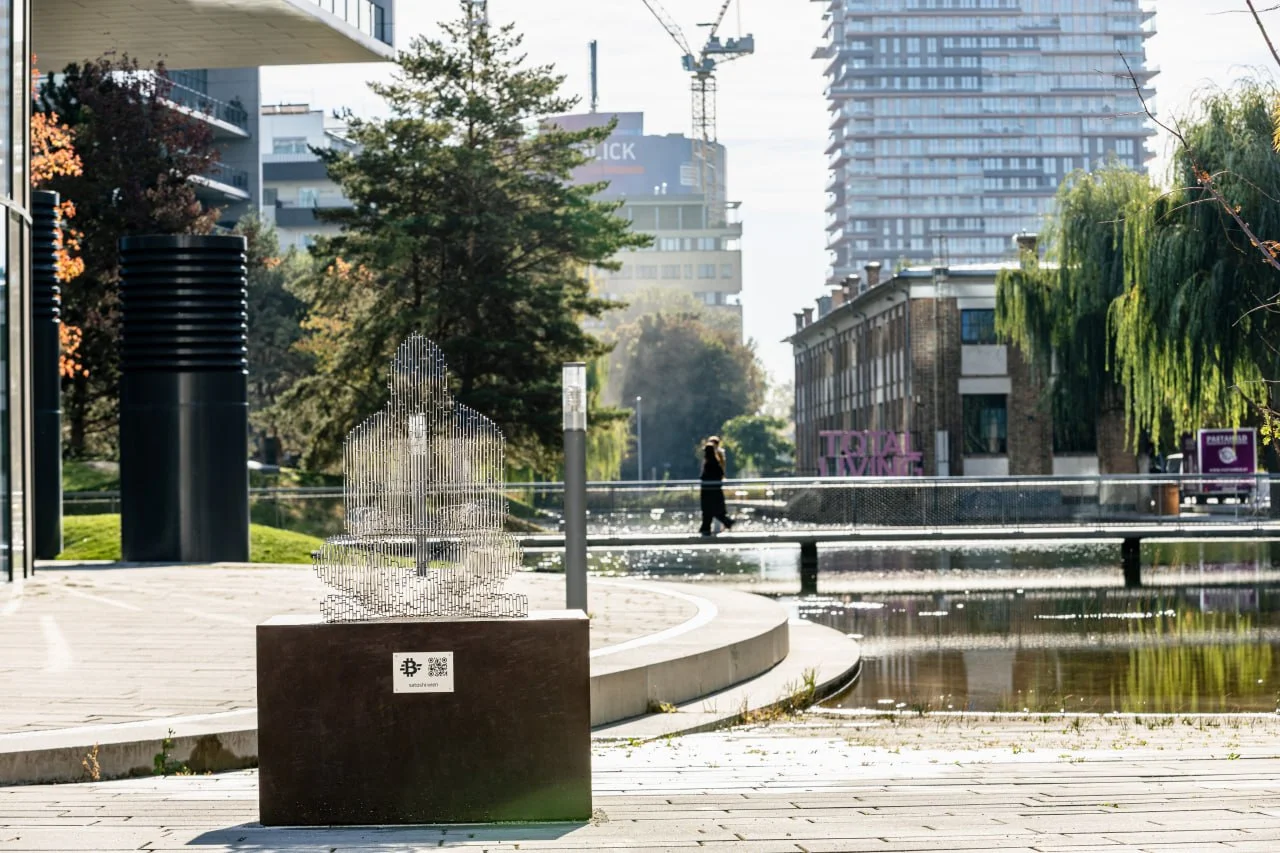
The sculpture depicts a programmer sitting in front of a laptop and was built with 61 thin layers of stainless steel, separated by small gaps. Viewed from the side, the figure is clearly recognizable. From the front, however, it becomes almost invisible, in a reference to Nakamoto's unknown identity.
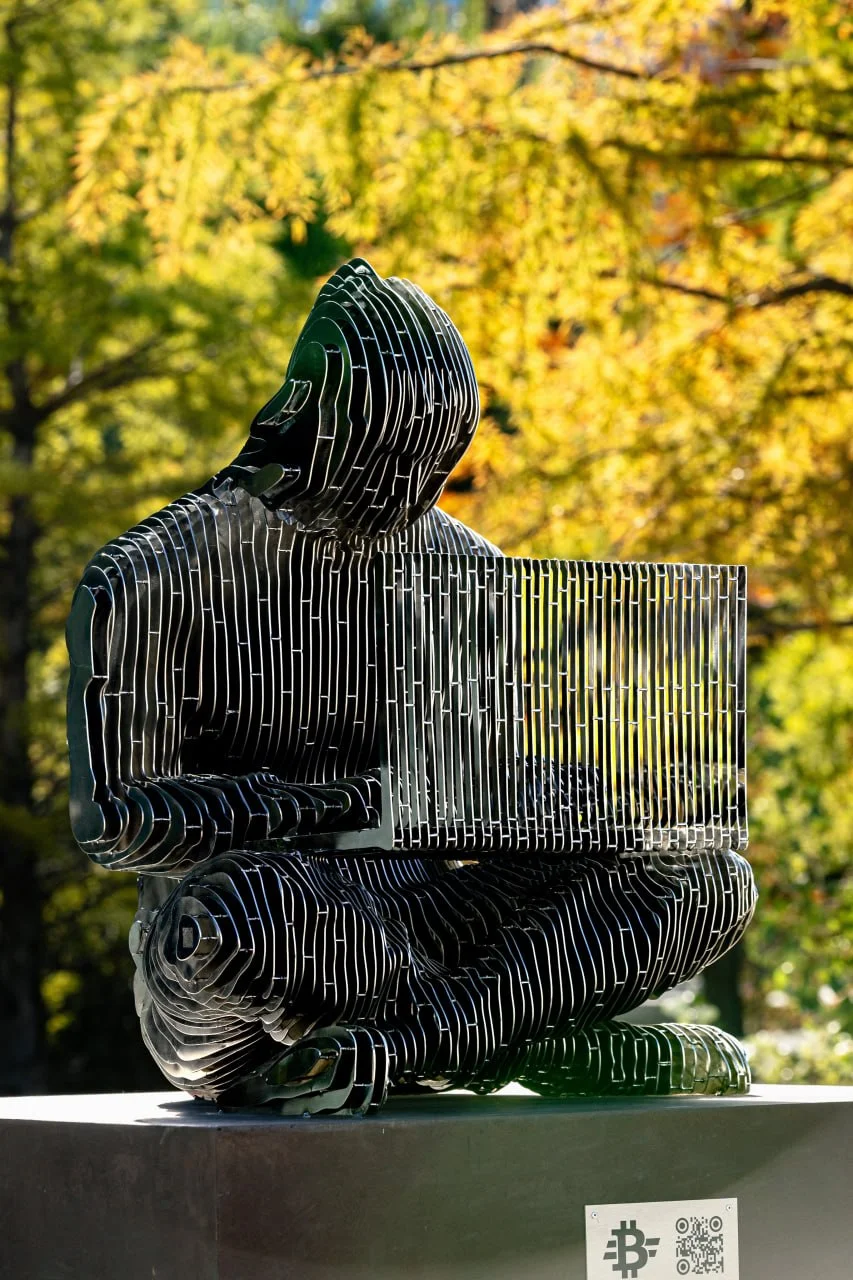
The visual effect also allows visitors positioned behind the statue to have their faces reflected in the figure's head area. The proposal represents the idea that anyone can be Satoshi, valuing collective participation in the development of Bitcoin.
The depiction of a hacker is intentional. Instead of trying to reproduce the appearance of a person whose identity remains unknown, the work pays tribute to the developers who built the global cryptocurrency ecosystem.
The installation was created by Satoshi Gallery, a project led by Italian artist Valentina Picozzi, who has worked with Bitcoin themes since 2012. Her career began with urban art interventions and evolved into the production of public sculptures.
The statue is part of the series 21 Nodes, which envisions the installation of 21 monuments around the world, a number inspired by the 21 million bitcoin issuance limit. The first sculpture was unveiled in Lugano, Switzerland, in October 2024. The project has also reached cities such as New York, Tokyo and Hanoi.
In Vienna, the initiative marks the 15th anniversary of the Bitcoin Austria association. The monument was funded by a donation campaign that brought together more than 120 individual contributors, in addition to supporting companies.
The work is installed in a public area near the Viertel Zwei lake, with free access for visitors.