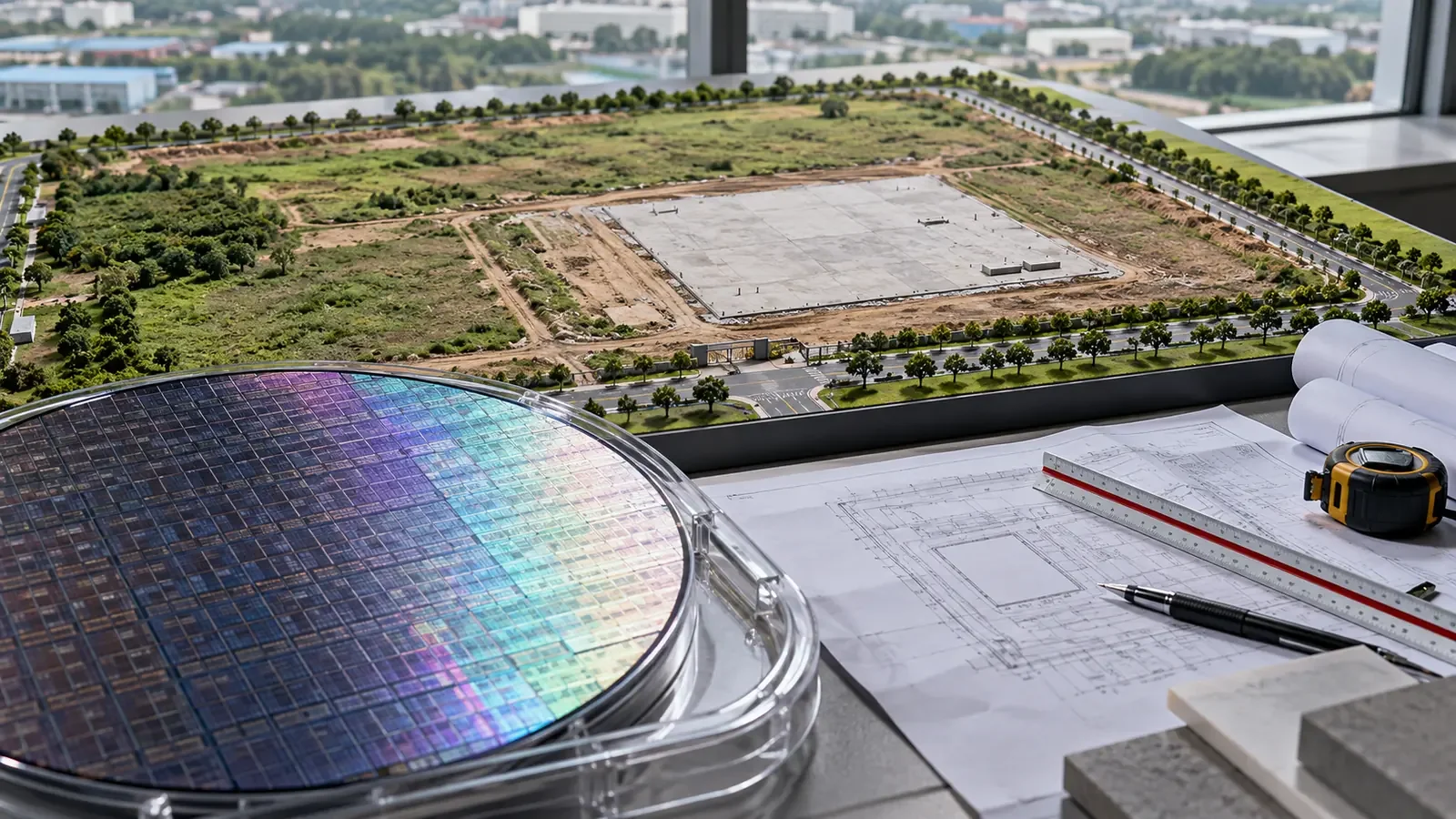
Vietnam may fail to start experimental production at its first semiconductor factory in 2027. The project, led by the telecommunications and defense group Viettel, still has no buildings constructed on the site near Hanoi, while negotiations to purchase equipment from the Dutch company ASML remain without agreement, according to an investigation published by Reuters this Monday, October 26.
The agency visited the site the previous week and found an area covered in vegetation. Satellite images captured in January and October also showed no construction of buildings. A person with direct knowledge of the project assessed that the pilot production target will probably not be met, citing administrative hurdles to obtaining public financing and Viettel's lack of experience in building this type of facility.
The company disputes the prospect of a delay. In response to Reuters, it said the project follows the established plan and schedule and that activities are carried out in stages, in accordance with technical requirements. Viettel did not disclose a new implementation schedule.
Negotiation with ASML has not yet ended
Three people familiar with the matter told Reuters that talks with ASML have been underway for months. Two of them reported discussions about a deep ultraviolet lithography machine, or DUV, equipment used to print circuit patterns on silicon wafers.
Reuters could not determine why there was no agreement, nor which machine model is under negotiation. That information would make a difference in understanding the cost and the possible application of Dutch export restrictions. ASML chose not to comment on the talks with Viettel, according to the report.
The estimated cost of the factory is US$ 1.3 billion. In January, when it announced the start of the project, Viettel expected experimental operations by the end of 2027 and full operation in 2030. The company had initially mentioned the intention to produce chips with 32-nanometer technology, a reference later removed from its website, according to Reuters.
The challenge of manufacturing chips in the country
The initiative is part of Vietnam's strategy to move beyond semiconductor assembly, testing and packaging, activities that have already attracted international companies to the country. Manufacturing the circuits directly on silicon wafers requires more complex facilities, equipment and technical expertise.
The difference between launching a project and putting a manufacturing line into operation is precisely the central point of the investigation. The absence of buildings and an equipment agreement raises concrete doubts about the deadline, but does not amount to an official announcement of postponement or cancellation. For now, Viettel publicly maintains the original target.