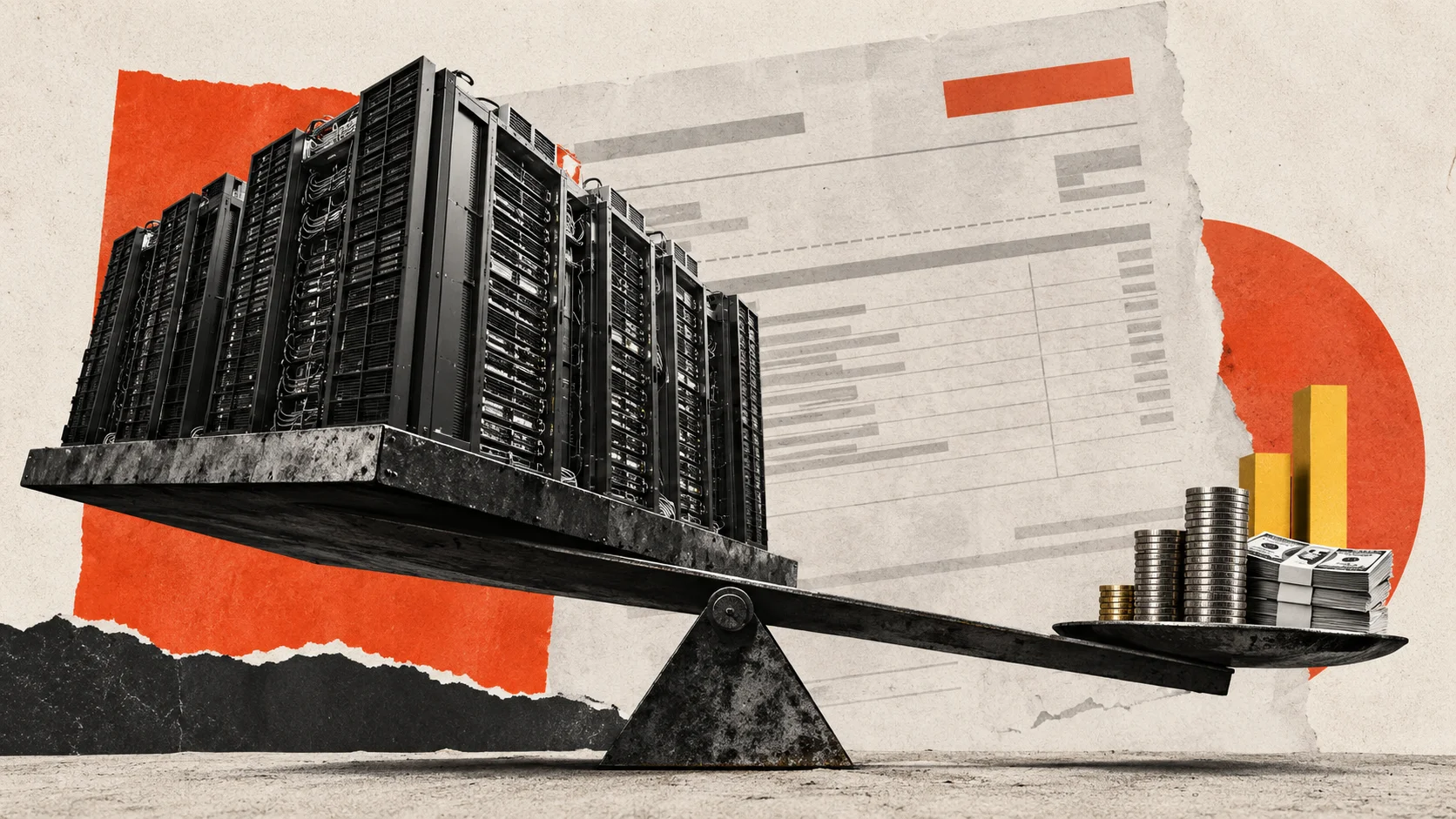
The global expansion of artificial intelligence is beginning to face a bill that goes beyond the ability to build new data centers. Bain & Company estimates that the sector will need to find about US$ 4.2 trillion in new annual revenue by 2031 to sustain the projected level of investment, while PwC projects US$ 31.6 trillion in cumulative spending on AI infrastructure by 2050.
The financial dimension of the race was highlighted by Reuters this Saturday (3), placing side by side the advance of investments and the revenue needed to remunerate that capital. PwC calculates that annual spending on data centers should go from approximately US$ 800 billion in 2026 to US$ 1.8 trillion in 2050. In the faster-adoption scenario, cumulative investment could approach US$ 50 trillion.
Much of that cost is not concentrated only in the construction of facilities. Servers, GPUs, storage and network equipment need to be replaced periodically. According to PwC, technology equipment accounts for about 70% of investment currently and could reach 93% of the total in 2050.
Bain sees a US$ 4.2 trillion gap
Bain estimates that annual spending on AI infrastructure could reach US$ 1.5 trillion in 2031. Considering an investment level equivalent to approximately 25% of the sector's revenue, the consultancy calculates that the AI market would need to reach nearly US$ 6 trillion in annual revenue to sustain that structure.
Consumer-facing products, including subscriptions and advertising, could generate between US$ 200 billion and US$ 400 billion. Enterprise adoption could add from US$ 1 trillion to US$ 1.4 trillion. Together, these fronts would reach at most US$ 1.8 trillion, leaving about US$ 4.2 trillion still dependent on new markets and applications.
Among the sources considered by Bain are advertising integrated into AI systems, autonomous vehicles and machines, robotics, industrial simulations, drug discovery and development of new materials. The consultancy estimates an opportunity of about US$ 900 billion in AI applied to the physical world and another US$ 400 billion in autonomous systems.
The pressure becomes more evident when compared with the commitments made by the companies themselves. Anthropic plans to spend US$ 518 billion on technology and infrastructure in the coming years, according to a prospectus seen by Reuters, an amount more than 100 times its 2025 revenue.
The challenge also depends on how much the technology will be able to raise productivity. JP Morgan said that broad gains in the United States are still limited and calculated that American productivity would need to grow between 3% and 5% per year for a decade to sustain, just as an example, Nvidia's current valuation. The Congressional Budget Office's long-term benchmark is 1.75% per year.
For Bain, efficiency gains in existing markets will not be sufficient on their own. Infrastructure is being built before the demand needed to use it in an economically sustainable way, shifting the next stage of the AI race to the creation of products, services and markets capable of turning computing capacity into revenue.