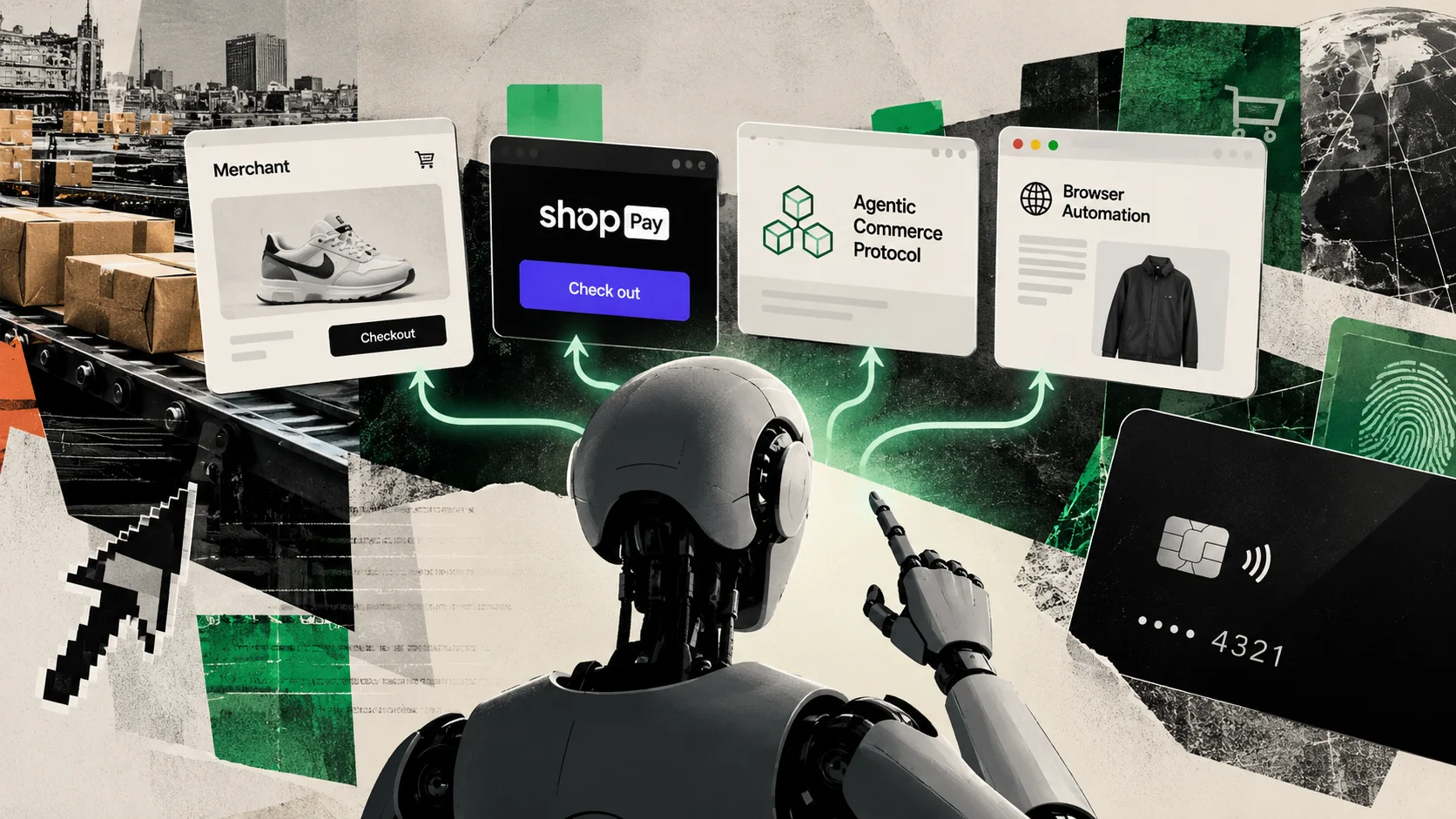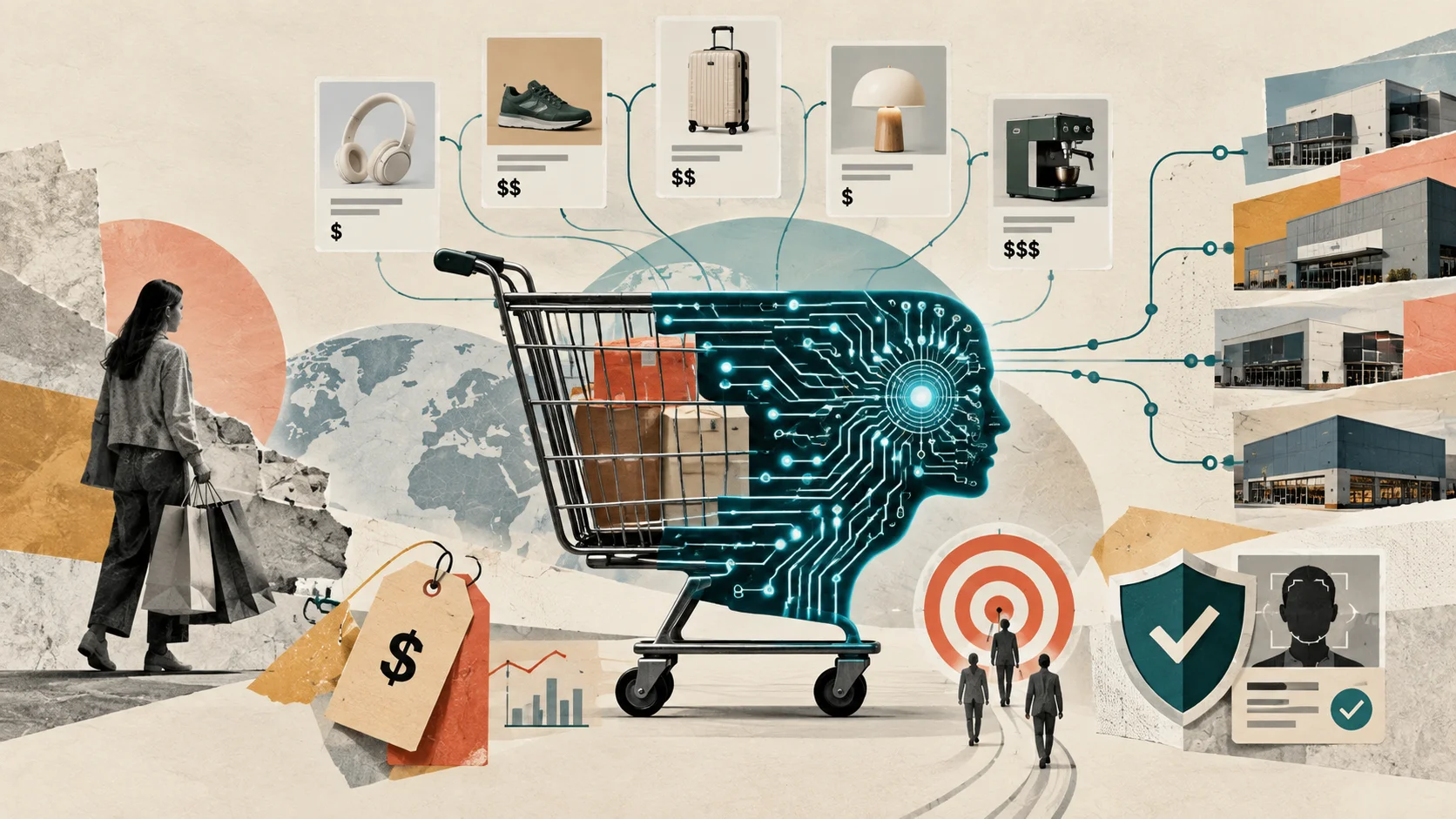
India’s e-commerce companies are beginning to prepare for a customer that may never open a product page. Personal AI agents can already research products, compare alternatives and, in some cases, execute purchases on behalf of users. According to The Economic Times, Indian e-commerce, travel and insurance platforms are now reassessing pricing, customer-engagement costs and bot-verification systems as that behavior expands.
The bigger change is not simply the arrival of another checkout interface. It is the possibility that software becomes the layer between a retailer and a growing share of its customers, deciding which products deserve consideration before a human ever reaches the store.
That creates a more consequential question for e-commerce: what happens to advertising, customer acquisition cost and pricing when buyers increasingly delegate discovery and comparison to agents?
AI traffic is already behaving differently from traditional acquisition channels
The first evidence suggests that AI-originated traffic can be economically attractive.
Adobe found that traffic from AI sources to U.S. retail websites grew 393% year over year in the first quarter of 2026. By March, those visitors were converting 42% better than traffic from non-AI channels. Separate May data showed AI-referred shoppers generating 53% more revenue per visit and converting 54% more often.
Retailers are noticing the difference. Ulta Beauty told Reuters that shoppers reaching its products through Gemini and ChatGPT showed roughly twice the conversion and purchase intent of other visitors. At the same time, the company said it would still prefer customers to complete the transaction on its own website.
That tension matters for CAC.
If an AI assistant filters hundreds of options before sending a shopper to a store, the retailer may receive fewer visits but with much stronger purchase intent. In that scenario, pageviews and raw traffic become less useful measures of acquisition efficiency. The valuable event happens earlier: getting the product selected by the agent.
For merchants, that could initially make AI referrals look like a low-cost acquisition channel. It does not mean the acquisition tax disappears.
Google is already testing sponsored placements and Direct Offers inside AI Mode, allowing retailers to surface discounts when its systems determine that a shopper is near a purchase decision. Advertising therefore appears more likely to migrate into the agentic decision layer than to vanish from commerce altogether.
Product feeds may become as important as storefront merchandising
Traditional e-commerce has spent decades optimizing pages for people: hero banners, recommendations, product grids, scarcity messaging, reviews and promotional placement.
Agents do not necessarily consume a store that way.
Google’s Universal Commerce Protocol is designed to let agents exchange structured information with merchants throughout discovery and checkout. Google is also expanding Merchant Center attributes specifically so AI systems can understand details such as compatible accessories, substitutes and answers to product questions. Mastercard’s Agent Connect similarly allows agents to retrieve catalog information and then confirm final price, taxes, shipping and fulfillment before a transaction.
That changes the competitive surface.
A retailer can still build a powerful brand and customer experience, but an agent comparing equivalent products can evaluate price, availability, delivery terms and product specifications far faster than a person switching between browser tabs.
For highly substitutable goods, that could reduce the influence of some traditional merchandising techniques and increase pressure on price transparency. The effect should be smaller where brand preference, exclusivity, loyalty benefits or differentiated service remain important.
Retailers are already being given tools to make those differences machine-readable. Google’s Direct Offers pilot starts with discounts but is designed to expand to attributes such as bundles and free shipping. In other words, merchants may increasingly compete not only with a displayed price, but with structured offers that an agent can evaluate automatically.
Attribution becomes harder when the agent owns the checkout
A second problem appears when the agent stops referring traffic and starts completing the transaction itself.
Shopify now allows eligible merchants to sell directly through Meta surfaces, including Muse where available. Products are discovered through Shopify Catalog, while checkout can take place without the shopper visiting the merchant’s site. Shopify remains the merchant-of-record infrastructure behind the transaction.
But there is an important measurement consequence: Shopify says third-party analytics pixels do not fire when direct checkout is completed on a Meta surface. The order is instead attributed to Meta inside Shopify.
That is a small technical detail with large implications for marketing economics.
CAC has traditionally been calculated around identifiable channels, clicks, sessions and conversions. If an agent researches across multiple sources, makes the recommendation and then executes checkout inside another platform, determining which advertising impression or piece of content actually acquired the customer becomes more difficult.
The likely result is not the end of attribution, but a new attribution layer controlled increasingly by agent platforms, commerce protocols and merchant backends rather than browser cookies and conventional website pixels.
Antifraud has to learn that some bots are customers
The security problem is almost the reverse of the one retailers have spent years solving.
Traditional bot management asks whether automated traffic should be blocked. Agentic commerce requires another question: is this automated visitor a malicious scraper or fraud bot, or an authorized agent representing a real customer?
Visa introduced its Trusted Agent Protocol specifically to address that distinction. Approved agents can use cryptographic signatures to establish their identity and shopping intent, allowing merchants to recognize legitimate automation without simply weakening existing bot defenses.
Mastercard is approaching the same problem through Verifiable Intent, which creates a tamper-resistant record linking the consumer, the instructions given to the agent and the resulting transaction. The objective is to give merchants and issuers evidence that an automated purchase was actually authorized.
India is confronting the issue at the payments-infrastructure level. Reuters reported this month that the National Payments Corporation of India is developing a registry intended to verify and monitor AI agents transacting through UPI as part of a planned agentic-payments framework. The rollout has also faced scrutiny over liability and safeguards if an agent performs an incorrect or unauthorized transaction.
The implication for merchants is straightforward: “human versus bot” is becoming an insufficient fraud rule. Identity, delegation and provable intent will increasingly matter alongside device fingerprints, behavioral signals and payment credentials.
The storefront is not disappearing yet
The transition should not be overstated.
AI referrals are growing rapidly, but direct autonomous purchasing remains a small and fragmented part of overall commerce. John Lewis recently said searches originating from AI agents had risen from 0.3% to 2.5% in a year. Reuters also reported that OpenAI ended its earlier Instant Checkout product in March and shifted emphasis toward product discovery and merchant-controlled checkout.
At the same time, new integrations are moving in the opposite direction. Shopify now supports direct checkout through Meta surfaces, while Google is rolling out UCP-based purchasing across AI Mode and Gemini for participating merchants.
That means the near-term market is likely to contain both models: agents that recommend and send shoppers to stores, and agents that complete transactions without a conventional store visit.
The economic shift will become clearer when retailers begin reporting four things consistently: how much commerce originates with agents, how those customers convert and repeat, what merchants pay to acquire them, and whether price dispersion narrows in categories where agents can compare offers instantly.
Until then, the most concrete change is already visible. E-commerce infrastructure is being redesigned so that a store can sell not only to a person looking at a screen, but to software acting on that person’s behalf. CAC, merchandising and fraud systems were built around the first customer. They are now being adapted for the second.