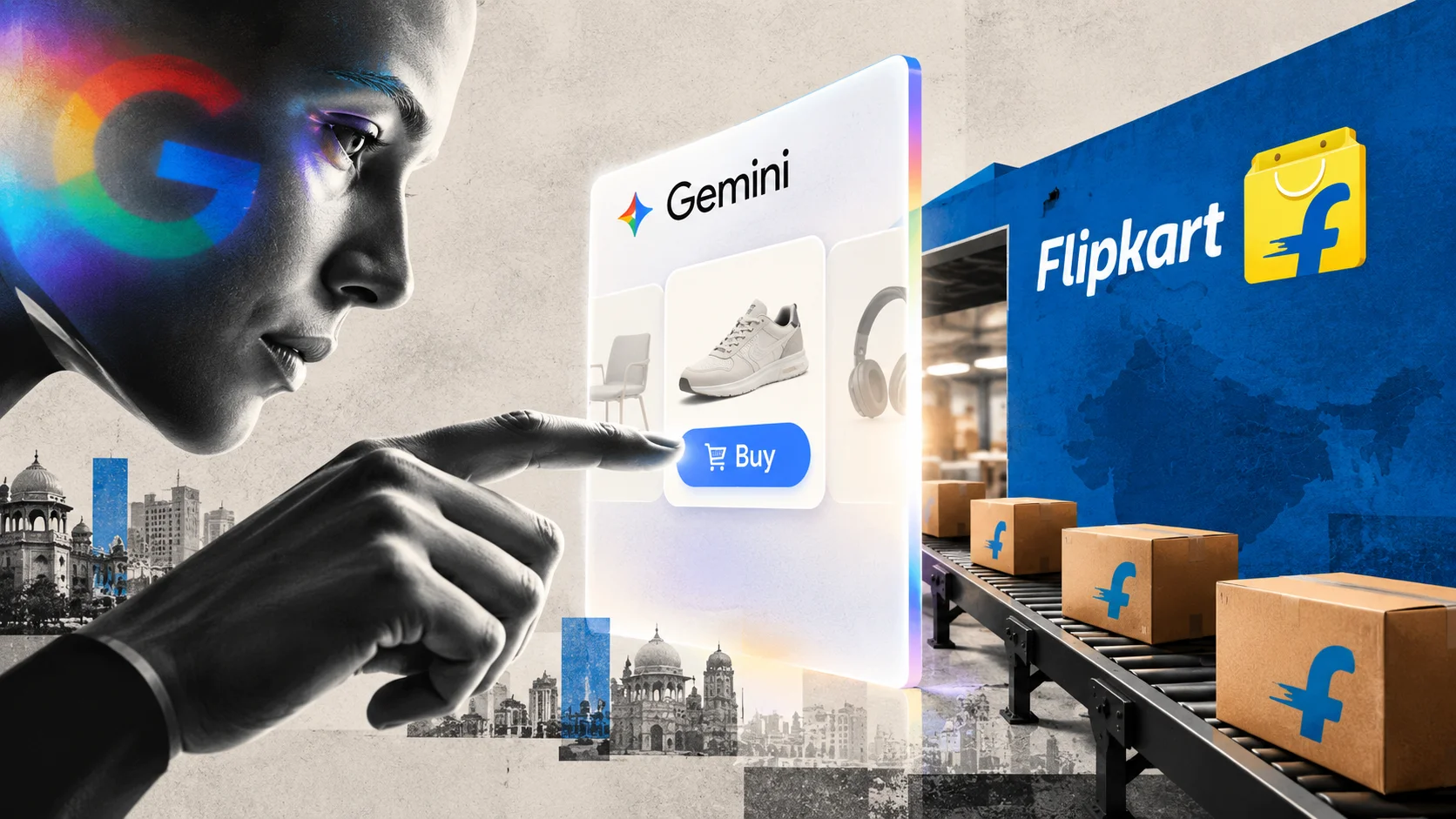
Google has begun testing in India an experience that allows some users to buy Flipkart products directly from Gemini and AI Mode. The test is still limited, but it shifts an important boundary: the AI interface stops merely recommending where to buy and starts participating in the execution of the purchase. The question now is less who processes the order and more who controls the path that leads the consumer to it.
In the experience observed by TechCrunch, certain Flipkart products display a buy button within Gemini or AI Mode. When tapping it, the user accesses a checkout with Flipkart branding without leaving the AI interface. The test covers only some users and a limited selection of smartphones, electronics and accessories. Google intends to expand the experience in October, before India's festive shopping season.
There is an important caveat. The flow seen in the test is not the same as the Google-hosted checkout the company previously introduced with the Universal Commerce Protocol, and the technology used in the integration with Flipkart has not yet been publicly confirmed. Google itself, however, had already announced Flipkart among the Indian partners of its agentic commerce initiatives.
The transaction remains with the retailer, but the journey begins to change location
The architecture that Google and other providers are building does not require the marketplace to stop being the seller.
In the Universal Commerce Protocol, Google states that the retailer remains the Merchant of Record, retains customer data and the customer relationship, and can maintain its own commercial rules. The protocol provides for checkout, order management, discounts, loyalty programs and identity connection while the experience can take place within AI Mode or Gemini.
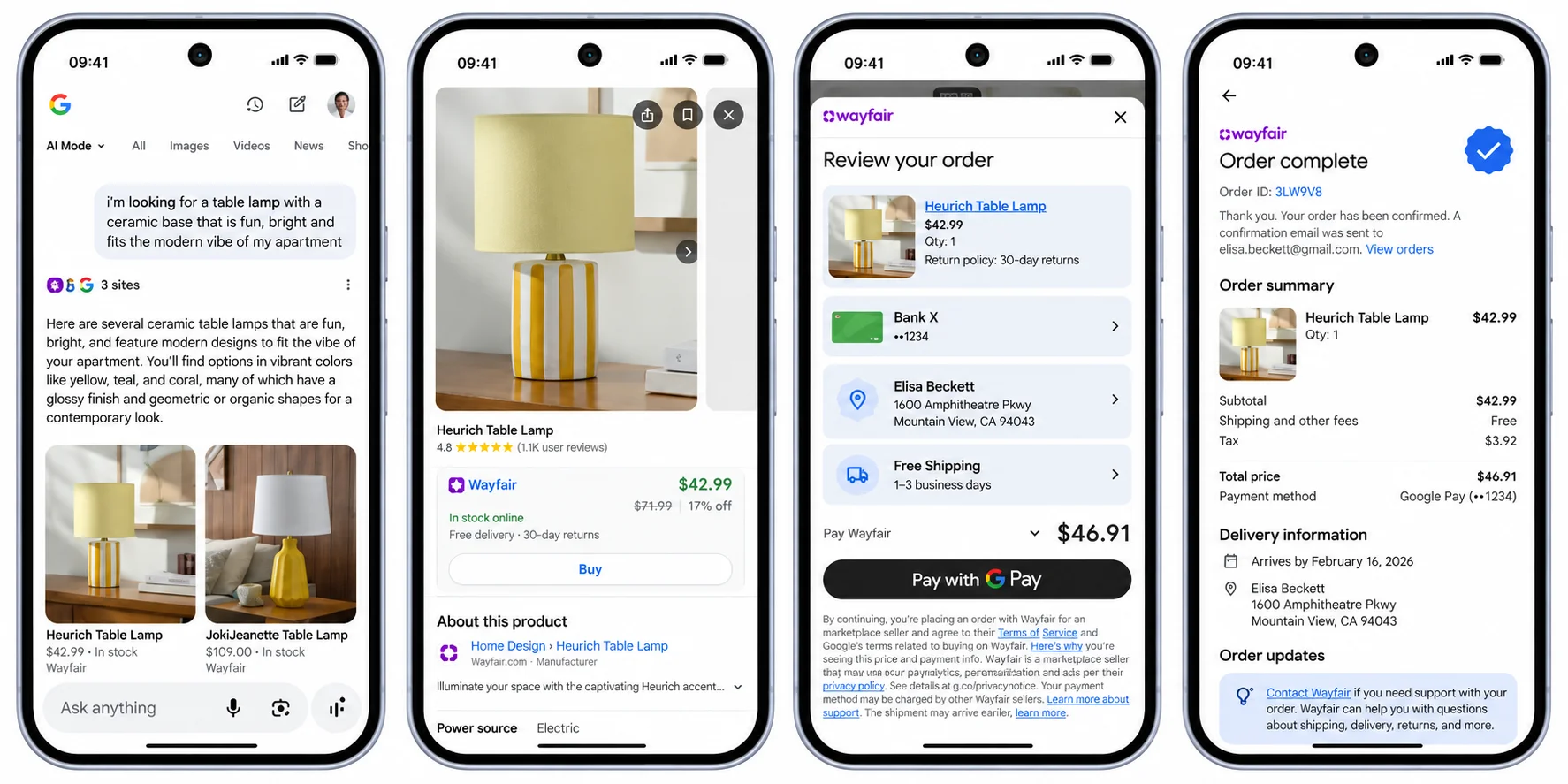
OpenAI adopted a similar logic with the Agentic Commerce Protocol. In Instant Checkout, the order, payment and customer service remain in the merchant's systems, while ChatGPT acts as the interface in which the consumer searches, chooses and confirms the purchase.
This limits a more extreme interpretation of agentic commerce. The marketplace does not need to lose the transaction to lose part of the control over the journey.
Historically, Google, social networks and affiliates sent traffic to product pages or apps. The retailer had to convert that traffic within its own interface. With checkout integrated into AI, a larger share of discovery, comparison and decision can happen before the consumer actually interacts with the marketplace's traditional experience.
Acquisition may stop meaning taking the consumer to a store
This change directly affects the way acquisition is measured.
Google is already organizing its commerce infrastructure so that catalogs are understood and used by its AI interfaces. UCP allows products to be discovered, added to carts and purchased within the conversational flow. Merchant Center is also gaining specific metrics to show how brands appear in AI Mode, AI Overviews and Gemini, including visibility share and performance across the discovery, evaluation and purchase stages.
In India, this movement starts from a base that has already advanced beyond traditional links. Gemini allows searching for products, comparing alternatives and viewing prices and sellers within the conversation. AI Mode also produces comparisons with prices, ratings and availability. Checkout adds the missing step to further shorten the distance between intention and transaction.
For the retailer, this creates a new possibility: acquiring a sale without necessarily acquiring a visit first.
The disputed asset is no longer just the click. It now includes presence within the response that shapes the decision.
Advertising can enter after comparison and before purchase
Google's advertising model shows why this layer is economically relevant.
The company already tests ads in AI Mode and created Direct Offers, a format in which retailers configure commercial offers and Google uses its AI systems to determine when a promotion is relevant to a consumer close to purchase. The first version works with discounts, but the company also foresees benefits such as shipping and product bundles.
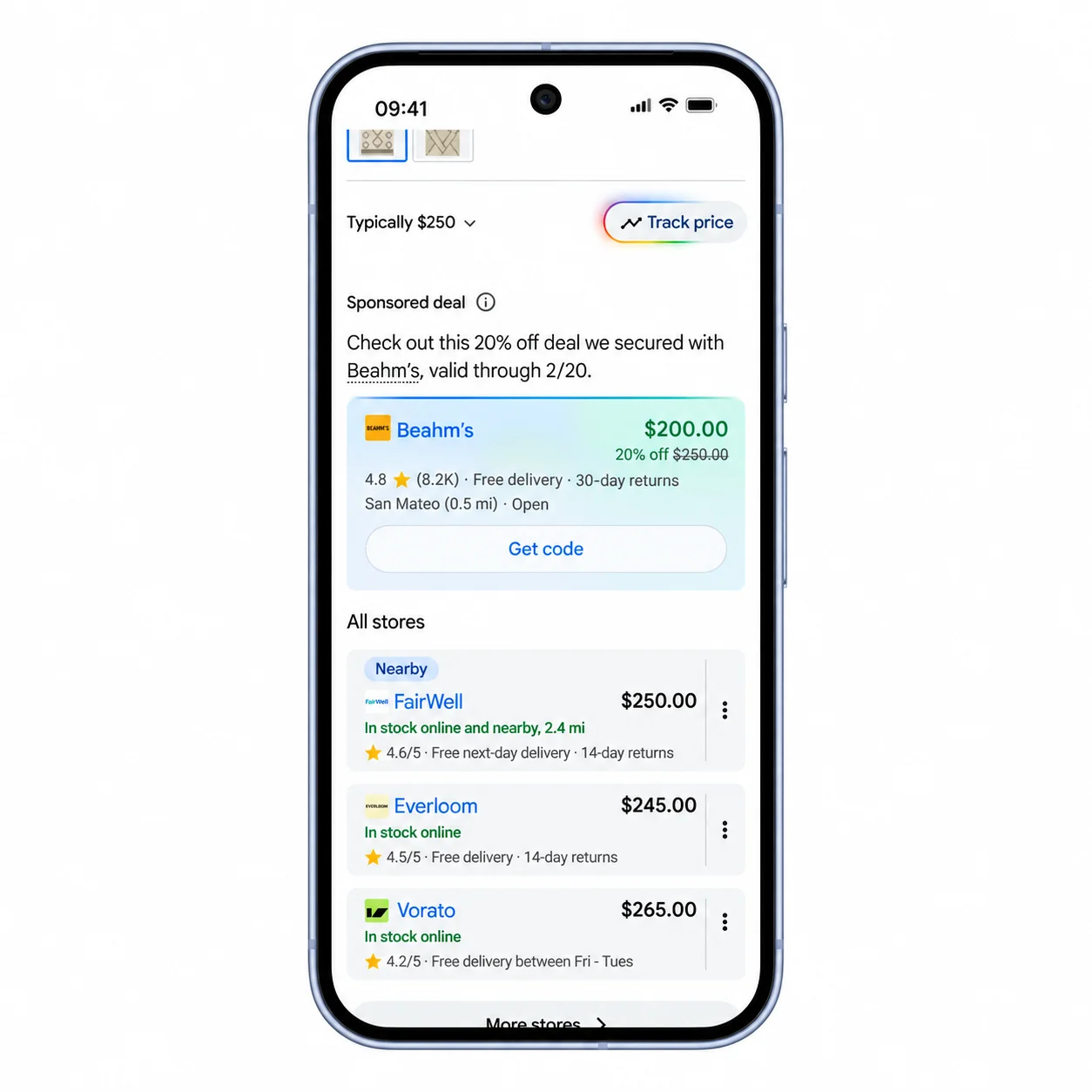
This does not mean that AI starts unilaterally setting the price. The merchant continues configuring its offers.
But there is a difference between controlling the available price and controlling which offer appears at the moment the decision is being made.
If increasingly complex commercial queries are resolved within Gemini or AI Mode, Google may be able to connect recommendation, advertising and conversion within the same interface. The ad would not need only to compete for the click that leads to another digital property. It could compete for space in the choice process itself.
Customer data does not disappear, but the pre-purchase context gains another intermediary
Google's official argument for merchants is explicit: integrating UCP does not mean giving up customer data. The retailer remains responsible for the transaction and retains its commercial relationship.
The strategic change is at another layer.
A conversational interface can be present when the consumer describes the problem, sets a budget, compares alternatives, eliminates products and finally decides to buy. This intent context exists before the order that reaches the marketplace.
For commerce platforms, this creates a possible division between transactional data and discovery data. The marketplace continues to know what was purchased, for how much, where it should ship and how the customer behaves on its own properties. The AI platform, in turn, occupies a central position in the interaction that preceded that purchase.
Google itself is building tools to turn this new journey into commercial metrics, with visibility and performance reports specific to its AI surfaces.
Pricing power does not migrate entirely, but the presentation of the offer may migrate
Something similar happens with price.
Protocols such as UCP keep functions such as checkout, discounts and loyalty with the merchant. There is no evidence that Google is taking direct control of retailers' prices.
What changes is the mediation.
An AI can compare prices across stores, consider characteristics mentioned during the conversation and present a given offer as more suitable. With Direct Offers, Google is also testing inserting sponsored benefits at moments identified as close to conversion.
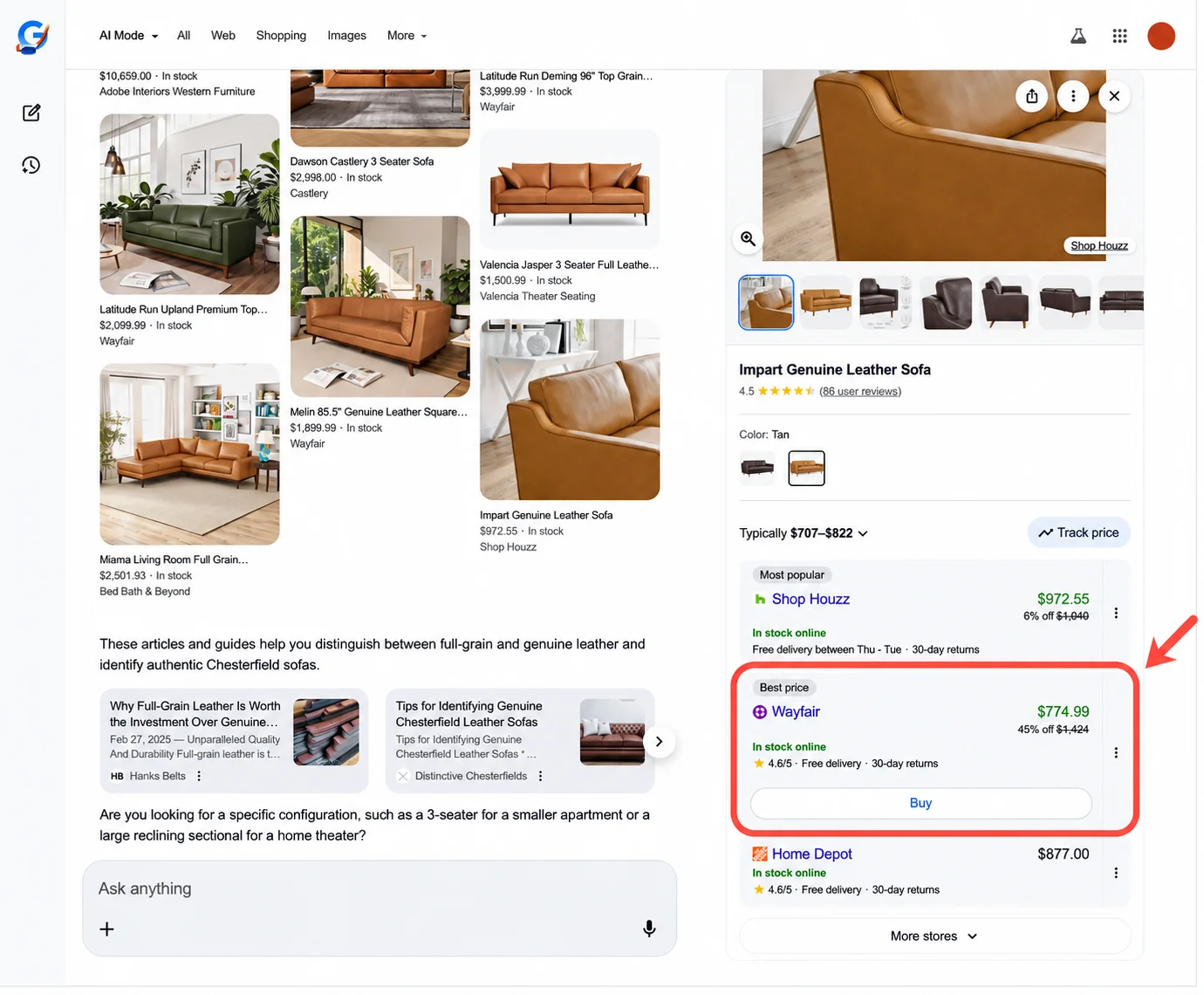
The retailer can continue defining how much it charges, while the interface gains growing influence over which price the consumer actually sees, compares and considers.
This distinction will be especially important for marketplaces that also monetize internal advertising. If part of commercial discovery starts outside their own apps, they will need to decide between integrating their catalogs deeply into AI interfaces or preserving the journey within their own environments.
The Flipkart test still does not prove that the marketplace will be replaced
The Indian experiment remains too small to support a definitive conclusion.
Not all users have access to the buy button. Only certain categories participate in the test. And, in the experience observed by TechCrunch, Amazon products appeared in recommendations alongside Flipkart items, but did not offer the same possibility of purchase within the AI.
This detail shows that agentic commerce can advance unevenly. For the AI interface to truly become a broad commercial layer, it will be necessary to integrate many retailers, preserve up-to-date inventory and prices, connect payments, manage returns, support loyalty and convince competing platforms that participating brings more advantages than handing part of the interface to the intermediary.
The UCP roadmap itself still foresees the expansion of features such as multi-item carts, connection with loyalty programs and post-purchase support.
October may show whether checkout becomes infrastructure or remains an experiment
The next concrete signal will come from India itself.
The planned expansion of the Flipkart test in October will make it possible to observe whether the buy button reaches more categories and users and whether other large retailers enter the same experience. It will also be important to monitor whether the flow continues using checkout with the marketplace's brand or converges toward integrations standardized by UCP.
After that, the question will be commercial: where ads appear, how conversions are attributed, what data merchants receive and to what extent loyalty programs and their own offers can survive within the agent's interface.
The Flipkart test still does not remove inventory, payment or the formal customer from the marketplace. But it shows that the dispute for e-commerce can begin before all that, in the place where the consumer decides what to buy and which offer deserves to be chosen.