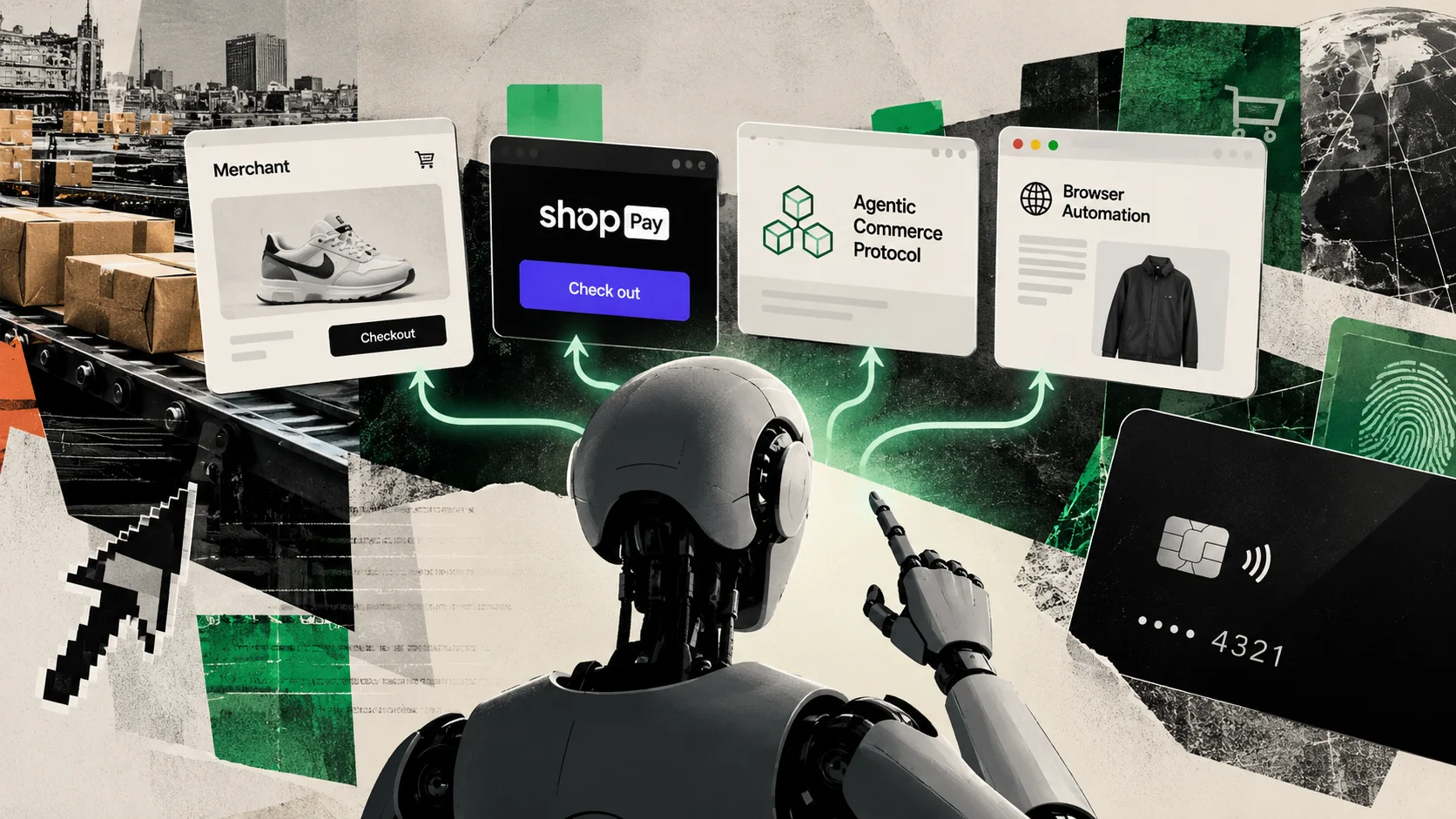
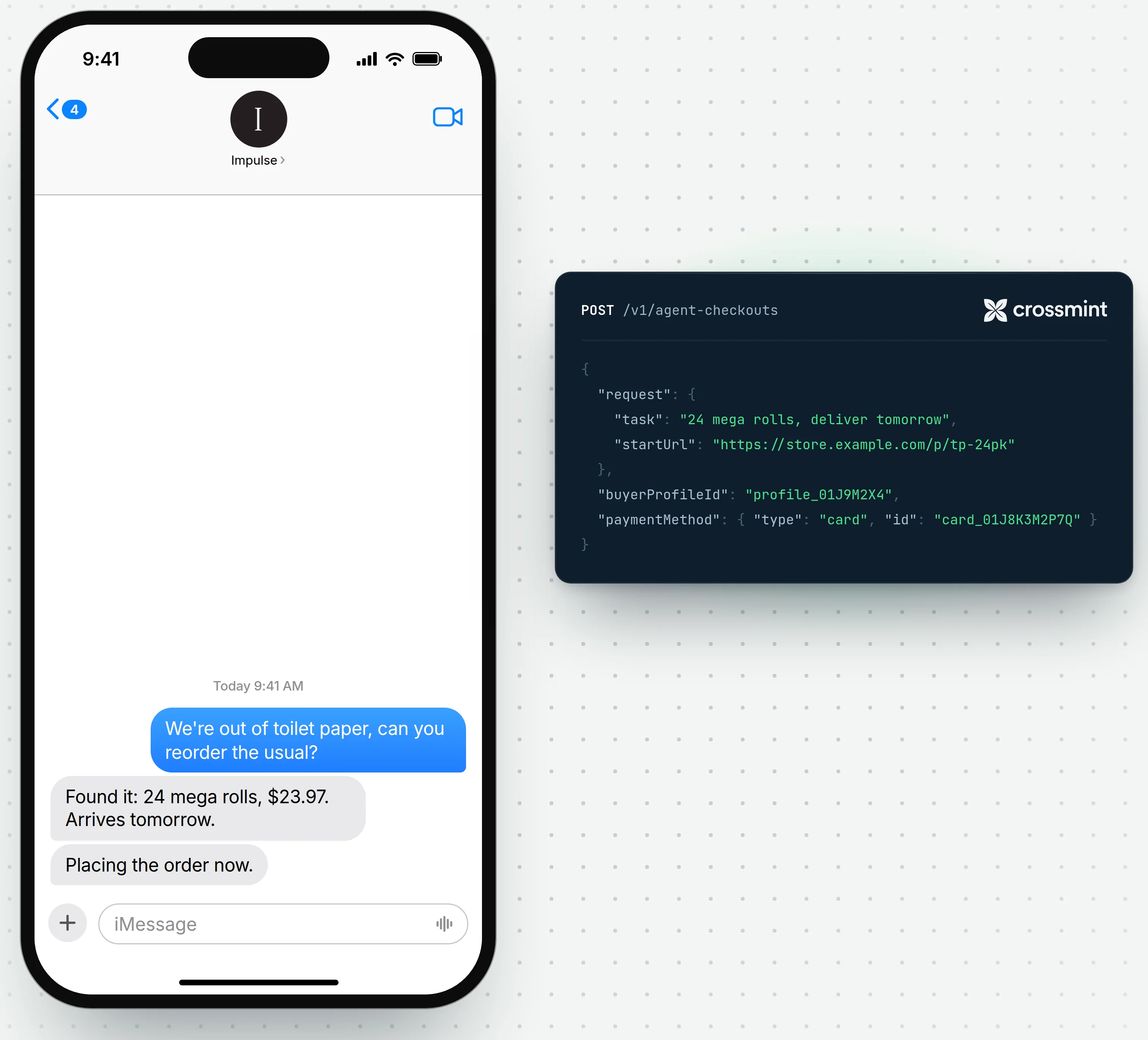
Crossmint has launched Agent Checkouts with a proposition that goes beyond offering yet another way for AI agents to make payments. The API allows an agent to state what it intends to buy, optionally provide a URL and choose a payment method. The infrastructure then decides whether the transaction should go through a direct integration with the merchant, through Shop Pay, through an agent-compatible protocol or even through browser automation.
The most important question is not in the API's launch. It is in what happens if these different purchase routes become interchangeable for the agent.
In that scenario, fragmentation among protocols can continue to exist behind the scenes, but disappear from the agent's experience. The dispute then comes to involve another layer: who controls identity, authorization, credentials and the choice of the infrastructure that actually completes each purchase.
According to Crossmint, Agent Checkouts chooses the best available route considering factors such as availability, reliability and cost. The company says it prioritizes direct integrations when they exist and falls back on the browser when necessary. Currently, it charges US$ 0.05 per execution in both cases. (Crossmint)
That turns a standardization problem into a routing problem.
Protocols can keep competing even if agents stop noticing that dispute
Agent-operated commerce is being built across several layers at the same time.
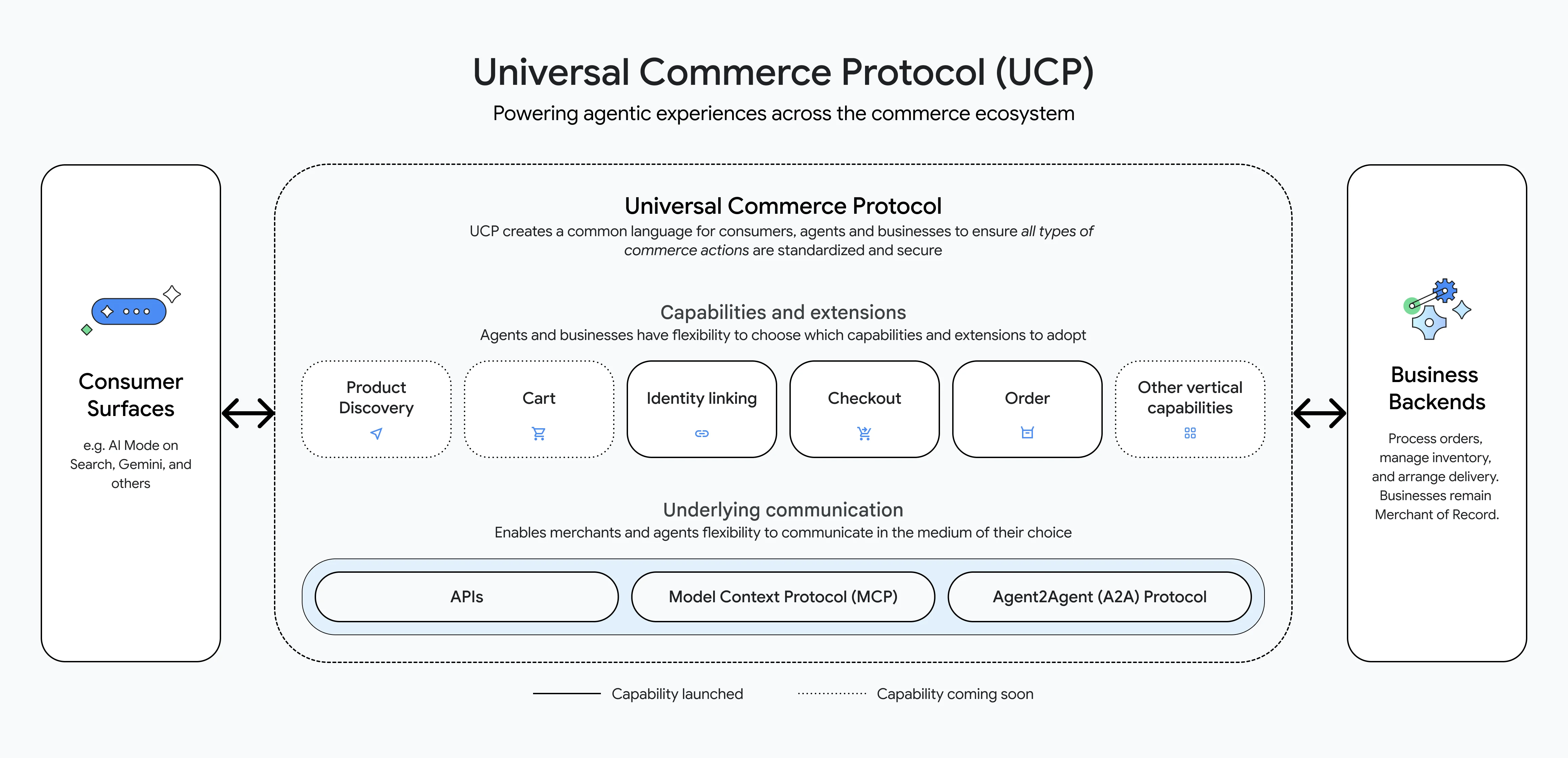
Google and Shopify developed the Universal Commerce Protocol, UCP, an open framework to allow agents, merchants and payment providers to negotiate steps such as product discovery, cart, checkout, fulfillment and payment. Google states that UCP can work together with other systems, including its Agent Payments Protocol, MCP and Agent2Agent. (Google Developers Blog)
Payment networks are building another layer.
The Visa Intelligent Commerce offers credential and authorization mechanisms aimed specifically at agent-initiated transactions. Mastercard follows a similar direction with Agent Pay, combining network tokens with controls designed to tie the transaction to an authenticated user instruction. (Visa)
Crossmint is betting that agent developers will not need to choose directly among all those systems on every transaction.
Its card vault can use Visa Intelligent Commerce or Mastercard Agent Pay when the credential is compatible. If those mechanisms are not available, the purchase can still go through another route. Shop Pay credentials and persistent sessions with merchants can also be reused, while browser automation works as an alternative for stores without agent-specific interfaces. (Crossmint)
If this model works at scale, UCP, payment network-specific credentials and traditional checkout do not need to converge into a single technology before agents can buy across much of the web.
They can simply become different routes that an infrastructure layer knows how to use.
The protocol war starts to turn into a dispute over abstraction
Crossmint is not alone in this direction.
Visa introduced Intelligent Commerce Connect, described by the company itself as an entry point independent of protocol, network and token vault for agent-operated commerce. The infrastructure was designed to accept transactions using technologies such as UCP, Agentic Commerce Protocol, Machine Payments Protocol and Trusted Agent Protocol, in addition to offering support for cards from other networks through external APIs. (Visa)
Stripe is following a similar logic at the credentials layer.
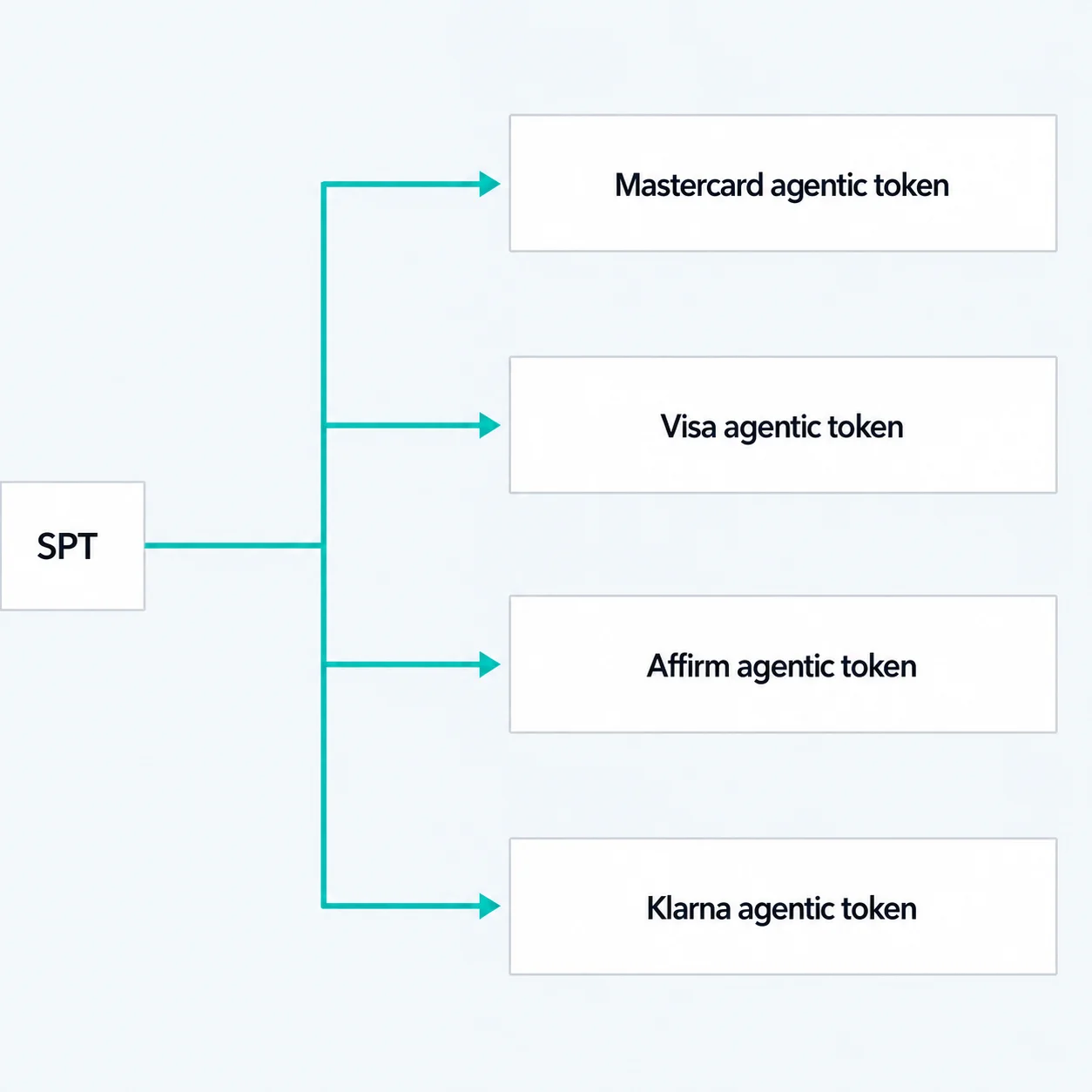
Its Shared Payment Tokens allow carrying a buyer's payment method to a merchant without directly revealing the credential data. Use can be limited by seller, amount and period. Stripe has also started connecting this mechanism to Visa Intelligent Commerce and Mastercard Agent Pay. (Stripe)
The move changes the nature of the competition.
The dominant infrastructure does not necessarily need to create the only protocol used by the market. It can become the layer that understands several protocols and decides which one to use.
That means storing or obtaining the right credential, identifying the merchant, choosing a transaction route and presenting that whole process to the agent through a single interface.
It is a known pattern in payments infrastructure. Complexity does not disappear when the developer stops seeing it. It is merely transferred to another layer.
Identity and authorization may be worth more than the checkout interface itself
Buying requires more than reaching a payment button.
The merchant needs to know which agent is interacting with its system, whether it represents a legitimate customer and whether a given purchase is within the limits that customer actually authorized.
The Trusted Agent Protocol, from Visa, for example, uses cryptographic signals to help merchants distinguish authorized agents from malicious or unknown automations. (Visa Developer)
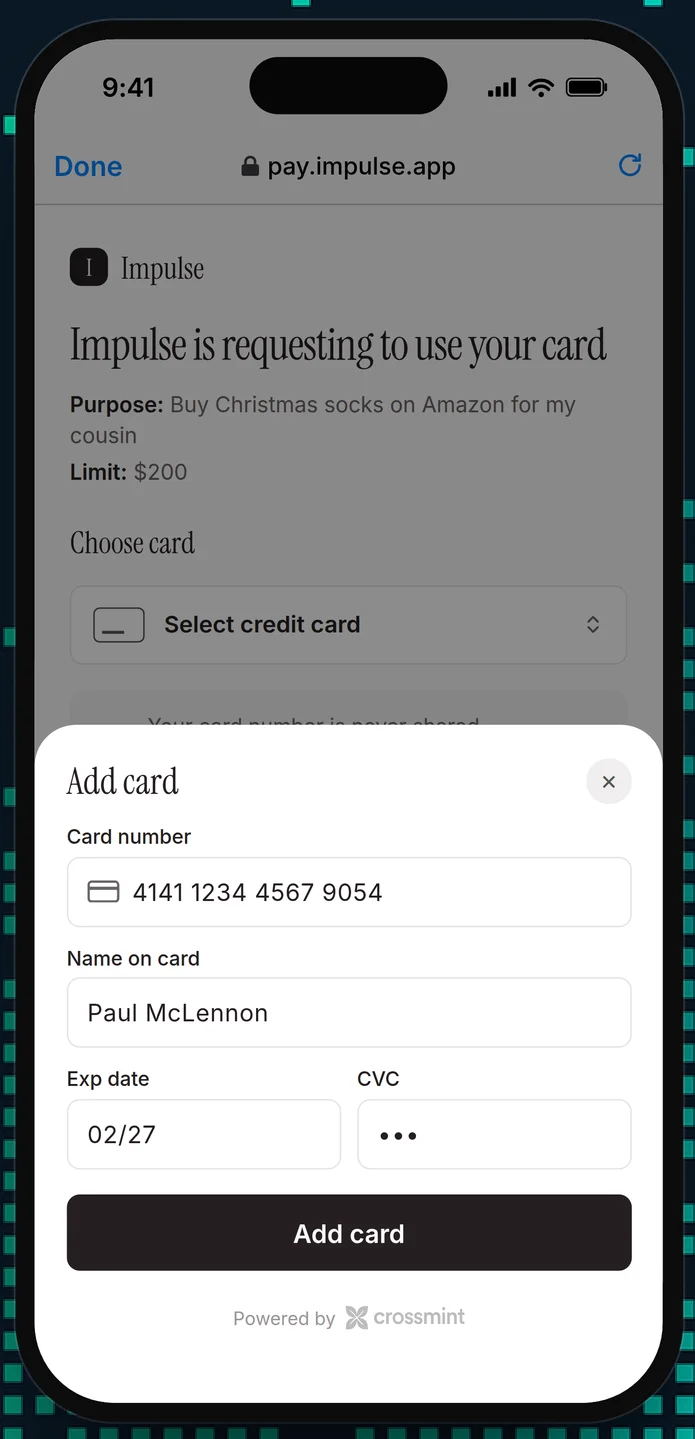
Crossmint itself acknowledges that this question is not yet solved across much of the web. The company states that merchants will need better mechanisms to identify agents and the users they represent, and says it is developing additional authentication, identity and trust products around Agent Checkouts. (Crossmint)
This is where the abstraction layer gains strategic importance.
An intermediary that brings together buyer profile, saved sessions, payment credentials, authorization policies and the ability to choose the checkout route occupies a different position from a simple payment API.
It can know what the user asked for, which merchant was selected, which credentials are available and which infrastructure can complete the transaction.
That does not mean that this company automatically controls the consumer relationship or the complete payment economics. But it does mean that a relevant part of the operational checkout decision can migrate to the orchestration layer.
Merchants and payment networks still retain important controls
This thesis also has limits.
UCP was designed to preserve the merchant as merchant of record and to allow companies to keep control over the customer relationship, pricing, fulfillment and certain transaction data. (Google Developers)
Payment networks and issuers continue to decide whether a credential is valid and whether a transaction should be authorized. Processors remain responsible for functions such as fraud prevention, settlement and processing.
Browser automation also looks more like a bridge than a final destination.
Crossmint states that it prefers to use checkout integrations whenever they are available and to resort to the browser only when necessary. The company itself also acknowledges that merchants will need to distinguish legitimate agents from unwanted bots. (Crossmint)
That creates an incentive for more and more operations to migrate from imitating human behavior in the browser to authenticated interfaces built for agents.
The result, therefore, may not be a single protocol defeating all the others.
A structure may emerge in which several protocols continue to exist beneath a few orchestration layers capable of talking to all of them.
The next dispute is over who becomes the default router
The main signal to watch is not only how many merchants adopt UCP, Visa Intelligent Commerce or Mastercard Agent Pay.
It is whether agent platforms will start to delegate checkout, credentials and authorization to intermediaries, instead of building those functions internally.
Crossmint charging the same amount for a transaction completed through direct integration or the browser already shows how this abstraction can be packaged commercially.
Visa is building an entry point capable of talking to multiple protocols. Stripe is bringing different payment mechanisms together through Shared Payment Tokens. Crossmint tries to put checkout, credentials and execution behind a single API.
If these layers gain adoption, the protocol war will not disappear. It will merely become less visible to those who build and use agents.
For the user, buying may end up feeling like a single instruction.
Beneath that instruction, merchants, payment networks, wallets, protocols and browsers will keep competing.
The most valuable position may end up being occupied by whoever decides which of them actually executes each purchase.