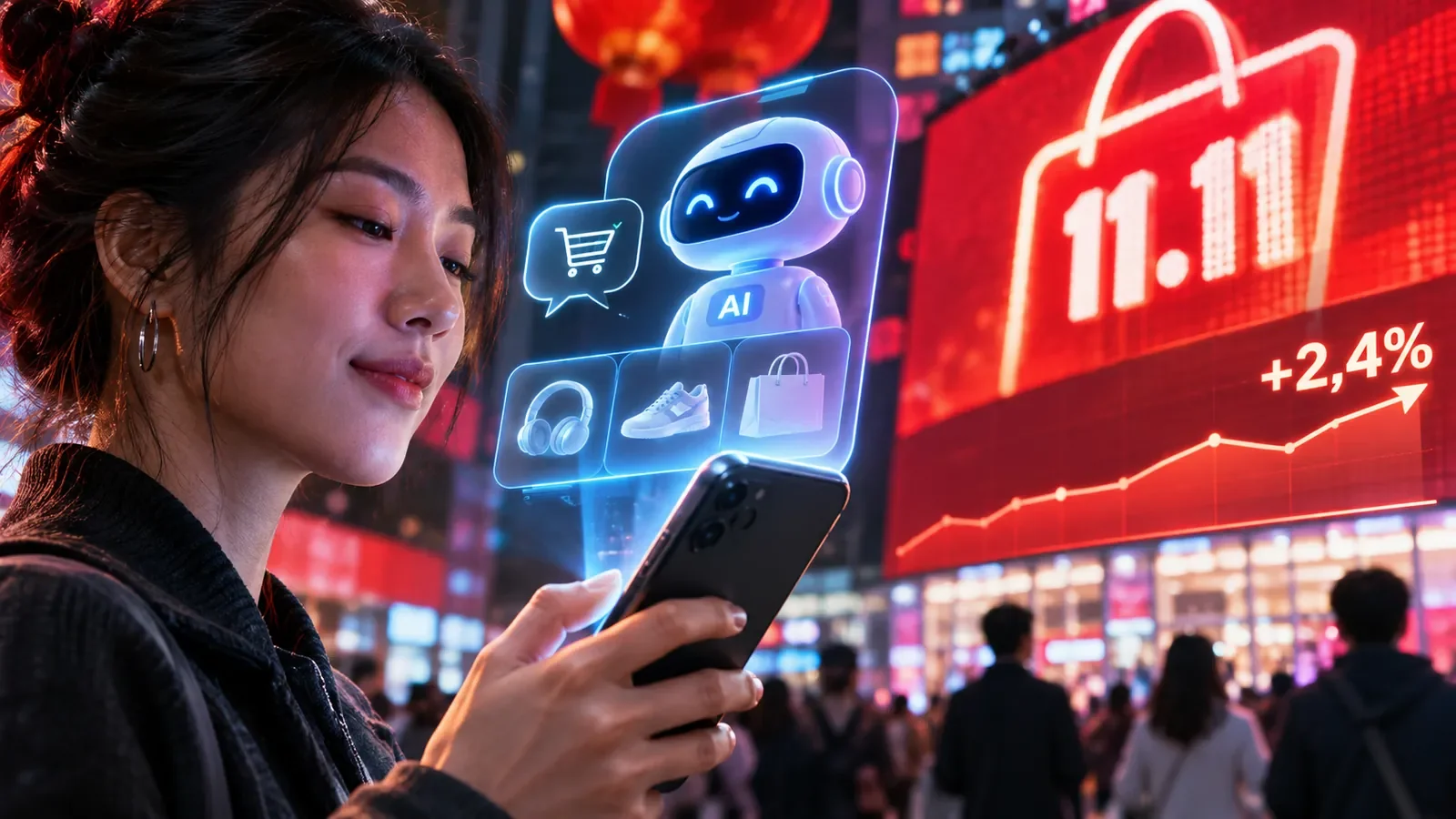
Singles’ Day 2026, China’s main shopping festival, reached November 11 with artificial intelligence assistants increasingly present on e-commerce platforms. Despite the expansion of tools capable of recommending products and making purchases, preliminary data still do not show a significant acceleration in consumption. According to analytics firm Syntun, sales grew 2.4% between October 7 and 31, before the end of the campaign.
Artificial intelligence gained ground at different stages of the shopping journey, from product research to applying discounts and completing orders. Alibaba, JD.com and other platforms incorporated these features to attract consumers in a market marked by competition and caution in spending, according to a report published by Reuters this Wednesday (11).
On Douyin, the Chinese short-video and social commerce platform, approximately 5% of purchases made in October came from chatbot links, according to data from WPIC Marketing + Technologies. In categories that require more considered decisions, such as dietary supplements, the share exceeded 20%.
Jacob Cooke, CEO of WPIC, described this commerce model to Reuters as a still-new channel for product discovery. He expects its share of direct purchases to increase, following a path similar to that of livestreams and social media commerce.
JD.com said its Dongdong shopping assistant attracted almost 80 million users during the campaign, more than three times the number recorded in the previous year. Alibaba’s Taobao and Tmall platforms, meanwhile, began offering assisted search features, virtual clothing try-ons and discount identification.
The integration of these features into apps that concentrate different services also allows AI agents to search for products, apply coupons, carry out transactions and organize deliveries without requiring the consumer to use another platform.
AI tokens gain ground, but consumption remains limited
Artificial intelligence also appeared as a product in the promotions. Tmall said that sales of AI tokens increased more than 700% between October 15 and November 5, compared with the period from September 15 to October 5.
These tokens represent units of use for artificial intelligence models, sold in packages that allow access to services and computing capacity. The growth reported by the platform measures a specific category of digital products, not the expansion of Chinese e-commerce as a whole.
Among physical products, Alibaba said AI toys surpassed 100 million yuan in sales since the category was created about a year ago. The company also reported that sales of AI companion robots were almost five times higher in the last two weeks of October compared with the same period in 2025, without disclosing the quantities sold.
The indicators, however, represent distinct phenomena. The share of chatbots in Douyin purchases, the number of Dongdong users and the growth in token sales are not directly comparable measures. Nor do they show that AI adoption has caused an equivalent increase in consumption.
Shoppers’ caution remains an obstacle. According to the Associated Press, weakness in the real estate market, limited income growth and the loss of consumer confidence continue to pressure Chinese demand. Retail sales grew only 1.1% in the January-to-September period, compared with the same period the previous year.
Greater use of assistants may also change competition among sellers. Ben Cavender, director at China Market Research Group, warned Reuters that some brands may lose visibility when consumers begin delegating product search and selection to AI systems.
The 2.4% tally released by Syntun remains preliminary and does not cover the entire festival. The company expects to present updated figures on Thursday (12), allowing for a more complete assessment of the campaign’s commercial performance.