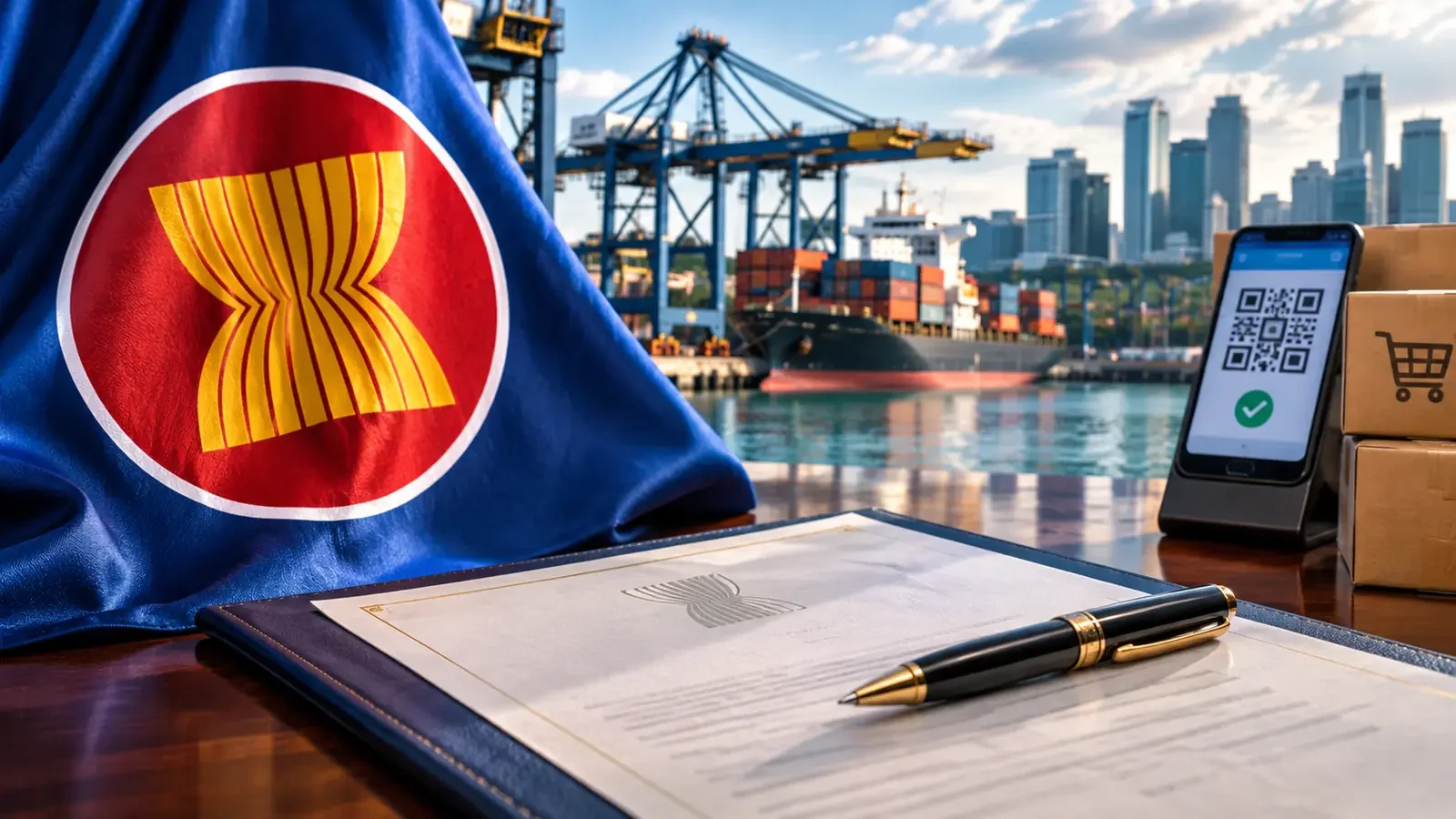
The countries of the Association of Southeast Asian Nations (ASEAN) signed this Saturday (14), in Manila, in the Philippines, a regional agreement to establish common rules for digital trade, electronic payments and international data flows. The Digital Economy Framework Agreement (DEFA) also covers cybersecurity and artificial intelligence, with entry into force expected in early 2027.
The treaty is ASEAN's first standalone regional agreement dedicated to the digital economy. Its goal is to reduce barriers that hinder operations between companies from different countries, especially in e-commerce, financial services and supply chains.
Among the planned measures are the facilitation of electronic transactions, the use of digital trade documentation and the development of standards that allow greater interoperability between national systems. The agreement also covers consumer protection, information security and source code protection.
The signing concludes a negotiation process that began in September 2023 and concluded in May 2026. According to a study commissioned by ASEAN, an ambitious implementation of the DEFA could raise the value of the regional digital economy to approximately US$ 2 trillion by 2030, compared with an estimated trajectory of close to US$ 1 trillion without this additional integration.
The figure, however, represents a projected scenario, conditional on the successful implementation of the agreement, and not an economic result guaranteed by the signing.
Payments, data and digital identity still depend on implementation
One of the priorities discussed by governments is facilitating cross-border payments, both in purchases made by consumers and in commercial transactions between companies. Other initiatives under consideration include electronic foreign trade documents and digital identity systems that allow trading partners to be verified.
These possibilities do not yet represent integrated services available throughout the region. The signing establishes a legal and cooperation basis, but it does not automatically make the payment, identification and document processing systems of the participating countries interoperable.
Singapore's Deputy Prime Minister Gan Kim Yong acknowledged the difficulties in reconciling the different laws and technological conditions of the bloc's members.
"But each country has its own specific concerns," he told Channel News Asia, explaining that some restrictions are related to privacy, business confidentiality and national security.
The agreement provides for flexibility and national exceptions in these areas. According to Gan, countries prepared to move forward on certain initiatives may cooperate without necessarily waiting for all the others to reach the same level of technological and regulatory development.
Timor-Leste's participation also requires a formal distinction. Although representatives of the country participated in the signing, Singapore's Ministry of Energy, Trade and Industry states that its official accession to the DEFA depends on the completion of the applicable procedures.
The ASEAN Secretariat expects the treaty to enter into force in early 2027. Until then, governments are working on implementation plans and the first cooperation initiatives, while e-commerce and payments companies will still need to wait for operational solutions to be defined in order to take advantage of the expected benefits.