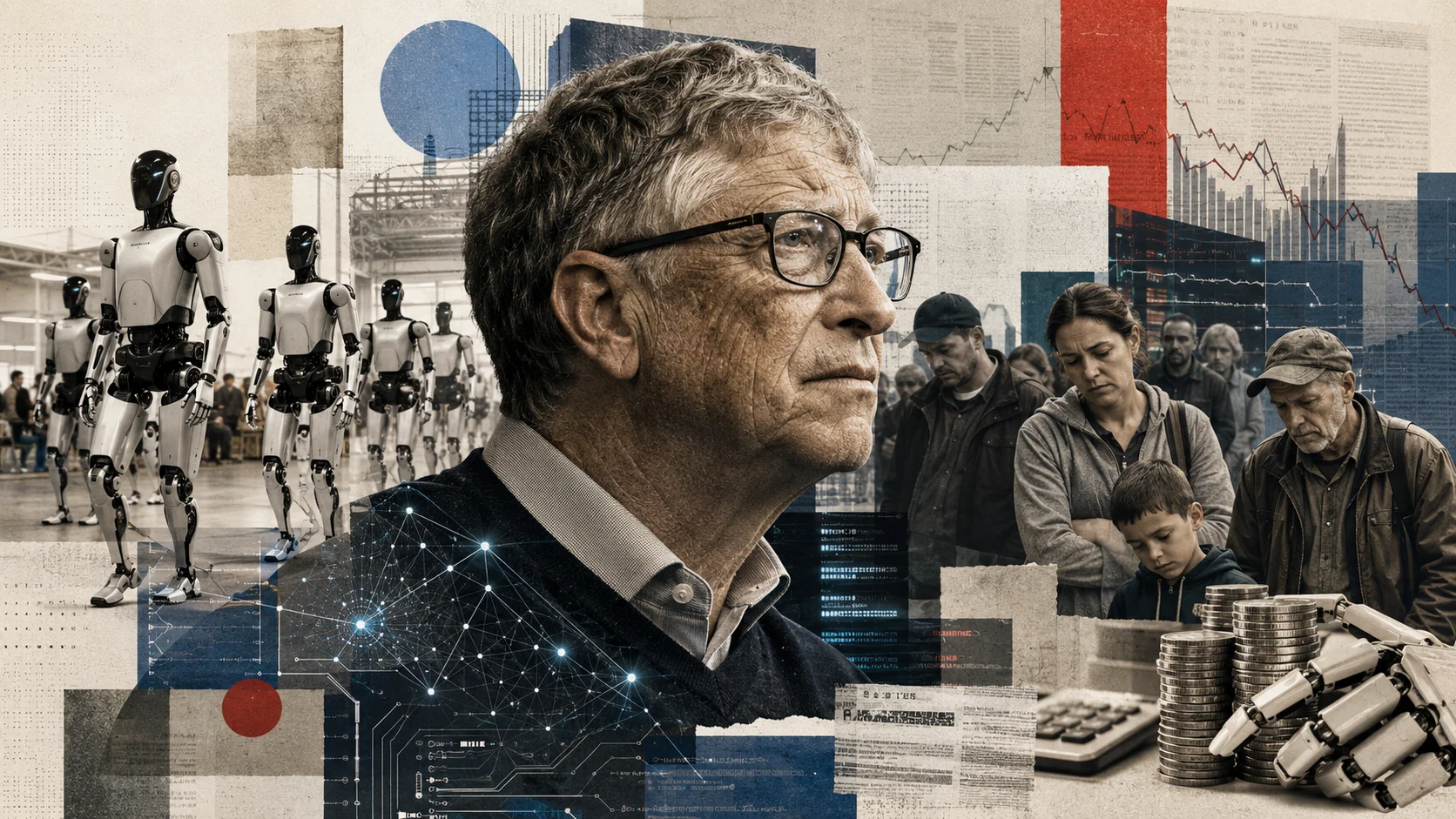
Bill Gates warned of the risk of mass and permanent unemployment caused by the advance of artificial intelligence and defended tax changes to reduce incentives for replacing workers. In an essay published this Wednesday (26), the Microsoft co-founder proposed taxing robots and the use of AI, preserving certain roles exclusively for humans, and creating a new international structure to manage the technology's risks.
For Gates, the current transformation will differ from previous technology cycles because AI systems could replace not only manual tasks but also part of the cognitive capacity used across a wide range of professions. He predicts impacts on administrative jobs, programming, customer service, medicine, industry, and later, physical work.
The businessman sums up the dilemma in one of the essay's main statements: the technology could become “the greatest equalizer ever invented or the worst source of injustice”. In his assessment, the outcome will depend on decisions made before the economic and social effects of automation become harder to manage.
Gates predicts permanent disappearance of jobs
The labor market is central to the warning. Gates rejects a direct comparison between artificial intelligence and earlier technological transitions, such as the gradual replacement of agricultural jobs by administrative roles in the United States.
In that process, he argues, the change took place over several generations, and new occupations still depended on human cognition. With AI, companies can adopt systems capable of seeing, hearing, speaking, and reasoning using computers and devices that already exist, reducing the time needed for the technology to spread.
Gates estimates that sectors such as law, consumer service, medicine, software development, and manufacturing could face changes over a decade, rather than several generations. Although new roles are likely to emerge, he considers it possible they will be insufficient to replace all the positions eliminated.
“Many jobs will disappear forever”, he wrote.
The first effects, according to him, should hit entry-level and mid-level positions especially. Gates points to sales, customer support, software engineering, and legal assistant activities among the areas that could be affected sooner.
The change would not be limited to office work. He believes robots capable of performing physical tasks will begin competing with workers in segments such as construction and hospitality by the end of the decade, as equipment becomes more skilled and cheaper.
Gates also describes a competitive effect that could accelerate automation. When a company replaces part of its human workforce and cuts costs, competitors come under pressure to do the same. If established companies resist, new automated businesses can enter the market with lower expenses.
The result, in his assessment, could be an economy with fewer jobs considered good and with a larger share of financial benefits concentrated among technology owners. Young people would be especially vulnerable as they face a market with fewer entry-level openings, traditionally used to gain professional experience.
Tax on robots and AI tokens
One of the most concrete proposals presented by Gates is a change in taxation to reduce the economic advantage of replacing workers with machines.
The businessman advocates charging taxes on robots and AI tokens — the processing units used by models to receive and generate information. The goal would be to partially slow the replacement of labor and fund job training programs and a broader social safety net.
Gates argues that current tax systems can create the opposite incentive. Companies pay payroll-related charges when they hire employees, while investments in equipment and automation can receive more favorable tax treatment.
The taxation would need to be targeted, according to him, to prevent the additional cost from harming applications considered socially beneficial, including those that could reduce spending on health and education.
The discussion gains importance because automation itself could pressure public revenues. If fewer people are employed or work fewer hours, governments would collect less income tax precisely when demand for unemployment insurance, retraining, and other social programs rises.
Gates had already defended a tax on robots years ago and now reiterated that he continues to support the idea. For him, the funds raised should go mainly to replaced workers, people who suffer wage or hour reductions, and communities where job losses are concentrated.
Jobs could be reserved exclusively for people
A second proposal is to create a category Gates calls “Human Reserved”, or “reserved for humans.” The idea is to deliberately prevent certain activities from being fully automated even when the technology is already capable of performing them.
He compares the concept to nature reserves: places that could receive roads or buildings but remain protected because society considers the loss caused by intervention unacceptable.
Gates cites as a reference the caregivers who accompanied his father during the advanced stages of Alzheimer's disease. For him, aspects of that care depended on a human relationship that should not be transferred entirely to machines.
The same logic could be applied to sensitive medical situations. A robot could technically tell a patient they have an incurable disease, Gates exemplifies, but the ability to perform a task does not necessarily mean society should allow its automation.
The criterion could also be economic. Governments could temporarily preserve certain roles when automation causes the layoff of large groups with few prospects of quickly moving to other professions.
Education and mental health, for example, could adopt hybrid models, with human professionals responsible for care and AI tools used to expand their capabilities. The rules would likely vary across countries according to economic, demographic, and cultural factors.
Gates himself acknowledges the proposal leaves unanswered questions, such as who would decide which professions are protected, what criteria would be used, and how to prevent companies from violating the restrictions.
Cyberattacks, bioterrorism, and loss of control
The replacement of workers is only one of three major groups of risks described in the essay.
The second involves the increased capacity of people, organizations, and eventually the AI systems themselves to cause harm. Gates warns of fraud, disinformation, deepfakes, surveillance, and cyberattacks becoming more accessible to criminals with little technical experience.
Hospitals, financial institutions, water networks, electrical systems, and platforms used to distribute public benefits are among the infrastructures he considers vulnerable.
The same dual-use nature appears in biology. AI can speed up the discovery of drugs and vaccines, but Gates warns that similar tools could also facilitate the development of dangerous biological agents.
He also points to a long-term possibility in which sufficiently powerful systems begin to act in ways not intended by their developers and, eventually, against human interests. Gates does not present this scenario as an inevitable prediction and says he intends to address the topic in more detail later.
Gates warns of AI's impact on children
The third concern involves children's development, education, and human relationships.
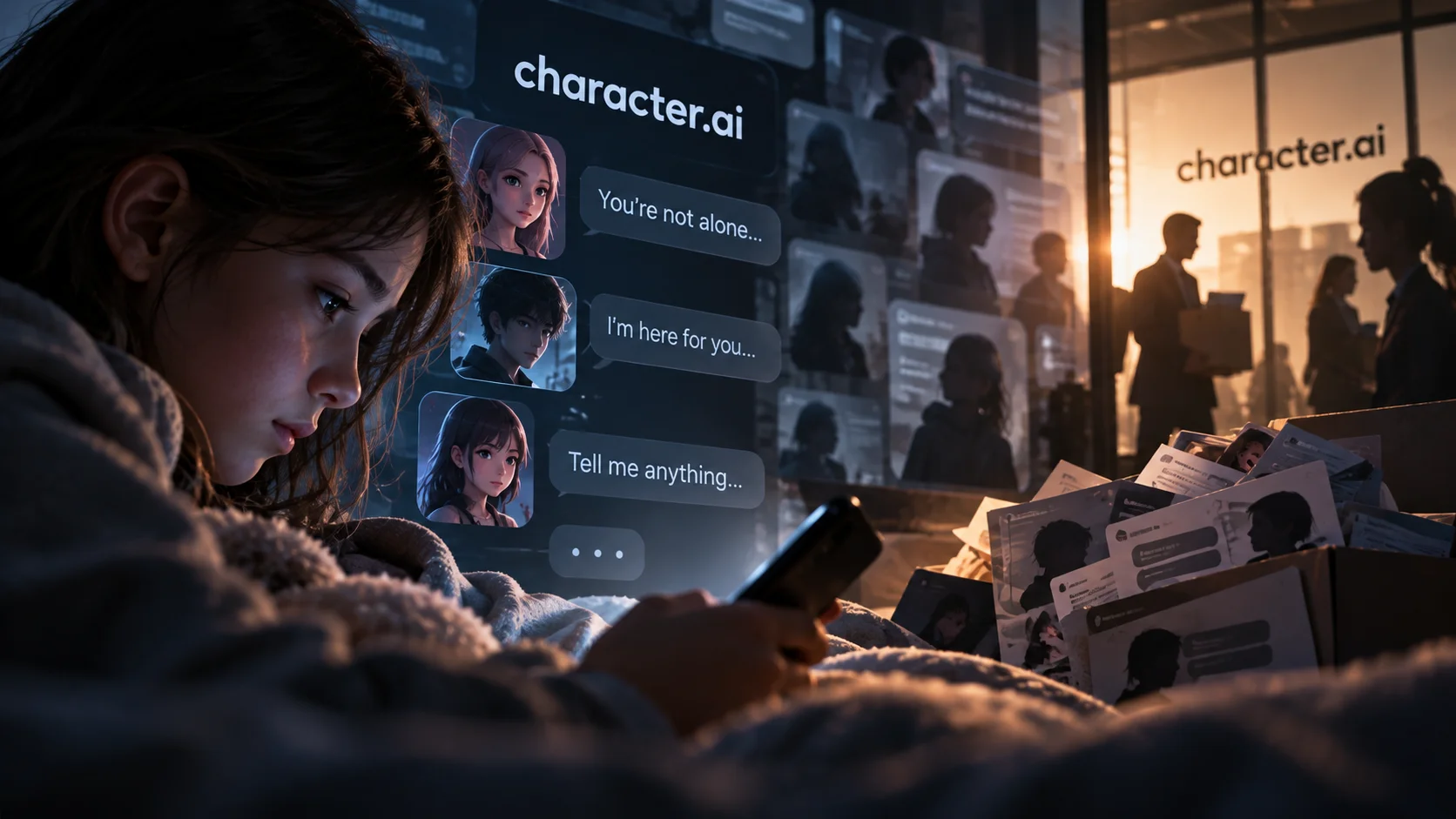
Gates fears that highly personalized virtual companions could reduce incentives for young people to face uncomfortable social situations necessary for developing interpersonal skills.
He cites a study of more than 1,100 users of AI companions, conducted by researchers at Stanford and Carnegie Mellon, in which people with smaller social networks were more likely to turn to chatbots. More intense and emotionally personal uses were also associated with worse well-being outcomes.
In education, the businessman points to a contradiction: the technology can vastly expand access to knowledge, but it could also allow students to skip part of the cognitive effort needed for learning.
The text mentions preliminary research that found an association between more intense AI use and lower critical thinking, with a more pronounced effect among young people. Gates links the issue to the growth of deepfakes and personalized disinformation, a context in which assessing the reliability of information tends to become more important.
AI can also expand access to health and education
Despite the warning tone, Gates does not advocate halting the development of artificial intelligence and devotes a substantial part of the essay to the technology's potential benefits.
He sees applications in scientific research, clean energy, climate change, food production, and drug development. Systems capable of processing large volumes of scientific literature could help researchers find patterns and select promising experiments.
In health, Gates cites tools capable of analyzing tests and assisting medical teams in hospitals without local specialists. He also envisions systems to support primary care doctors, help patients interpret tests, and follow up on treatments.
In agriculture, he believes some of the biggest gains could occur in low-income countries. Farmers who currently have little access to weather forecasts, information about seeds, animal diseases, and soil conditions could receive personalized guidance from AI.
Public services are another highlighted area. Systems could help citizens navigate bureaucratic processes to apply for health insurance, student aid, or food assistance while also reducing administrative costs.
In education, Gates advocates tools that preserve what researchers call “productive effort”: instead of automatically providing an answer to the student, AI could guide reasoning and allow teachers to devote more time to individual attention.
Gates Foundation intends to expand use of the technology
AI will also play a direct role in the philanthropic projects linked to the businessman. Gates said the foundation has 19 years to spend the remaining US$200 billion of his fortune and intends to use artificial intelligence in health, agriculture, and education initiatives.
Goals include accelerating research on vaccines and drugs against HIV, tuberculosis, malaria, and malnutrition, and helping health professionals and patients use new tools.
Gates also said that OpenAI, Anthropic, Google, and Microsoft are working with the foundation on different initiatives. One priority will be to expand the availability of models in the languages spoken in countries where the organization operates, rather than concentrating resources only on the most widely used languages in rich and middle-income economies.
New international organization for artificial intelligence
The main institutional recommendation presented in the essay is the creation of a new governance architecture to manage the transition.
Gates argues that current public bodies were built to deal separately with labor, security, health, taxation, energy, or education. Artificial intelligence, on the other hand, can simultaneously affect employment, elections, the financial system, national security, public health, transportation, energy, and digital infrastructure.
At the national level, he advocates bodies capable of coordinating priorities across different agencies and identifying risks that could lack a specific owner within the traditional structure of the state.
Because digital and biological threats can cross borders, Gates considers an international institution dedicated to AI necessary. The organization could incorporate elements of existing systems for nuclear inspections, international aviation rules, and environmental agreements, though he does not present a closed institutional design.
The proposal would require some level of cooperation between the United States and China, in addition to dialogue among the countries that host the main AI developers and critical components of the supply chain.
For Gates, this process must begin before a crisis forces governments to react hastily. “We do not have the luxury of moving slowly”, he said.
He advocates that leaders bring together economists, technology and labor experts, businesspeople, and workers to identify flaws in existing institutions and determine which new authorities will be needed.
Gates also said he intends to increase his personal participation in this debate. He said he would bring the relationship between AI and inequality to conversations with lawmakers in Washington, international leaders, and executives responsible for developing the leading models.
The stance is more cautious than the one Gates presented in 2023, when he published the essay The Age of AI has begun and compared artificial intelligence to transformations caused by the personal computer, the internet, and the cell phone.
Now, Gates argues that the speed and ability to replace human cognition make some comparisons with previous technological revolutions inadequate. Although he still considers AI a possible tool for reducing inequalities, his assessment is that the benefits will not be distributed automatically and that leaving adaptation solely to market forces could widen economic concentration.