The CFTC has decided to use an authority created by Dodd-Frank to build a specific federal framework for retail crypto transactions carried out with margin, leverage or financing. The move allows the regulator to advance without waiting for broad market structure legislation, but it also exposes the main limit of that strategy: the agency can regulate a significant part of the market, but cannot turn the entire American spot market into a federal market on its own.
The proceeding opened on October 5 is based on section 2(c)(2)(D) of the Commodity Exchange Act. The rule already determines that certain retail commodity transactions carried out with margin, leverage or financing be treated similarly to futures and executed within the CFTC's regulatory framework, except for exceptions provided by law, such as actual delivery of the asset.
What is new is that the agency intends to stop using that authority mainly as an enforcement tool and turn it into an operational architecture for crypto exchanges.
The CFTC found a door that the spot market does not offer
The legal divide is decisive.
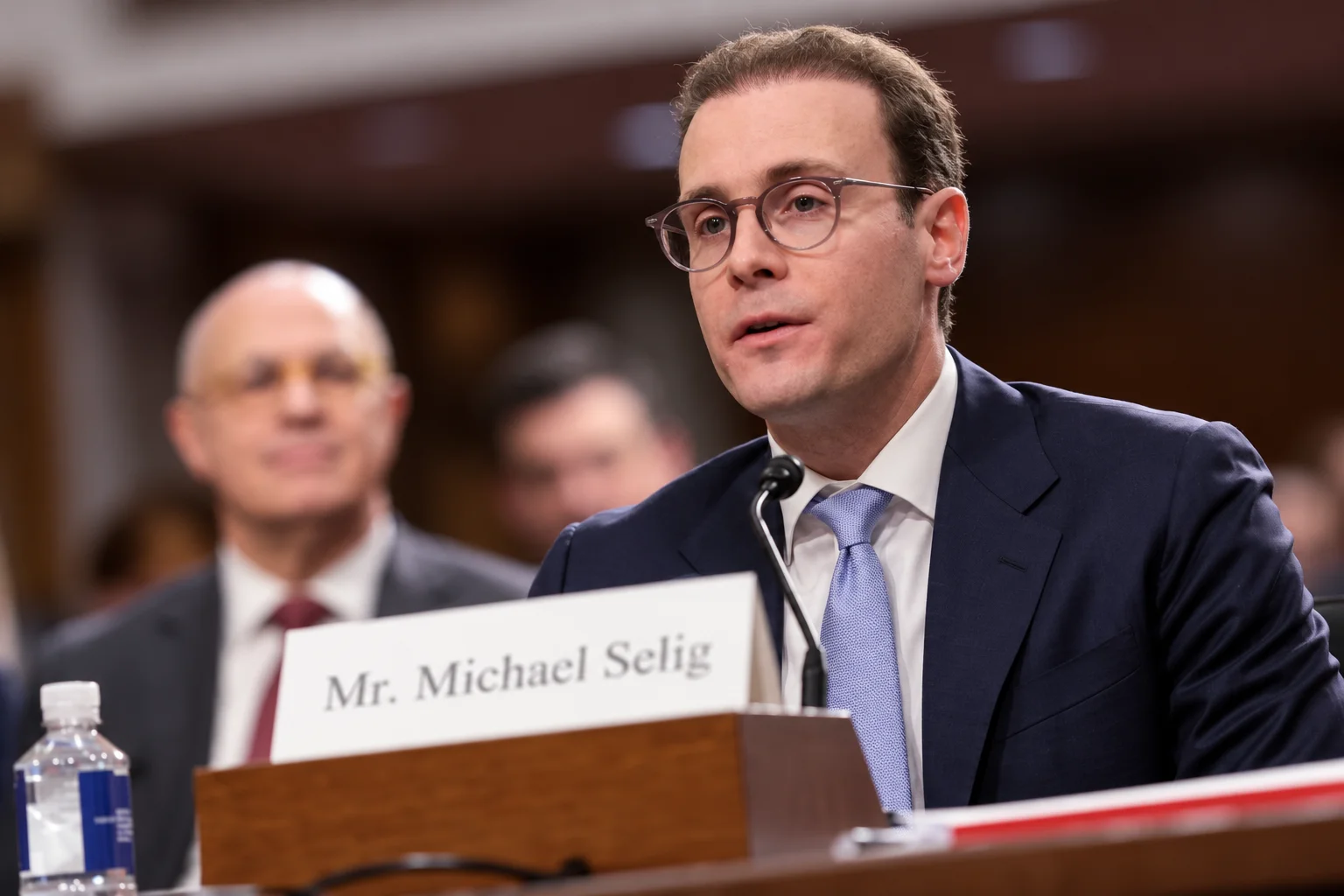
An exchange that offers only conventional crypto buying and selling remains, to a large extent, within state money transmission regimes, while the CFTC maintains powers against fraud and manipulation. According to the agency's chair, Michael Selig, only Congress can require all these spot platforms to register with the CFTC.
The situation changes when a platform offers retail clients transactions with margin, leverage or financing. In that case, existing legislation already creates a direct connection with the CFTC's jurisdiction.
It is in that difference that the regulator is trying to build its federal alternative.
The plan provides for the creation of so-called Crypto Asset Transactions, or CTXs, and a new category of platform called Crypto Asset Market, or CAM. A CAM would function as a subcategory of current designated contract markets, with rules adapted specifically for crypto. Exchanges already registered as DCMs could also offer CTXs within the proposed framework.
This means that the CFTC does not need a new law to start building a federal market for a certain class of crypto transactions. It needs one to turn this model into a general obligation for the spot market.
The federal license comes with a structural change
The possible advantage for exchanges is the creation of a more uniform national route for activities currently surrounded by a combination of state regimes and federal restrictions.
But that route would not simply be a more convenient federal license.
CAMs would have to comply with principles currently applicable to DCMs, including market supervision, financial integrity, handling of customer funds, controls against abusive practices, conflicts of interest and operational security.
In asset listing, for example, a platform would have to assess crypto-specific factors such as token concentration, distribution, lockup periods, vesting, programmatic emissions and buyback mechanisms to demonstrate that a given market is not easily manipulable.
The CFTC is also considering requiring proof of reserves from exchanges that hold customer assets in omnibus accounts.
Another potentially deeper change would be the mandatory participation of futures commission merchants in CTXs. FCMs would manage customer accounts and funds and would be subject to capital requirements, asset segregation, recordkeeping, risk controls and obligations related to the Bank Secrecy Act.
This brings leveraged crypto infrastructure closer to the traditional architecture of regulated American derivatives markets.
For larger platforms, especially those that already maintain sophisticated regulatory structures or operate derivatives, this standardization can be economically attractive. For companies focused on simple spot, the advantage is less evident because the federal regime would add costs and intermediaries that are not necessary to continue operating exclusively within the first layer described by the CFTC itself.
The federal route can change exchanges' incentives
The most important competitive consequence may arise at the boundary between spot and more sophisticated products.
Today, an exchange can remain essentially spot and operate through state licenses. With clear federal rules for CTXs, a platform could consider that adding financed or leveraged products now justifies the cost of entering the CFTC regime.
This would turn regulation into a product variable.
The choice would no longer be just between complying with dozens of state regimes or waiting for a federal law. It would also come to involve which products the exchange wants to offer and what regulatory infrastructure it is willing to take on.
This change does not mean that state licenses would automatically disappear. The CFTC itself presents the model as a federal option and recognizes that spot platforms can continue following the state route.
The economic reach of the proposal will therefore depend on how many exchanges see enough value in offering CTXs to justify registration, intermediation by FCMs and controls equivalent to those required of markets regulated by the agency.
The delivery exception keeps an exit for onchain transactions
There is yet another important limit.
The legislation excludes certain transactions from the retail commodity transactions framework when there is “actual delivery” of the asset within 28 days. The CFTC intends to make it clearer that the transfer of crypto to an external, non-custodial wallet controlled by the user can generally satisfy this condition.
The distinction is relevant because it prevents any financed transaction involving crypto from being automatically absorbed by the new regime.
The concept of actual delivery is also not new. In 2019, in the Monex case, the Ninth Circuit recognized that the exception requires actual transfer of some degree of possession or control to the customer. The Supreme Court later declined to review the appeal filed against that decision. Although the case involved precious metals, it legally strengthened the CFTC's interpretation of the authority granted by section 2(c)(2)(D).
This offers a more solid basis for regulating retail commodity transactions. It does not mean, however, that all elements of a future Regulation CAM are immune to legal challenges.
Congress continues to control the missing piece
The CFTC's strategy partially responds to the legislative impasse, but does not eliminate it.

Without new legislation, the agency cannot turn all centralized spot exchanges into mandatory participants in a federal market similar to the one that exists for futures. That is precisely the expansion that a market structure law could establish.
What the regulator can do alone is turn an already existing authority, until now used mainly in enforcement cases, into a regulatory infrastructure usable by exchanges that offer products with margin, leverage or financing.
The next concrete signals will be the content of the proposed rule after the comment period, the final definition of CAM obligations, the design of intermediation by FCMs and, above all, the reaction of the exchanges themselves.
If major platforms apply for registration or adapt their products to operate under this regime, the CFTC will have created in practice a significant federal layer of the crypto market without waiting for Congress.
If participation remains limited, the episode will also show where the reach ends for an agency trying to build market structure from powers originally conceived for a much narrower part of the market.