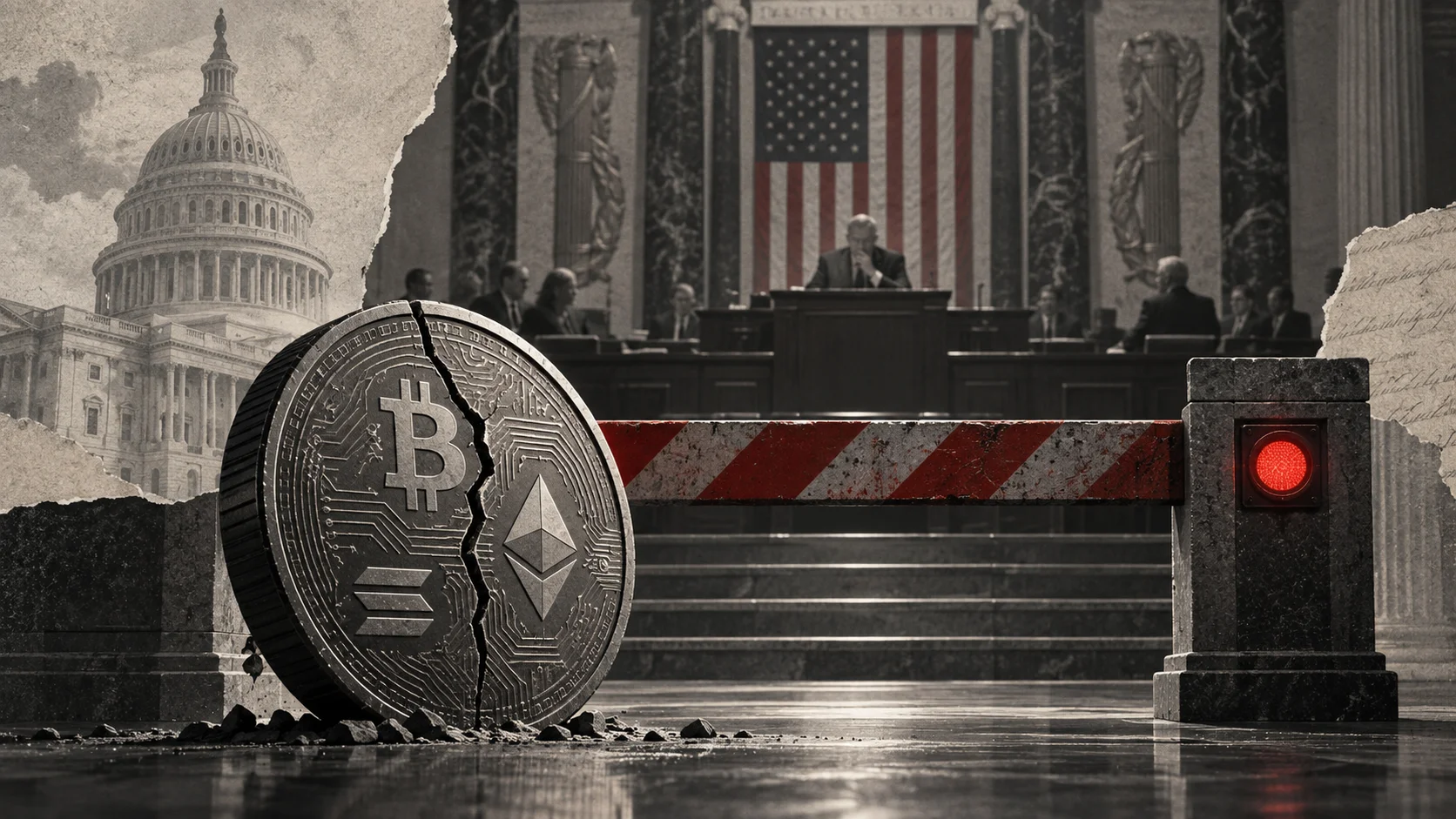
The U.S. Senate failed to move forward with the CLARITY Act on Tuesday (15), after a procedural vote ended in 49 votes in favor and 50 against, below the 60 needed to open the way for consideration of the bill. The result halts, for now, Congress's main attempt to create a comprehensive federal framework for the cryptocurrency market.
The vote did not represent a definitive rejection of the text. What failed was the so-called cloture, a mechanism needed to end the preliminary debate and allow the Senate to move to formal consideration of the proposal.
Republican Senator Thom Tillis changed his vote to "no" after it became clear that the proposal would not reach the 60 votes. The change was procedural and preserves the possibility of a future reconsideration, but no new vote has been confirmed.
The setback comes after the bill advanced through important stages in Congress. The House of Representatives passed the CLARITY Act by 294 votes to 134 in July 2025, and the Senate Banking Committee approved the proposal 15 to 9 in May of this year.
Disagreements prevented sufficient support in the Senate
The CLARITY Act seeks to define how different types of digital assets should be regulated in the United States and to delineate the responsibilities of the Securities and Exchange Commission (SEC) and the Commodity Futures Trading Commission (CFTC).
Republicans presented a revised version before this week's vote, incorporating changes negotiated in previous months, including new provisions on conflicts of interest for public officials and rules related to stablecoins. Even so, the text did not gather the necessary bipartisan support.
Democrats maintained objections involving consumer protection, combating illicit financial activities, and ethics rules for officials with financial interests in cryptocurrencies. Some senators also questioned the possible impact of yield-bearing stablecoins on bank deposits and the availability of credit.
Republicans who support the bill argued that the changes made during negotiations already addressed most of those concerns. Senate Banking Committee Chairman Tim Scott said after the defeat that he will continue working toward legislation for the sector.
SEC and CFTC continue to have a central role while Congress negotiates
Without the CLARITY Act advancing, the division of responsibilities set out in the bill does not take effect. In practice, the SEC and CFTC continue developing rules for digital assets based on the authorities they already have, while Congress tries to find sufficient support for permanent legislation.
Scott explicitly advocated that the two regulators continue establishing rules for the sector while Congress has not passed a new law.
The bill is also not formally closed. Tillis's maneuver leaves open a new attempt at a vote, but the Senate calendar and the proximity of November's legislative elections make it uncertain when negotiations might produce another floor test. No new date has been announced.
The market reacted negatively in the session in which the bill stalled. Coinbase shares closed down about 10%, while Circle lost more than 11%; bitcoin also retreated during the day. The moves occurred amid uncertainty over when a regulatory framework approved by Congress might return to the agenda.