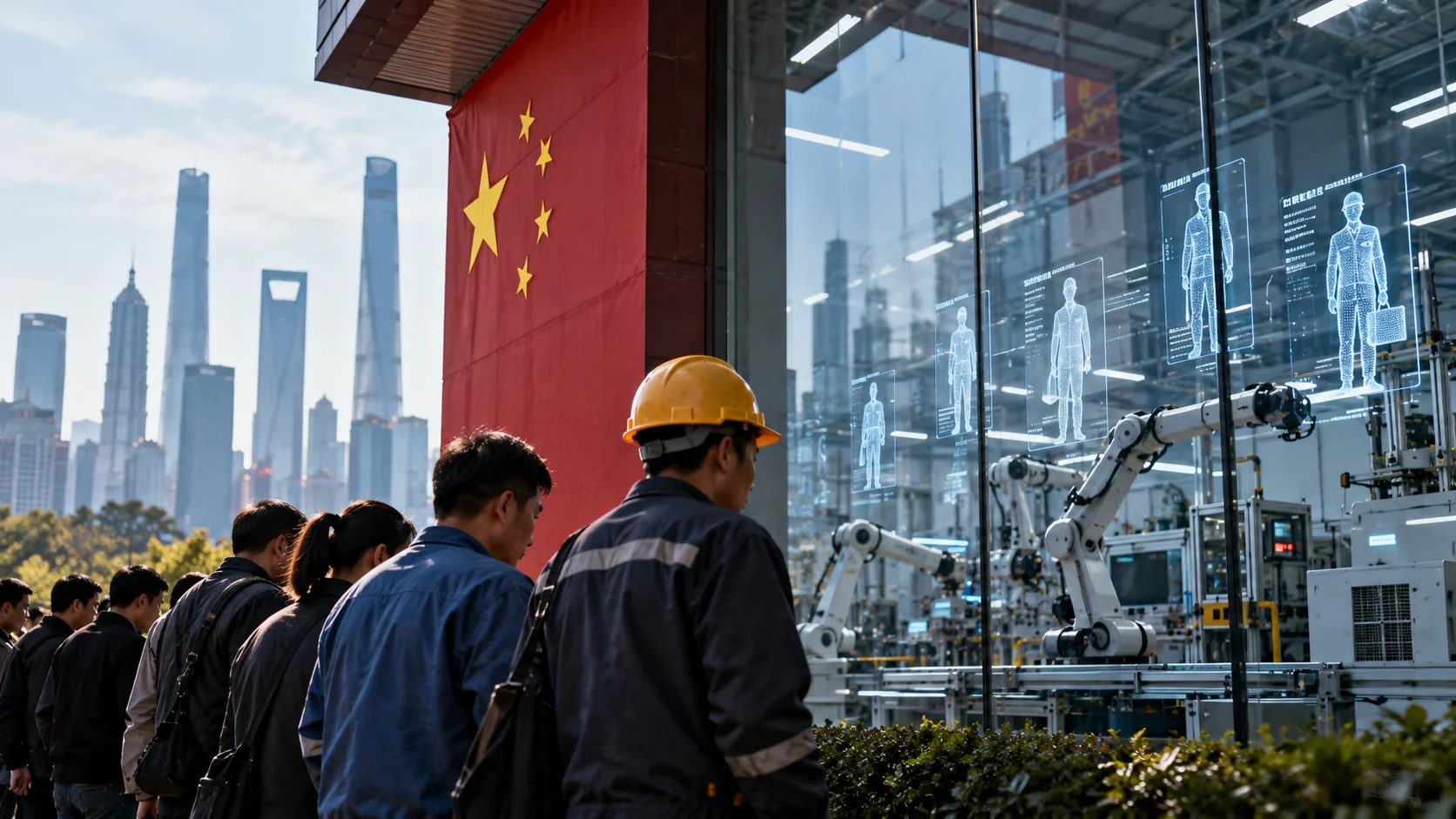
The government of China released new guidelines this Friday (23) to reduce the risks of workers being replaced by artificial intelligence. The document, published by the General Office of the State Council, instructs public agencies to combine the expansion of the technology with professional training, job placement and employment protection measures.
The initiative brings together 18 tasks distributed across six areas of action. Among the priorities are the creation of AI-related occupations, support for small and medium-sized enterprises, and the adaptation of traditional activities to preserve job opportunities during automation.
The government also intends to establish mechanisms to assess the risks of projects that use artificial intelligence, especially those capable of causing significant changes in the labor market.
Guidelines include reskilling and occupational risk monitoring
The guidelines provide for specific training programs, career guidance services and support for the job placement of workers affected by the technology. Authorities should also improve public employment services, including with AI tools to connect candidates with opportunities.
Another front involves the creation of monitoring and alert systems to identify risks of job replacement and prepare responses to possible impacts of automation.
The document also covers the strengthening of labor rights, the adaptation of social security mechanisms and measures related to income distribution. As detailed by Reuters, the guidelines also address the use of algorithms in personnel management, including discriminatory practices, fraudulent recruitment and privacy violations.
Implementation will be the responsibility of local administrations and the bodies responsible for employment and economic development policies. The guidelines set priorities for government action, but do not represent the full implementation of the measures, nor do they prove results in preserving jobs.