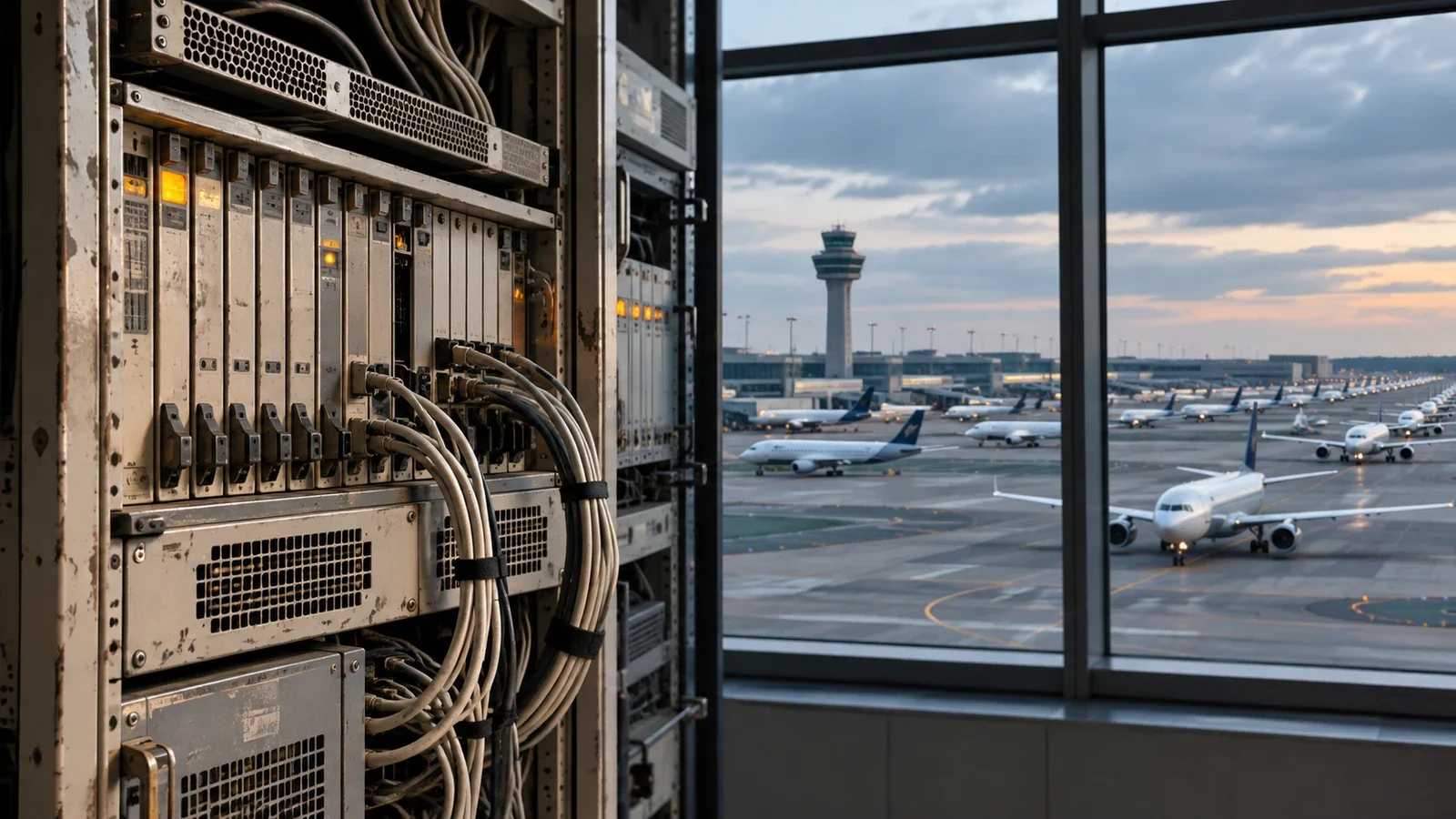
The U.S. Federal Aviation Administration (FAA) ordered a nationwide suspension of departures on Friday (13), after a failure in communications and radar information used by air traffic control. The instability began at 3:36 p.m. Eastern Time, and the airspace was reopened at 8:15 p.m., after more than four hours of restrictions.
When the measure was adopted, more than 3,500 aircraft were in the air, according to U.S. Transportation Secretary Sean Duffy. Controllers followed contingency procedures to guide landings, while new departures were halted as a precaution.
The stoppage did not mean a complete loss of radar or communications systems. According to Duffy, the equipment was providing inconsistent information, which led the FAA to suspend departures to preserve the safety of operations.
Even after the reopening, airlines faced difficulties reorganizing their operations. Thousands of flights were canceled, and the resumption depended on the availability of aircraft, pilots and crews, many of them displaced from their original schedules.
Old routers are cited as the source of the instability
During a press conference at the White House, Duffy attributed the incident to the overload of old equipment in the U.S. air traffic control telecommunications infrastructure.
The affected system uses TDM technology, employed in traditional telecommunications networks, as well as routers and switches responsible for transporting information between control facilities. According to the secretary, these components became overloaded and began providing inconsistent data to air traffic control centers and airport approach units.
“It was the old equipment that failed”, Duffy said, explaining that the new IP protocol-based switches, already installed in part of the infrastructure, did not show the same problem.
The difference between the old and new components reinforced the government's preliminary assessment that the instability was related to legacy infrastructure. However, definitive identification of the cause still depended on technical investigation.
The secretary also clarified that the SMART tool, developed to assist with air traffic management, was not connected to the affected systems. The solution uses information about the airspace to offer recommendations to human controllers, but it did not take part in the operations responsible for the failure.
The clarification ruled out the hypothesis of direct involvement by the artificial intelligence tool in the incident, although authorities were still investigating the details of the disruption.
Duffy said that technical teams managed to reduce the overload on the equipment and restore operations at the control centers. He also again asked the U.S. Congress for resources to modernize the FAA's infrastructure.
The reopening of the airspace, however, did not mean an immediate return to normal. The secretary warned that the reorganization of flights could continue the next day, as airlines managed to reposition aircraft and assemble available crews.