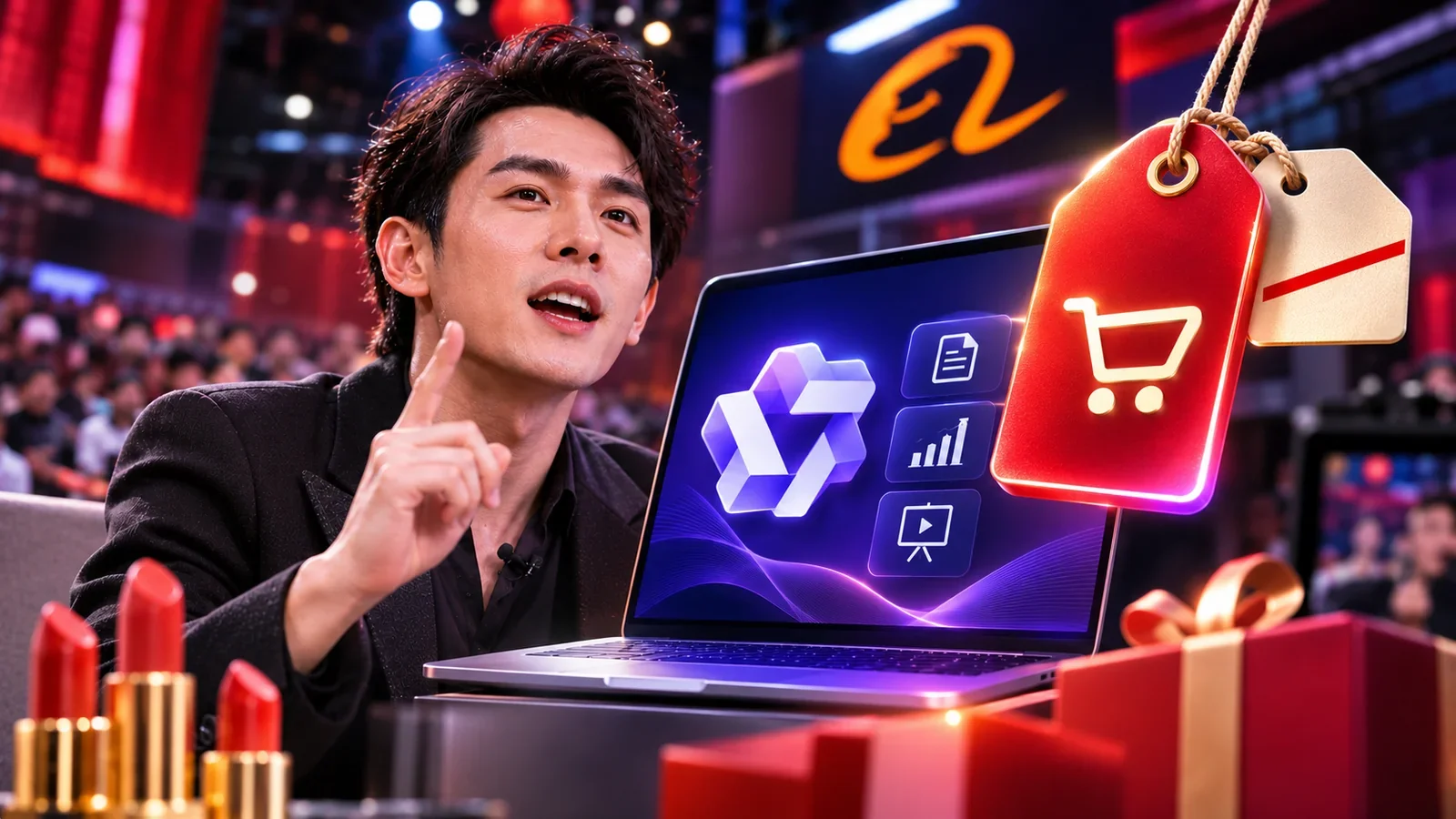
Chinese influencer Li Jiaqi, known as the "Lipstick King" for his cosmetics sales livestreams, sold about 100,000 artificial intelligence subscriptions in just 30 minutes. The operation took place on Monday (2), during Singles' Day promotions in China, with a decisive condition: the service, normally offered for 28 yuan, cost just 0.01 yuan.
The subscriptions belong to QwenWork, Alibaba's AI productivity platform. According to data released by the company and reported by Reuters this Tuesday (3), the packages sold represent approximately 2 trillion tokens of contracted capacity.
The number, however, does not mean that all this processing was used. It refers to the capacity associated with the subscriptions purchased by consumers.
Tokens are units used by artificial intelligence models to interpret and generate content. They allow the processing of texts and other information to be measured, also serving as a reference for billing for the use of AI services.
QwenWork offers tools to produce documents, create presentations, analyze data and automate office tasks. During the Taobao livestream, the platform was presented to the public alongside computers and devices equipped with artificial intelligence features.
From lipsticks to artificial intelligence credits
Li Jiaqi's participation represents a shift in how Chinese companies are marketing AI services. Instead of restricting the offering to specialized platforms, companies have begun presenting processing capacity as a product that can be purchased in promotional campaigns, alongside electronics and consumer goods.
Alibaba has created a dedicated section on Tmall for selling token packages, bringing together offers from developers such as MiniMax, Moonshot AI and Z.AI, in addition to its own services.
Competitor JD.com has also begun offering a commercial area for AI services, including products associated with DeepSeek, Z.AI and ByteDance's Volcano Engine.
The strategy is already showing significant numbers in corporate disclosures. Alibaba reported that sales of token plans grew 450% between October 1 and 20, compared with the previous month.
This indicator, however, does not clarify how much of the growth resulted from discounts, new buyers or increased actual consumption of the services.
0.01 yuan promotion limits conclusions about demand
The most important detail of the livestream appears in the pricing policy. According to the Chinese newspaper Beijing Business Today, QwenWork's basic monthly subscription, originally announced at 28 yuan, was offered for 0.01 yuan.
The discount practically eliminated the cost of trying the service, making the campaign especially favorable for acquiring new users.
Although the volume of approximately 100,000 subscriptions is significant, it does not prove that these consumers would agree to pay the regular price after the promotion ends.
There are also differences between subscriptions sold, tokens contracted, processing actually used and revenue generated. The numbers released by Alibaba do not allow these equivalences to be established, nor were they presented as independently audited results.
The experiment shows that artificial intelligence credits can already be marketed in popular e-commerce livestreams. The next challenge for Chinese platforms will be to convert this promotional interest into recurring use, subscription renewals and sustainable revenue.