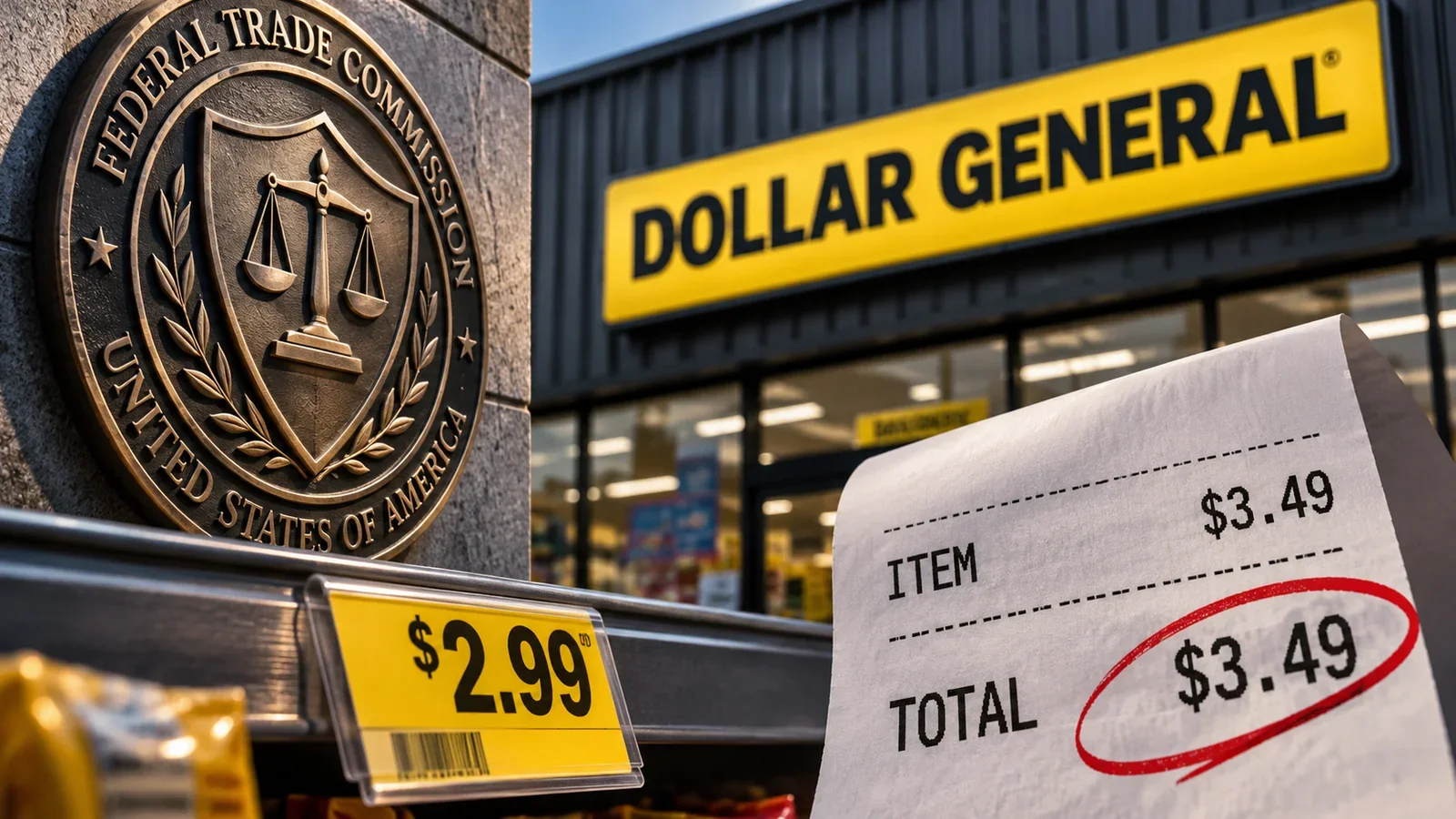
The United States Federal Trade Commission (FTC) and authorities from 20 states sued Dollar General on October 26, 2026, accusing the retail chain of charging amounts higher than those advertised on shelves, labels and advertisements. According to the lawsuit, the practice allegedly occurred for years, causing millions of dollars in improper charges to consumers.
The complaint was filed in federal court in Tennessee and argues that the company was aware of the discrepancies but did not take sufficient measures to resolve them. Dollar General operates more than 21,000 stores in the United States, with a strong presence in rural communities and among low-income consumers.
Court documents indicate that the company received 29,265 complaints related to noncompliance with advertised prices between January 2023 and March 2026. The records cover the 48 U.S. states where the chain operates.
The FTC also mentions a regulatory enforcement history. Between 2019 and 2026, Dollar General entered into seven agreements with state authorities related to pricing problems, which resulted in more than US$ 6 million in penalties. For the agencies responsible for the lawsuit, this history shows that the inconsistencies were not unknown to the company.
Dollar General disputes allegations and promises to defend itself
In a statement released on the day of the lawsuit, Dollar General rejected the allegation that it had deliberately ignored customers' interests. The company acknowledged that occasional differences between shelf prices and checkout prices can occur, but said that its employees are instructed to correct the amounts when they identify problems.
The retailer also questioned the calculations used by the FTC to determine possible financial compensation. According to the company, there were negotiation attempts before the lawsuit was filed, but the monetary demands presented by the regulator would be disproportionate to the estimated losses.
In a document sent to the United States Securities and Exchange Commission (SEC), Dollar General stated that it intends to challenge the allegations in court and acknowledged that an unfavorable outcome could affect its financial statements.
The FTC and the participating states are seeking court measures to stop the challenged practices, as well as financial compensation and civil penalties. There is still no final decision on the allegations, which remain under review by the U.S. federal court.