On Monday (12), Meta introduced the Muse Wonder and Muse Wonder Full artificial intelligence models, developed for programming, personal agents, and execution of complex tasks. The launch begins with access aimed at developers, while the more advanced version is restricted to Muse Code subscribers.
The new models were developed by Meta Superintelligence Labs and trained with the infrastructure of the Prometheus data center. The company says it has achieved competitive results with leading AI systems in evaluations of programming, memory, and professional tasks.
The technology was also designed for activities that require multiple steps, such as developing applications, interpreting legal documents, and working with financial information. However, immediate availability does not extend to all users of the Muse assistant.
Muse Wonder is already available through the API, but the Full version requires a subscription
Muse Wonder can be accessed through the Meta Model API and Muse Code, the company's programming tool. Muse Wonder Full, meanwhile, is available exclusively to Muse Code subscribers, with no announcement of access through the API.
The integration of Muse Wonder into the Muse app will occur later, starting with subscribers. Meta has not set a date for this distribution and intends to develop specialized versions to expand access to the technology.
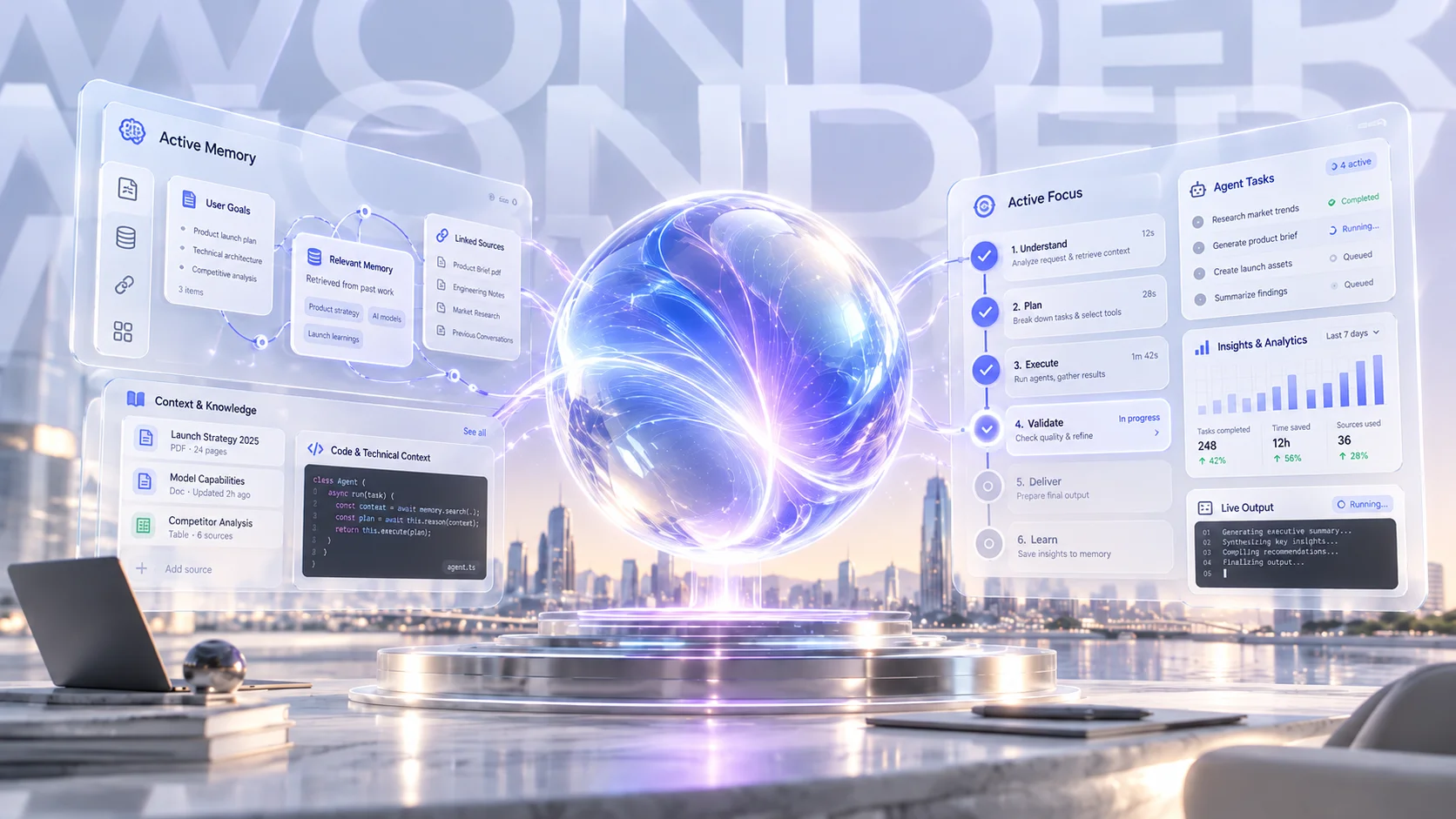
Among the main innovations are two mechanisms aimed at task continuity. Active Memory makes it possible to retrieve relevant information from previous conversations, preventing the user from having to repeat instructions or provide certain contexts again.
Active Focus was developed to keep agents working on prolonged objectives, including when they encounter obstacles. The system can test alternative approaches, adapt execution to new information, and request confirmation before performing important actions.
In programming, the models were trained to follow projects with multiple stages of development, testing, and reviews. Meta also presented evaluations in areas such as law, finance, and health, in addition to tests of prolonged execution of software projects.
The results released indicate, according to the company, competitive performance with models from other labs. These comparisons, however, are based on evaluations presented by Meta itself, and do not constitute independent proof of superiority.
The company also reported that it is preparing an additional report on safety, including tests of protection of private information and resistance to misuse of the models. It did not announce when the complete document will be published.