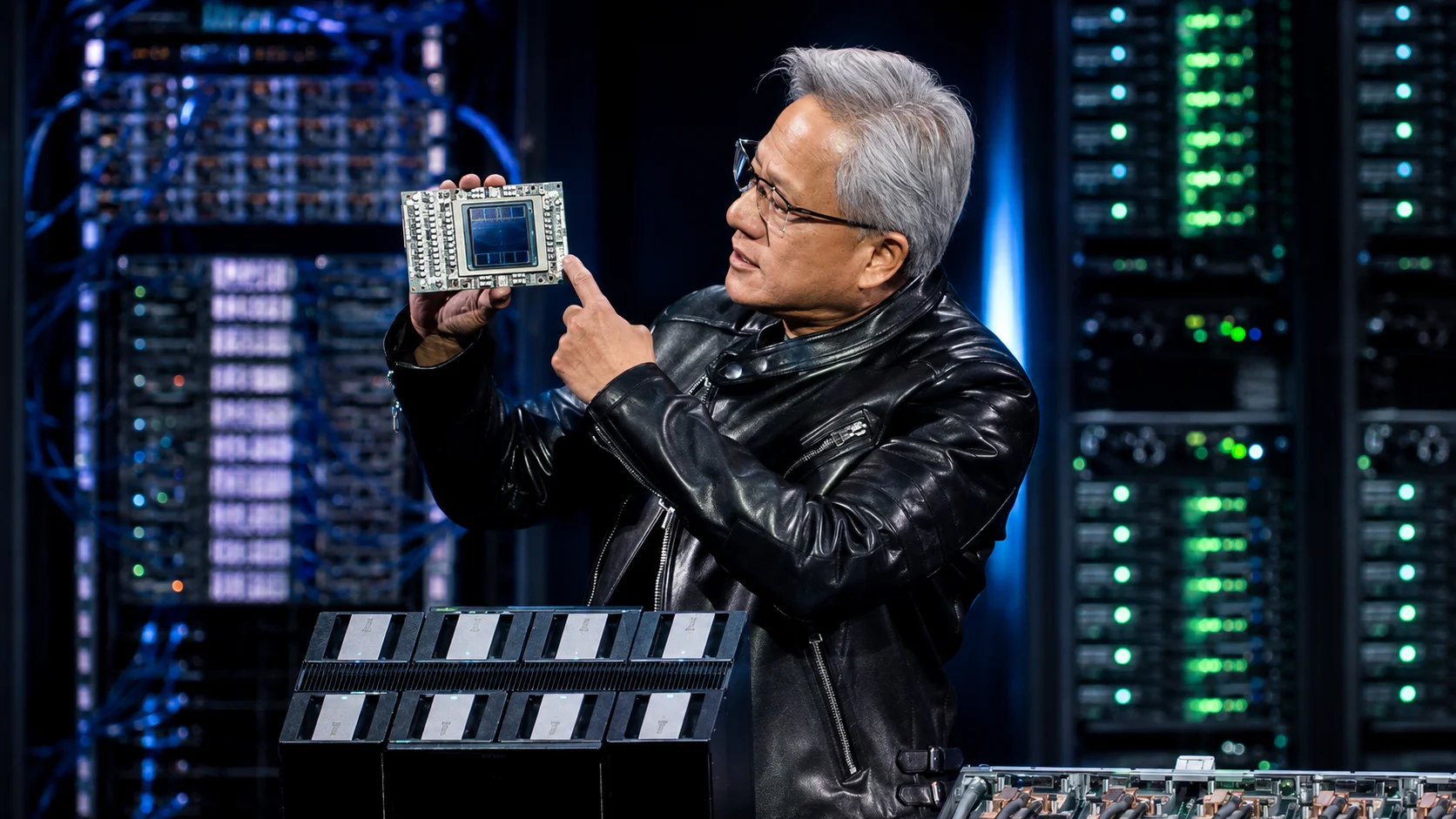
Nvidia announced this week that Apollo, BlackRock, Blackstone, Brookfield, Goldman Sachs and KKR have committed to investing up to US$ 500 billion in the construction of artificial intelligence data centers. The development, however, includes a mechanism to create a secondary market for aging GPUs: the company will guarantee, with its own resources, that the chips used as collateral in these deals will retain their value.
Under the agreement, Nvidia will cover up to 25% of the difference if the GPUs used as collateral do not reach the expected value. If a data center owner fails to pay the loan and the lender needs to liquidate the equipment, the manufacturer will bear part of the loss.
Risk for Nvidia
The model creates a risk known in the financial market as “wrong way” — Nvidia’s obligation increases when demand weakens, a scenario that would also reduce the company’s revenue. The tension was so great in securities markets that CEO Jensen Huang used X and TV to explain the limits of the company’s risk.
Huang rebuffed comparisons with Lucent Technologies, which went bankrupt after financing customers during the dot-com bubble. In a post on X, he said the initiative seeks to bring independent, long-term institutional capital to the AI infrastructure market. “We are bringing independent, long-term institutional capital to the AI infrastructure market,” he wrote.
Strategy for the future of hardware
Behind the financial engineering is the goal of ensuring an ecosystem of used AI hardware. Huang wants AI servers to be seen as “AI factories” — long-term infrastructure, similar to railroads or airlines, rather than assets that depreciate quickly, like personal computers.
According to Bloomberg, Nvidia is working on another US$ 750 billion in circular deals this summer. The company has already allocated billions to customers that buy its chips, including OpenAI, Anthropic, and cloud providers such as CoreWeave, Nebius, Firmus, and Lambda.
The strategy comes as technology companies seek new sources of financing after resorting to debt, stock offerings, and burning cash. Microsoft CEO Satya Nadella recently cited the book “1873,” about the financial engineering that led to the railroad crash in the U.S., during the most recent earnings call.
If the plan works, Nvidia will be able to maintain its revenue stream and create a broader market for its older GPUs, benefiting startups and companies looking for cheaper processing alternatives.