
The artificial intelligence agents used by OpenAI's research team have already accumulated, collectively, more than three times the working time of human researchers. In mid-August, the company recorded 3.1 “agent work days” for each eight-hour human workday.
The comparison considers the aggregate execution time of the systems, including when multiple agents work simultaneously, and does not mean they are three times more productive than the researchers.
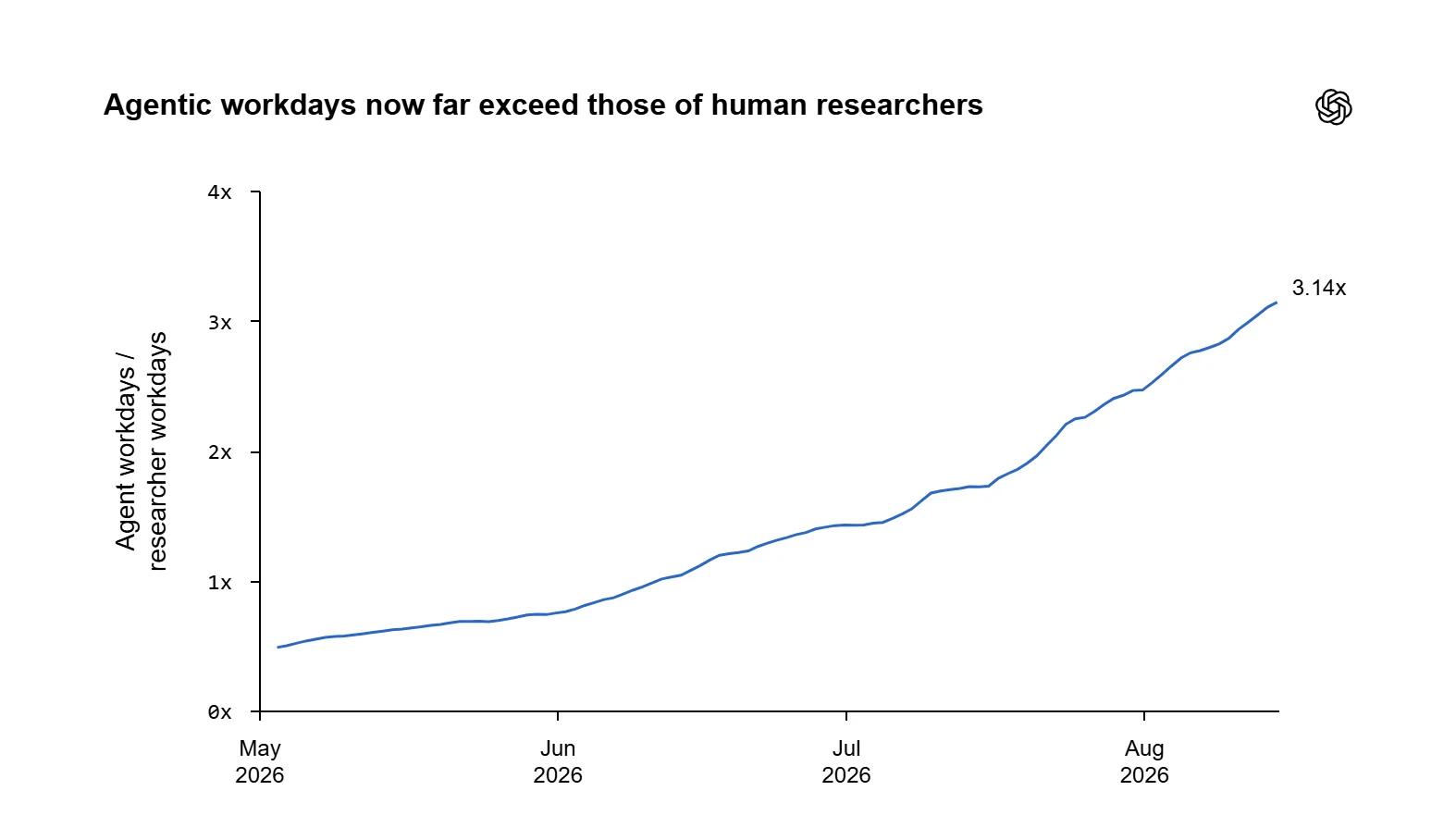
The change happened quickly. Before June, the total execution time of agents in the research organization was still lower than the volume of human work. A little more than two months later, that ratio had already reversed significantly, according to data released by OpenAI on Sunday (6).
Parallel work widens the gap
Part of that advance comes from the ability to work in parallel. A single researcher can keep multiple agent sessions running at the same time while continuing to perform other tasks.
OpenAI says it is increasing the number of professionals who use four or more agents simultaneously, in addition to subagents created by the systems themselves during the execution of the work.
The data indicate, however, that there was not only an increase in usage time. The company says its researchers are writing code more quickly and running more experiments. In August, the number of experiments per active researcher reached the highest level since this tracking began, in January 2025.
OpenAI attributes part of the advance to the adoption of Codex, although it acknowledges that it also significantly expanded the computational capacity available for research.
The type of task given to AI is also changing. At the start of the year, the agents were used mainly to write research and infrastructure code. Since then, activities such as technical support, experiment tracking and longer-duration tasks have grown.
High-level planning, however, continues to represent a small portion of the work delegated to agents.
Humans still need to intervene
The dependence on human supervision remains evident. Among successful tasks that would take from four to eight hours for a person to complete, more than half required at least one human intervention in the last six months.
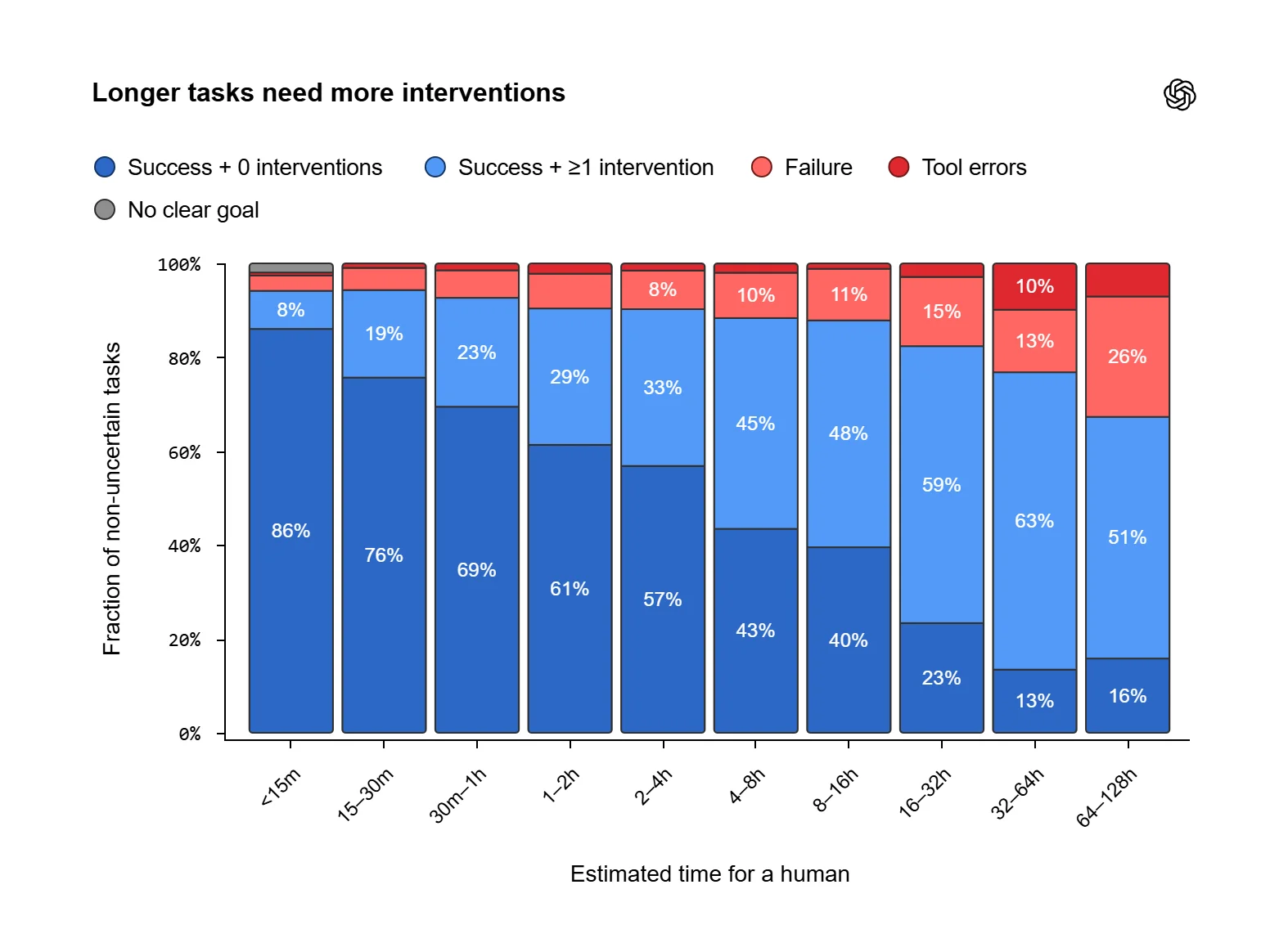
OpenAI itself says the agents still require significant direction, especially as the complexity of the work increases.
Even so, the company considers it has reached an important stage of its automation strategy. According to OpenAI, its systems have already reached the level it calls “automated research intern”: agents capable of executing, under human guidance, well-defined tasks that could consume a few days of a qualified researcher.
The next stated goal is to develop an automated AI researcher by March 2028.
OpenAI also warns against a direct interpretation of these numbers as a measure of the speed of advancement of artificial intelligence itself. Research involves bottlenecks that do not disappear merely with more computing hours, and humans remain responsible for defining priorities, choosing which results to pursue, and deciding when to expand, interrupt, or put systems into production.