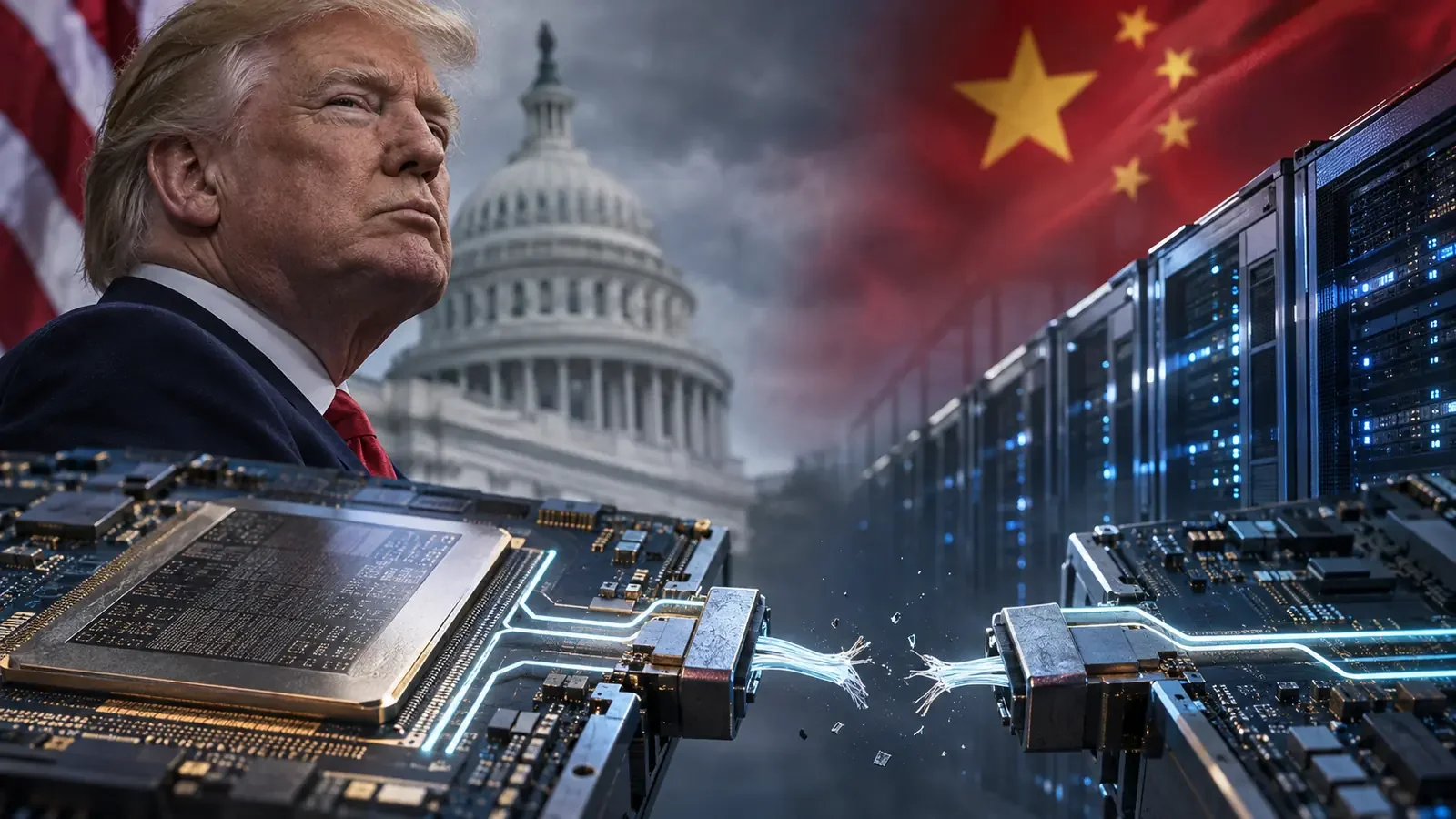
Oracle canceled a contract estimated at US$ 7 billion that would allow the Chinese company Tencent to use advanced artificial intelligence chips in data centers in Southeast Asia. The decision came after officials in Donald Trump's administration expressed concerns about the operation, according to a report published by Financial Times this Wednesday (4).
The agreement, signed in 2026, provided for a five-year lease of computing capacity at different Oracle facilities. Tencent would have access to approximately 100,000 AI chips, including processors that were not available in China due to the technology restrictions imposed by Washington and Beijing.
According to people familiar with the negotiations interviewed by the British newspaper, representatives of the US government approached Oracle to question the contract. The report did not clarify whether there was a formal order to halt the operation or whether the company backed out in the face of the concerns raised by the authorities.
Reuters reported that it could not independently verify the cancellation. Oracle, Tencent and the White House did not immediately respond to the agency's requests for comment.
Tencent also faced pressure from Chinese authorities
The negotiation faced resistance from both sides. In addition to US concerns, authorities in China's Guangdong province, where Tencent has its headquarters, approached the company to encourage the use of semiconductors produced by domestic manufacturers.
The contract had been revealed by Financial Times in October, when it was presented as the largest overseas computing infrastructure leasing agreement signed by Tencent. The operation called for an initial payment equivalent to approximately 30% of the total estimated value, although it is unclear whether there were any disbursements before the cancellation.
The structure would allow the Chinese company to use processors installed in other countries without the need to physically import the equipment into China. This contracting model has gained importance for Chinese companies seeking to expand their capacity to train and run artificial intelligence models amid restrictions on access to advanced chips.
The cancellation comes as Tencent expands its investments in infrastructure and AI model development. To date, no details have been disclosed about any financial consequences of the termination or about alternatives the company intends to adopt to replace the computing capacity provided for in the contract.