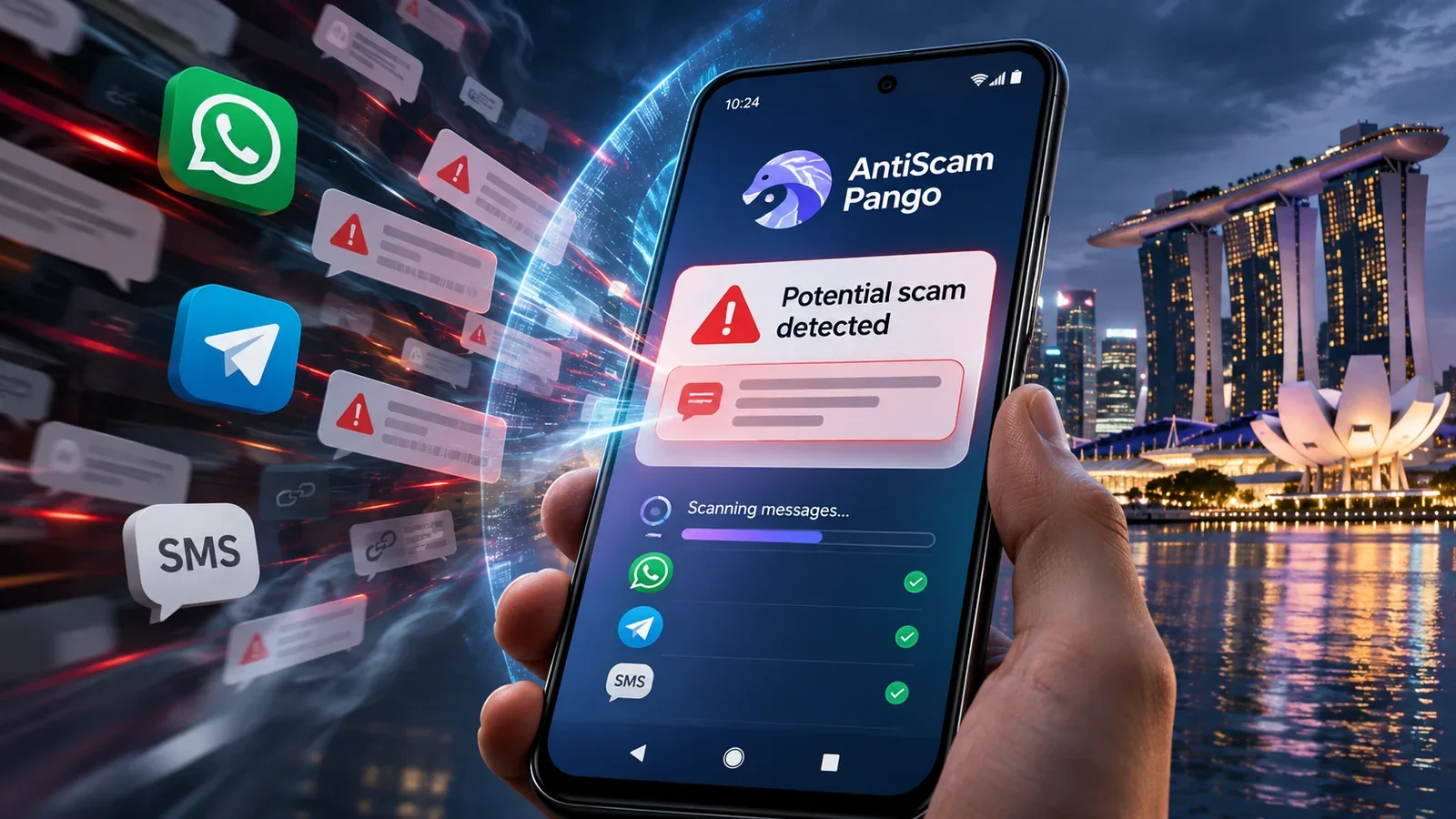
Singapore presented this Wednesday (4) the AntiScam Pango, an app that uses artificial intelligence to identify possible scams in messages received via WhatsApp, Telegram and SMS. Developed by the government agency GovTech in collaboration with Google DeepMind, the tool analyzes suspicious signals in conversations and warns the user before they make potentially risky decisions.
The beta version was presented during the STACK 2026 conference and is available for Android phones through the Google Play Store. Unlike systems that depend on previously reported numbers, Pango examines the content of messages to recognize possible manipulation attempts, even when the sender has not yet been identified as a scammer.
When it finds signs of fraud, the app displays an alert and explains the reasons for the suspicion. The tool does not block or delete messages automatically, leaving it to the user to decide whether to verify the sender's identity, interrupt the conversation or report the content.
How Pango analyzes messages and protects privacy
The system works in the background based on notifications received by compatible apps. For this, the user must authorize access to the phone's notifications and allow Pango to send its own alerts.
According to GovTech, message analysis occurs directly on the device, without sending the content of conversations to external servers. The text of messages is only shared when the user decides to submit a report. Technical data necessary for operation and usage information authorized separately may be transmitted.
Protection, however, has limitations. Messages that do not generate notifications may be left out of the analysis, and the model initially recognizes mainly scams written in English. The app also requires Android 12 or higher and at least 6 GB of RAM, with no version available for iPhone.
Pango complements ScamShield, another fraud prevention tool used in Singapore. GovTech is studying incorporating its features into the existing service in the future, but has not yet announced a timeline. For now, the effectiveness of the new system in broad use remains without independent verification.