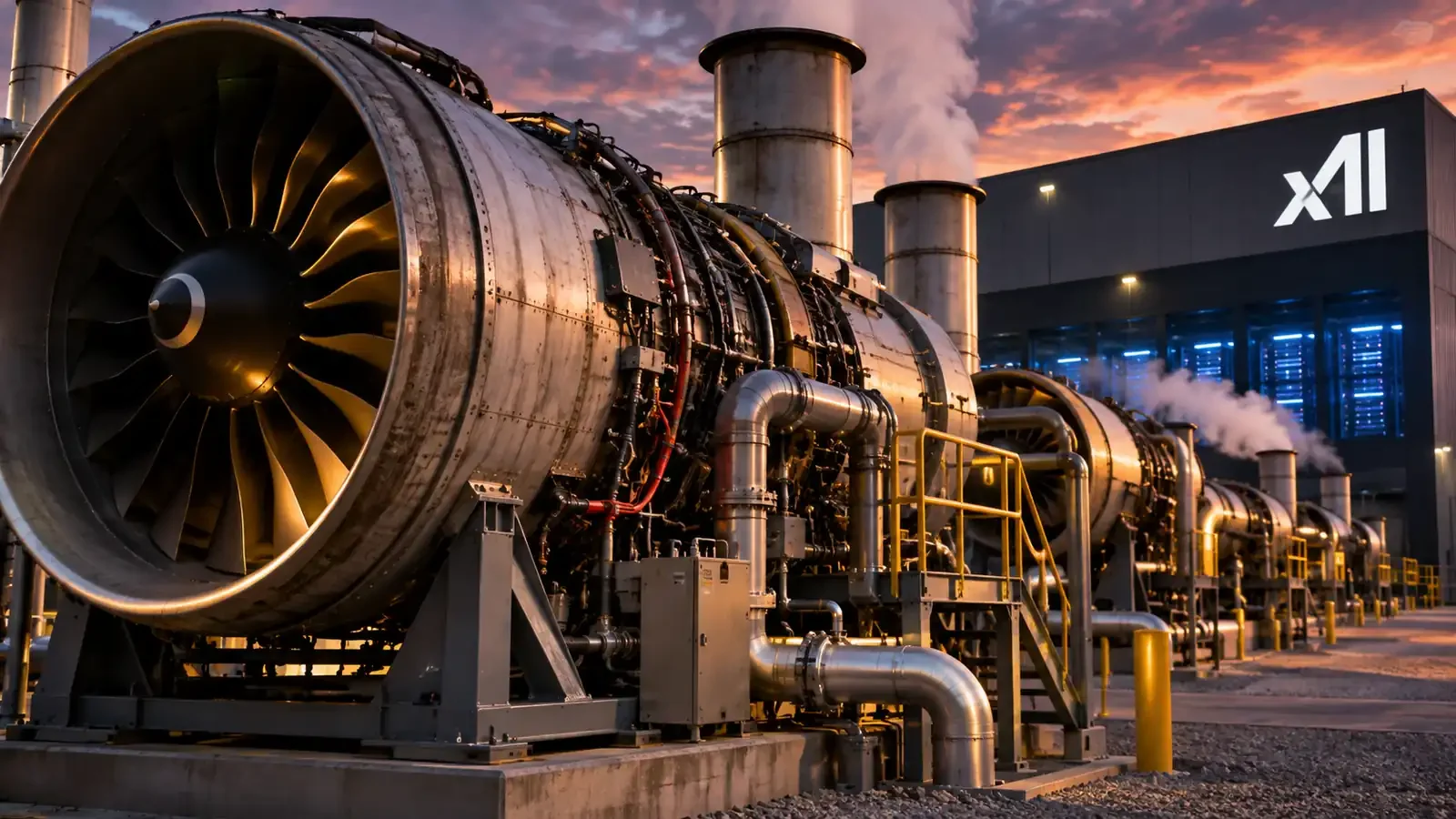
Engines removed from retired airplanes are gaining a new function in the United States: generating electricity for artificial intelligence data centers. An investigation published by The New York Times on Tuesday (3) identified eight converted turbines installed by xAI, Elon Musk's company, in Mississippi, amid the race for energy sources capable of meeting the expansion of AI infrastructure.
The adaptation makes it possible to use equipment originally developed to propel aircraft. In the conversion, the front fan is removed, the combustion chamber is modified to use natural gas, and the engine shaft starts driving an electric generator.
ProEnergy, the manufacturer of the generators used by xAI, is among the companies exploring this market. The company repurposes a General Electric turbine model found in Boeing aircraft.
The main advantage is the speed of deployment. Data center operators face long waits to obtain new connections to the power grid or acquire conventional turbines, while demand for computing capacity continues to grow.
Bill Kleyman, CEO of AI infrastructure company Apolo, summarized that urgency in an interview with The New York Times. According to him, developers began prioritizing speed of access to electricity, with a central question: “How quickly can you supply me with power?”
The solution, however, has limitations. Repurposed aircraft turbines tend to be less efficient than equipment designed specifically for conventional gas plants. That also means more units are needed to produce the same amount of electricity.
Environmental permits reveal differences between converted turbines
The environmental documents examined by The New York Times show an important difference between the converted generators and other equipment installed at the xAI facility.
The eight turbines identified in Mississippi have state authorization to emit carbon monoxide at a rate twice as high as that permitted for other turbines at the same site. For volatile organic compounds, the authorized limit is25% higher
These percentages represent limits established in the permits, not emissions actually measured. Therefore, the documents do not demonstrate, by themselves, that the equipment is releasing pollutants in those proportions during operation.
The difference is relevant because both groups of substances pose health risks. Environmental organizations question the adoption of older, less efficient engines to supply facilities that require large volumes of electricity.
Patrick Anderson, a lawyer at the Southern Environmental Law Center, told the newspaper that electricity generation, especially for a technology like artificial intelligence, should become progressively cleaner, not more polluting.
ProEnergy said that demand for its equipment among data center operators already exceeds that of traditional energy utilities. The investigation also identified projects by other companies that intend to use converted aircraft turbines.
When contacted by The New York Times, xAI and ProEnergy did not comment on the environmental concerns related to the equipment.